Languages
Monday, October 5, 2026



News and Views from the Global South


Endangered Monkey Survives in Tiny Private Paradise
A young forest planted by a woman from the Peruvian Amazon has provided a home for 40 specimens of a highly endangered monkey species with very few places left to live.Ecobreves – HONDURAS: More Than 500 Forest Fires
In the first quarter of 2011, over 500 forest fires were recorded in 16,973 hectares of forest, Trinidad Suazo, director of the Forest Conservation Institute of Honduras, told Tierramérica.Ecobreves – BRAZIL: Super Plastic Developed from Fruit Fibres
Researchers at the State University of São Paulo have created a new plastic ideal for use in automobiles from fruit fibres, using nanotechnology.
EUROPE: The Harmless Invasion of the Pacific Oyster
In the 1970s, French oyster breeders introduced the Pacific oyster (Crassostrea gigas) to the Bay of Biscay to diversify the area’s species and develop the commercial oyster industry.
BRAZIL: Porto Alegre Cyclists Step Up Demands for Bike Lanes
In the weeks since a motorist mowed down dozens of cyclists in the southern Brazilian city of Porto Alegre, the incident has becoming a rallying flag in the fight to create a more bike-friendly city.Ecobreves – ARGENTINA: Buenos Aires to Contract Cooperatives for Waste Collection
The city of Buenos Aires will contract 13 cooperatives to handle the collection and recycling of all of the capital’s dry wastes as of 2012.Ecobreves – BRAZIL: Guaraní Aquifer Threatened by Pollution
The illegal dumping of garbage and toxic agrochemicals used in sugarcane farming poses a serious threat to Latin America’s largest groundwater reservoir, the Guaraní Aquifer, according to the Institute for Technological Research (IPT) in the southern Brazilian state of São Paulo.
Porto Alegre Cyclists Step Up Demands for Bike Lanes
A motorist’s attack on a group of cyclists in Porto Alegre has drawn local and international attention to the cause of bicycles as a mainstream means of transportation.Ecobreves – HONDURAS: Illegal Dam Construction Under Investigation
The Office of the Special Prosecutor for Ethnic Groups in Honduras is investigating the construction of small hydroelectric dams without the required environmental licences in the western department of Intibucá, which is home to most of the country’s Lenca indigenous people.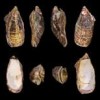
The Harmless Invasion of the Pacific Oyster
Exotic species pose a threat to biological diversity in many parts of the world. But the invasion of the Baltic Sea by an oyster native to the Pacific coast of Asia is rather atypical in several ways.
ARGENTINA: Cutting-Edge Model of Coastal Protection
Governments, environmentalists and private companies have just under four years to establish joint management of 43 protected areas on Argentina’s Atlantic coast, one of the world’s most productive and best preserved biomes.
ECUADOR: Trees on Shaky Ground in Texaco’s Rainforest
When the trunks of the trees move with every step you take, you know you are in a swamp. This is what happens when you walk over the seemingly firm and vegetation-covered ground over what was once a pit used to dump oil sludge in the Ecuadorian Amazon rainforest.Ecobreves – BRAZIL: Water Shortages Threaten 3,059 Municipalities
According to a report on urban water supply released Mar. 22, 55 percent of Brazil’s municipalities could face water shortages by 2015.Ecobreves – VENEZUELA: Bat Protection Measures Planned
Venezuelan researchers and authorities have created a working group to develop initiatives for the protection of the country’s 165 species of bats, whose populations are threatened by the degradation of their natural habitats.Ecobreves – HONDURAS: Eco-Friendly Comic Strip Launched
A beaver and a drop of water are the “heroes” in a new comic strip that recounts their adventures in protecting the environment, to be published in Honduran newspapers.
Trees on Shaky Ground in Texaco’s Rainforest
Texaco’s “clean-up” of the toxic oil waste pits in the Ecuadorian rainforest consisted of filling them with sticks, tires, tanks and scrub and then covering it all up with soil.
Cutting-Edge Model of Coastal Protection
A non-governmental organisation has been tasked with managing a system comprising all of Argentina’s marine-coastal protected areas.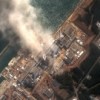
Who Controls the Nuclear Control Agencies?
As Japan struggles to confront a nuclear disaster that could be the worst in history, it seems clear that any discussion about the safety of nuclear energy should address the independence of regulatory agencies.
BOLIVIA: Cochabamba Still Thirsty
There is still no apparent solution to the unsatisfied demand for drinking water in Cochabamba, 11 years after this central Bolivian city made international headlines with a popular uprising that halted the privatisation of water service.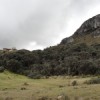
ECUADOR: Water Management Transcends “Public or Private” Debate
For one day, civil servants are trading their desks for the chilly highland plains in a rural community 3,500 metres above sea level on the outskirts of the Ecuadorian capital, where they are helping to plant native trees.
Water Management Transcends “Public or Private” Debate
A fund financed with public and private resources seeks to create a participatory and transparent water management model in Quito.« Previous Page — Next Page »


Tierramérica is the main communications platform on sustainable development and the environment in Latin America and the Caribbean. It is produced by IPS Noticias, the agency’s Spanish-language service, which created it jointly with the United Nations Development Programme (UNDP) and the United Nations Environment Programme (UNEP), with later support from the World Bank. The weekly editions of Tierramérica are published in Spanish, Portuguese and English and are picked up and printed by dozens of media outlets in the region. Follow us on Facebook and Twitter.

From the Frontline of Environment
Supported by

Tierramérica en Español

Terramérica em Portuguese

