Languages
Friday, October 9, 2026



News and Views from the Global South


Final Throes for Jamaica's 'Hippie Paradise'?
What was once a magical place in Jamaica is on the verge of losing its best trait: the beaches.
PERU: The Tangled Paths of New Forest Law
Indigenous protests prompted the introduction of a new legislative bill on forests and wildlife in Peru, the second most forested country in South America. Experts consulted by Tierramérica pointed to what the initiative gets right, but also to what's wrong with it.
CHILE: Quake a Chance for Sustainable Rebuilding
Although there is not yet an official tally of the environmental consequences of Chile's Feb. 27 earthquake and tsunami, environmental groups and experts are calling for quick and sustainable responses to the problems.
BIODIVERSITY-EUROPE: Sturgeons Return to the Danube
A century ago, when the Danube was still blue, it teemed with beluga sturgeon, as did the Rhine with salmon. But industrialisation and the construction of canals and dams have destroyed the habitat of both species of fish.Ecobreves – VENEZUELA: Fires Cover Caracas in Smog
A hot, dense haze covered the Venezuelan capital in late March, when the ash from a series of fires across some 140 hectares on Mount Ávila, which looms over the capital, mixed with the city's usual air pollutionEcobreves – CHILE: Quake Shifted the Environmental Calendar
The government's environmental agency CONAMA on Mar. 19 suspended for 15 workdays the deadlines for proceedings before the Environmental Impact Evaluation System in the regions of El Maule, Bío-Bío and La Araucanía, the hardest hit by the Feb. 27 earthquake.Ecobreves – CUBA: Eastern Region under Seismic Alert
A quake measuring 5.5 on the Richter scale shook up residents in Cuba's southeastern provinces, prompting concern about increasing seismic activity in the Caribbean, most notably the Jan. 12 earthquake in Haiti.
Quake a Chance for Sustainable Rebuilding in Chile
Chilean environmentalists are promoting sustainable and inclusive reconstruction of their country in the aftermath of the Feb. 27 quake. They want better-planned cities and unconventional renewable energy sources.
The Tangled Road of Peru's Forest Law
Some of the provisions of new regulations for protecting the forests of Peru and the rights of the indigenous communities of the Amazon have stirred up controversy.Sturgeons Return to the Danube
A program involving experts and officials from eight European countries is working to repopulate the iconic Danube with the endangered beluga sturgeon.
DEVELOPMENT: The Caribbean Trembles
Better known for its hurricanes, the region that extends from the Cayman Islands in the west to the chain of Windward and Leeward Islands in the east is home to one of the earth's principal seismic belts.
BIODIVERSITY: Corals Fight for Survival
The survival of corals, which face grave threats from ocean acidification, bottom trawling and the jewelry and decor trade, is in even greater doubt after a vote taken at a conference under way in Doha, Qatar.
Corals Fight for Survival
Delegates from 175 countries discuss listing endangered plant and animal species to protect them from unregulated trade. For corals it's a lost opportunity.
The Caribbean Trembles
The Haiti earthquake was a reminder that the beautiful Caribbean is one of the planet's most geologically active zones.Ecobreves – MEXICO: A Green University
The private Ibero-American University of Mexico is working to reduce its harm to the environment through the ambitious "Green Campus" program.Ecobreves – BRAZIL: Bioinsecticide Against Dengue
A biological insecticide developed at Brazil's Oswaldo Cruz Foundation is an effective weapon against dengue because it does not harm human health or the environment, say researchers.Ecobreves – ARGENTINA: More and More Garbage
The government of the Argentine capital is depositing twice the volume of solid waste in sanitary landfills than is allowed under the 2005 "zero garbage" law.
ENERGY-LATIN AMERICA: Moving Towards Renewables
Argentina is building its first solar energy park in the northwestern province of San Juan. The project calls for the manufacture of photovoltaic panels to supply the rest of the country and the other member countries of the Southern Common Market (Mercosur).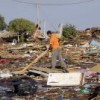
CHILE: Cracks Exposed in Readiness Plan
Inadequacies in technical equipment, specialised human resources, institutional coordination, land zoning and citizen awareness were all laid bare by the major earthquake and subsequent tsunami on Feb. 27 in central and southern Chile.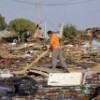
Cracks in the Readiness Plan of the 'Chilean Miracle'
Chile still lacks experts capable of operating new anti-seismic technologies and the ability to disseminate emergency information among officials and the population.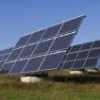
Latin America Builds Another Energy Capital
Generating electricity from the sun and from the wind is taking off with Latin American projects that include the region's own technology and manufacturing.« Previous Page — Next Page »





Tierramérica is the main communications platform on sustainable development and the environment in Latin America and the Caribbean. It is produced by IPS Noticias, the agency’s Spanish-language service, which created it jointly with the United Nations Development Programme (UNDP) and the United Nations Environment Programme (UNEP), with later support from the World Bank. The weekly editions of Tierramérica are published in Spanish, Portuguese and English and are picked up and printed by dozens of media outlets in the region. Follow us on Facebook and Twitter.

From the Frontline of Environment
Supported by

Tierramérica en Español

Terramérica em Portuguese

