Languages
Friday, November 6, 2026



News and Views from the Global South


The Nuclear Club's New Clothes
It's false that electricity production from nuclear reactors does not produce carbon dioxide, the leading greenhouse gas, explains Chilean environmental expert Sara Larraín in this exclusive Tierramérica column.
AGRICULTURE: Foreigners Lead Global Land Rush
More than 20 million hectares of farmland in Africa and Latin America are now in the hands of foreign governments and companies, a sign of a global "land grab" that got a boost from last year's food crisis.Ecobreves – BRAZIL: Productive Plan to Save Biodiversity
Technical training, access to credit and strengthening the market are the key points of the national plan for socio-biodiversity productive chains, signed in late April by Brazil's President Luiz Inácio Lula da Silva.Ecobreves – CHILE: Anti-Dam Campaign Reaches Europe
May 8 will mark the end of a two-week tour through Spain and Italy by activist Juan Pablo Orrego, international coordinator of the Patagonia Defense Council, which is fighting the construction of five dams in the southern Chilean region of Aysén.Ecobreves – VENEZUELA: National Park Restricts Vehicles
Access of all-terrain four-wheel-drive vehicles is being limited in the Cainama National Park, in southeastern Venezuela, bordering Brazil and part of the Guiana massif.
Chernobyl Kids Keep Arriving in Cuba
More than 24,000 people affected by Ukraine's 1986 Chernobyl nuclear disaster have been treated in Cuba since 1990.
Mexico's Future Hinges on Near-Empty Science Classrooms
The suspension of classes in Mexico due to the swine flu epidemic is not the only reason science and technology university courses have been nearly deserted.
Foreigners Lead Global Agricultural Land Rush
Corporations and governments with financial resources to spend are buying up agricultural land in poor countries as a means to ensure food and energy supplies.
Q&A: Wanted – A Truly Clean Development Mechanism
The Clean Development Mechanism established under the Kyoto Protocol on climate change "should go beyond pure compensation" and produce "a net atmospheric benefit," argues Lambert Schneider, an expert with Germany's Institute for Applied Ecology.
RIGHTS: Indigenous Wisdom Against Climate Change
While industrialised countries like Canada continue to emit ever-higher levels of greenhouse-effect gases, indigenous peoples around the world are working to survive and adapt to an increasingly dangerous climate.Ecobreves – HONDURAS: Forest Fires Claim 17,000 Hectares
In the first three months of this year, forest fires destroyed 17,000 hectares of forest in the southern, northeastern and Atlantic regions of Honduras, say official sources.Ecobreves – MEXICO: School Kids Turn Eco-Monitors
Esteban Carrillo, 12, committed his parents to reducing electricity and water consumption at their home in the state if Mexico, neighboring the capital. Along with 549 children, he was named an ecological monitor for his district.
Indigenous Wisdom Against Climate Change
Native peoples, with their ancestral links to the land, have learned some useful lessons over the millennia about how to fight and adapt to climate change.
Wanted: A Truly Clean Development Mechanism
The international climate rules that emerge in 2012 should contain a reformulated Clean Development Mechanism, says German expert Lambert Schneider in this Tierramérica interview.Ecobreves – BRAZIL: New National Science Team for Climate Change
Brazil has created its own 300-scientist panel to assess climate change. The team will update the national inventory of greenhouse-effect emissions, which is still based on 1994 data.Ecobreves – ARGENTINA: Eco-Promoters for Polluted River
Argentina's Secretariat for Environment and Sustainable Development signed an agreement with the National University of La Matanza to train community environment promoters for the Matanza-Riachuelo Basin, the country's most polluted, located south of Buenos Aires.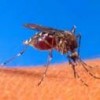
HEALTH-LATIN AMERICA: Dengue Spreading and Increasingly Lethal
The population's susceptibility to suffering more severe forms of dengue is worrying health experts, as the epidemic in South America expands in Argentina, Bolivia, Brazil and Paraguay.ENVIRONMENT: Indigenous Peoples Demand Greater Role in Climate Debate
While indigenous peoples from around the world are meeting in this Alaskan city to seek a greater role in global climate negotiations, the rapidly warming Arctic is forcing some Inuit villages to be relocated.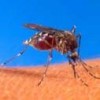
Dengue Spreading and Increasingly Lethal
The mosquito-borne disease dengue is becoming more virulent and lethal in South America.
Electronic Garbage Can Produce Marvels
While learning to recycle electronic waste, young Brazilians are acquiring skills and greater awareness about the impacts of material consumption.
Indigenous Peoples Demand Greater Role in Climate Debate
Indigenous organizations and communities want their voices heard in the international negotiations on how to deal with climate change.« Previous Page — Next Page »





Tierramérica is the main communications platform on sustainable development and the environment in Latin America and the Caribbean. It is produced by IPS Noticias, the agency’s Spanish-language service, which created it jointly with the United Nations Development Programme (UNDP) and the United Nations Environment Programme (UNEP), with later support from the World Bank. The weekly editions of Tierramérica are published in Spanish, Portuguese and English and are picked up and printed by dozens of media outlets in the region. Follow us on Facebook and Twitter.

From the Frontline of Environment
Supported by

Tierramérica en Español

Terramérica em Portuguese

