Languages
Friday, November 6, 2026



News and Views from the Global South

Ecobreves – CHILE: Mapuches Question Validity of Gov't “Consultation”
Leaders of the Mapuche people are challenging the legitimacy and usefulness of the First National Consultation of Indigenous Peoples that the national government has extended to Mar. 2.Ecobreves – CUBA: Danger: Fire
The three hurricanes that thrashed Cuba in 2008 have increased the threat of forest fires during the current dry season, which lasts until early May, experts told Tierramérica.
BIODIVERSITY: So Long, Salamanders
Mesoamerica's salamanders appear to be joining the global decline in amphibian species, like frogs, adding to the evidence of ecological change around the planet.
DEVELOPMENT: Aquaculture Awaits Its Heyday
With wild fish catches in sharp decline, aquaculture, which now accounts for nearly half of all seafood consumed, is expected to double production over the next two decades.
Recession Challenges Fair Trade
The uncertainty caused by the global economic recession has cast a shadow over the immediate future of fair trade efforts in Latin America.
So Long, Salamanders
These days it's hard to find any salamanders in some parts of Mexico and Guatemala, where just a few decades ago they were abundant, says a new study.Ecobreves – BRAZIL: Acceleration in Refrigerator Replacement
The Brazilian government decided to speed up the subsidized replacement of 10 million old refrigerators over the next 10 years.Ecobreves – MEXICO: Drafting Eco-Laws for Automobiles
The Mexican government is drawing up new standards that will require automobile manufacturers to offer vehicles with low carbon dioxide emissions.Ecobreves – HONDURAS: World Bank Finances Protected Areas
The World Bank granted Honduras a three-million-dollar loan to protect its main areas of ecological and forestry preserves.Ecobreves – ARGENTINA: Anti-Soybean Video for Kids
With a 13-minute video starring puppets and aimed at children, the environmental group Bios Argentina sets out its views on the monoculture of soybeans and the crop's environmental impact.
SOUTH AMERICA: Tenacious Drought Puzzles Climate Experts
For months now, yellowed pastures, cracked soil and dead livestock have been the landscape of what otherwise are the most productive farming areas of Argentina, Brazil, Paraguay and Uruguay. Scientists say it is so far impossible to determine if the drought is a manifestation of climate change processes.Ecobreves – VENEZUELA: Wetlands Not So Protected
Venezuela has reached the 38th anniversary of the Ramsar Convention on Wetlands with mixed results.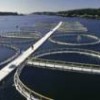
Aquaculture Awaits Its Heyday
Fish farming could fill the void left by commercial fishing as a source for human food -- and it can transform itself into a sustainable industry, say its promoters.Ecobreves – CUBA: Applause for Ozone Therapy
A million patients with chronic illnesses were treated with ozone therapy in Cuba over the past two decades. Eighty percent of the cases responded with satisfactory results.Ecobreves – HONDURAS: Biosphere Destruction Denounced
Humanitarian and environmental groups have reported the continued logging in the Honduran biosphere reserve of the Plátano River, where clandestine sawmills operate.Ecobreves – CHILE: Conflict Over Petroleum Storage Site
Residents, fishers and salmon workers, including the indigenous population of Calbuco, in the southern Chilean region of Los Lagos, have announced a mobilization against a fuel storage plant of the Chilean oil company Copec.Ecobreves – BRAZIL: Partial Ban on Asbestos
Brazil's environment minister, Carlos Minc, has banned the use of asbestos in public works and in all vehicles associated with his portfolio, due to the health dangers the fire-resistant mineral poses.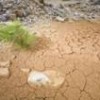
Tenacious Drought Puzzles Climate Experts
Climatologists and meteorologists have not yet established a reason for the lack of rainfall on the normally fertile and productive plains of Argentina, Brazil, Paraguay and Uruguay.
HEALTH-ARGENTINA: No End to Chagas Disease
After two years of the government health programme "Argentina justa, Argentina sin Chagas" (Fair Argentina, Chagas-Free Argentina) the fight against the endemic disease of that name is weakening, according to experts.
CHILE: Biofuels Head to the Forests
Chile has set its sights on producing second-generation plant-based fuels from forest biomass within the next five years. But before that it must consider the environmental and socioeconomic impacts of such an endeavour, warn experts and activists.
ENERGY: Parasails Can Move Ships
They say that faith can move mountains. Now, faith in the wind has led to a new way to move ships. The technique, developed in Germany, is powerful enough to move today's deep-draught cargo vessels and can reduce fuel consumption by 50 percent.« Previous Page — Next Page »





Tierramérica is the main communications platform on sustainable development and the environment in Latin America and the Caribbean. It is produced by IPS Noticias, the agency’s Spanish-language service, which created it jointly with the United Nations Development Programme (UNDP) and the United Nations Environment Programme (UNEP), with later support from the World Bank. The weekly editions of Tierramérica are published in Spanish, Portuguese and English and are picked up and printed by dozens of media outlets in the region. Follow us on Facebook and Twitter.

From the Frontline of Environment
Supported by

Tierramérica en Español

Terramérica em Portuguese

