Languages
Sunday, November 22, 2026



News and Views from the Global South
Africa
Q&A: Forging New Paths to Sustainable South-South Cooperation
Countries from the South are assuming leading roles in decisions on global issues ranging from economic recovery to food security, climate change and HIV/AIDS.CLIMATE CHANGE: Commonwealth Champions Adaption Fund
South African President Jacob Zuma admits that before to coming to Trinidad for the bi-annual Commonwealth Heads of Government Meeting (CHOGM), he met with its secretary general, Kamalesh Sharma, to discuss the relevance of the grouping in today's evolving global power structure.TRADE: Africa Should be Prioritised at WTO Ministerial
African countries are ready to conclude the Doha Round on the basis of current proposals, but warn against any attempt to renegotiate them at the seventh ministerial conference of the World Trade Organisation (WTO) that opens in Geneva today. Meanwhile, the Africa Trade Network demands a moratorium on the Doha talks.Q&A: ‘You Have To Be Educated To Be A Leader’
Traffic flowing in and out of her office, each interruption addressed with effortless calm, the nurse in charge of Hospitalisation and Immunisation at Nyamata Health Center in Bugesera District, is a confident woman in her element.
NAMIBIA: Waiting at the Polls
The Electoral Commission of Namibia (ECN) has again suspended the observer status of a human rights watchdog it accuses of lying about mistakes on the voter’s roll.WORLD AIDS DAY: Groups Urge Repeal of “Antiquated Colonial Laws”
On the heels of a new report by UNAIDS that the HIV virus is now infecting Caribbean men and women at an equal rate, activist groups are urging regional leaders to eliminate laws that further the stigmatisation associated with the deadly virus.
RIGHTS: Nigeria Failing To End Discrimination Against Women
Nigeria ratified the Convention on the Elimination of Discrimination Against Women (CEDAW) in 1985 without reservations. But few of its citizens have ever heard of the document. Day-to-day life for women in Nigeria is shaped less by international conventions than it is by the diverse cultures, traditions and religions found in the country.Q&A: CEDAW – Signed, Sealed and Largely Left on the Shelf
Mauritania formally adopted the Convention on the Elimination of Discrimination Against Women in 2001, but in the eight years since, it has had limited effect on the status of women.
SOUTH AFRICA: Legal Victory Offers Little Relief For Sex Workers
More than seven months after the Cape High Court ruled in favour of the Sex Workers Education and Advocacy Taskforce (SWEAT), interdicting the police for harassment and arrests, sex workers are losing the daily battles against police and criminal elements on the streets.
SUDAN: Peace Agreement Proving Less Than Comprehensive
The 2005 Comprehensive Peace Agreement (CPA) ended one of Africa's longest and complex civil wars, with nominal agreement reached on security, wealth sharing, and governance issues. But there are renewed fears that conflict could erupt again in the country as divisions between the north and the south deepen.
CLIMATE CHANGE: Angry Greenhouse Gas Victims Demand Action
‘Angry’ is not the adjective that comes to mind when you first meet Nelly Damaris Chepkoskei.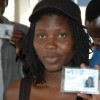
POLITICS-NAMIBIA: SWAPO’s Dominance Challenged
"Man RDP!" sighs Martha Hamukoto, sitting on the steps of a Windhoek office block. She is lamenting the breakaway faction, the Rally for Democracy and Progress (RDP).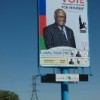
POLITICS-NAMIBIA: ‘Parties Totally Don’t Care About Women’s Rights’
Gender activists foresee a drop in female parliamentarians after Namibia’s general and presidential elections on November 27 and 28. It’s a trend that jeopardises the region’s goal of 50 percent female representation in politics by 2015.
GENDER-SOUTH AFRICA: ‘There Is A Sense Of Vindication’
Born in a squatter camp in Orlando East and raised by a single mother; working in a factory while completing secondary school by correspondence; arrested and banned by the apartheid government: South Africa's ambassador to Italy is an example of the long road her country has travelled.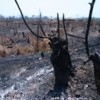
CLIMATE CHANGE: Fears Forest Proposals Are ‘Human Rights Disaster’
The clean, ultra-modern chrome and glass lines of the Bella Centre, in the Danish capital Copenhagen, is a world away from the thronging canopy suspended over the tropical forests of Uganda, or the Democratic Republic of Congo, or Cameroon.SOUTH AFRICA: ‘Shoot to Kill’ Comment Shocks Judge
In more than 34 years as a judge, he has not been as deeply concerned by anything as he was by the recent comment of a South African deputy minister of police that police officers should shoot and "kill the bastards".ZAMBIA: Electoral Commission Accused of Bias
The Electoral Commission of Zambia (ECZ) is once again under fire from opposition political parties and some civil society organisations, which accuse it of bias in favour of the ruling party during elections.CORRUPTION-UGANDA: Leaders’ Integrity Questioned
Seated at a u-shaped table is an assembly of middle-aged men and women clad in business suits, faces stern and expressionless. Refreshments - bottled water, sodas and giant flasks of tea - clutter the long table, competing for space with piles of documents.TRADE: “African States Need Advice Body Outside WTO for Talks”
Since before the creation of the World Trade Organisation (WTO) in 1995, two groups of people have confronted each other: supporters of trade liberalisation, who regard the pursuit of growth as paramount, and opponents of trade liberalisation, who see unfettered trade as the cause of many socio-economic problems.
WATER: Poor Sanitation Killing Liberia’s Young
Nineteen-year-old Beauty Phillips clutches her emaciated baby tightly to her chest. At seven months, Inga suffers from malnutrition.
ZAMBIA: Putting Waste to Work
When Obed Mumba first came to the Zambian copper mining town of Ndola in search of work, it was still known reverently as "Ku kalale" - the land of the white man. In the decades since, he has witnessed his Kabushi township outgrow the limited dreams of its planners.« Previous Page — Next Page » *#*

The Week with IPS

NEXT STOP - SDGs
Tracking global progress towards a sustainable world
Tracking global progress towards a sustainable world
