Languages
Monday, November 23, 2026



News and Views from the Global South
Africa
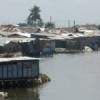
DEVELOPMENT-AFRICA: Focus on Housing the Urban Poor
Millions of people move to Africa’s cities every year, swelling the numbers of urban poor. "We cannot chase people away from slums," says Kelvin Mmangisa, chief executive of the Lilongwe City Assembly. "But we can improve the conditions there to make their lives better."ECONOMY-AFRICA: One of These States Is Not Like the Others…
African economic experts at the World Economic Forum on Africa have called for a regional approach to the global financial crisis, but South Africa - the continent’s strongest economy - does not want to play ball.NIGERIA: Endemic Corruption Draining Human, Economic Resources
Government corruption has long been a fact of life in Nigeria - elections are often fraught with fraud, intimidation, and violence; oil companies have been known to pay the military for assistance in suppressing protests; embezzling politicians steal money away from infrastructure services and programmes.
Q&A: Why Sanitation Is the Forgotten Sister
As part of the International Year of Sanitation in 2008, Zimbabwe developed a national strategy for sanitation, launched in February 2008. Just five months later, a cholera outbreak that was to claim over 4,000 lives began.
DEVELOPMENT: Africa ‘Not Badly Hit’ Despite 16 Million More Poor
Former United Nations secretary general Kofi Annan believes that Africa has not been affected as ‘‘profoundly’’ by the global economic crisis compared to other regions in the world - despite the number of Africans living in poverty having increased by 16 million in the last year and annual growth dropping from six to one percent.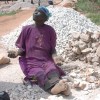
RIGHTS-UGANDA: ‘When a Man Hurts a Woman, There’s Nothing She Can Do’
Mary Atimango left the war-ravaged Gulu district to come and live in Kampala during the peak of the northern Ugandan conflict over fifteen years ago. The 59-year-old now lives in the small peri-urban village of ‘Acholi Quarters’ on Kireka Hill, on the outskirts of the Ugandan capital.ECONOMY-AFRICA: Economies Must Diversify, Reduce Focus on Mining
The global financial crisis has taught African governments a lesson. More than ever, they recognise the need to diversify their countries’ mining operations as a key defence against economic instability and cyclical swings.SWAZILAND: Donor Support For Health Sector Drying Up
As the global economic downturn begins to take its toll on developing countries, Swaziland's health system - already strained by the burden of HIV/AIDS - has come under severe threat. The third of the national health budget which comes directly from donor agencies is abruptly drying up.RIGHTS: Saro-Wiwa Settlement Latest Vindication of 1789 Law
Monday's settlement of a long-pending case by Royal Dutch Shell marks the latest successful use by human rights groups of a 1789 anti-piracy law to gain redress in U.S. courts on behalf of foreign victims of serious abuses committed overseas – in this case, Nigeria.GHANA-ECONOMY: Credit Crunch Starts To Bite
When the news of the global financial crisis broke in Ghana last year, the then-President John Kufuor said the country’s economy was insulated against the effects of the credit crunch being reported in Europe and the United States. There now seems to be an admission now that ripples are being felt.DEVELOPMENT: ‘‘19th WEF on Africa Just About Elite Agendas’’
The 19th World Economic Forum (WEF) on Africa, which kicks off tomorrow, is a space ‘‘for the rich and powerful elites who control the global economy and who seek to further open Africa’s economy in collaboration with a tiny minority of corrupt elites in Africa.
AGRICULTURE: Liberia’s Land Just for Some
After watching the murder of her husband and his three other wives by Charles Taylor’s rebels, Fatu Bonah and her seven children fled into the dense forest to hide. "The rebels burned down our home and when I returned my in-laws had taken the land," she says. "I went to the town chief, who tried to resolve it, but the family refused, saying they had already taken over the land."TRADE: EPA Signing Threatens Southern African Customs Union
Fears that accession to an economic partnership agreement (EPA) in Southern Africa will destroy regional integration seem to be coming true after Botswana, Lesotho and Swaziland (BLS) ignored a key provision of the Southern African Customs Union when they initialled their trade deal with the European Union last week.HEALTH-SOUTH AFRICA: Mental Illness in HIV-Positive Patients Largely Ignored
Although mental disorders, such as depression and dementia, are a commonly associated with HIV, they remain largely undiagnosed in South Africa. Lack of human and financial resources for mental health are the main reason for this, researchers say.SOUTH AFRICA: Wastewater Is a Resource
South Africa faces chronic water shortages, yet billions of litres are flushed away every year. Being one of the driest countries in the world, the conservation of water resources and managing wastewater should be a top priority for government.ENERGY: New Moves to Bring More Light to Africa
Looking at night-time satellite pictures of Africa, most of the continent seems to be suffering a giant power cut, especially when compared with brightly lit Europe or the United States.
POVERTY-ANGOLA: NGOs Sceptical of Govt’s Rural Development Plans
In an attempt to reduce rural poverty, Angola’s government plans to diversify its oil-focused economy by trying to restore the country’s once-booming agricultural sector.RIGHTS: Honour Pledges on Reproductive Health
In 1994, the International Conference on Population and Development (ICPD) proposed a groundbreaking shift in the approach to reproductive health: women's reproductive capacity was to be transformed from an object of population control to a matter of women's empowerment to exercise personal autonomy.BURUNDI: Ceasefire Failing to Quell Political Violence
Despite ongoing peace talks between Burundi's ruling party and rebel groups, a Human Rights Watch (HRW) report released this week says the government must do more to end partisan violence in the central African nation.EGYPT: ‘Obama Talks Democracy, Endorses Dictatorship’
Egyptian officials are lining up to praise U.S. President Barack Obama's address to the Islamic world delivered in Cairo Thursday. But local campaigners for political reform say the speech was disappointingly light on the issues of democracy and human rights.
FILM-RWANDA: Genocidaires Face Off With Their Victims
In 1994, hundreds of thousands of Tutsi were slaughtered by their Hutu neighbours, friends, and family members across Rwanda. Nine years later the killers came home from prison to live side by side again with their victims.« Previous Page — Next Page » *#*

The Week with IPS

NEXT STOP - SDGs
Tracking global progress towards a sustainable world
