Languages
Tuesday, November 24, 2026



News and Views from the Global South
Africa
AGRICULTURE-MALAWI: Going Against the Grain on Subsidies
In each of the past three growing seasons, the family of Bernadette Banda, in Chidambo village in the central region of Malawi, has doubled the maize harvest from the family plot, thanks to a government input subsidy programme.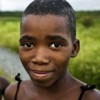
RIGHTS: Swazi Law And Custom Under Pressure
When the women's movement in the southern African kingdom of Swaziland took to the streets in August to challenge what they called extravagance by the royal family, Swazi traditionalists were livid.
RIGHTS-SOMALIA: Building Women’s Leadership
The moderator raps her pen on the table to hush the boisterous assembly of Somali women gathered in Bagamoyo, on the Indian Ocean coast of Tanzania. Their voices drop for a moment before the sound level rises again to a heated crescendo.DEVELOPMENT-AFRICA: Why The Richest Continent Is Also The Poorest
The ecological impact of natural resource exploitation on the lives of the poor in Africa and other regions is not being addressed sufficiently in aid effectiveness and development discussions, aid experts say.
Q&A: 'Our Voices Have Been Heard'
As the Third High Level Forum on Aid Effectiveness draws to a close in the Ghanaian capital, gender activists are reflecting on the way ahead.DEVELOPMENT: Donors And The Poor Agree Aid Agenda
Delegates from both developing and developed countries have adopted the Accra Agenda For Action (AAA) as a guide to improve the way aid is given and spent.SOUTH AFRICA-VENEZUELA: Forging a ‘Strategic Alliance’
Venezuelan President Hugo Chávez and his South African counterpart Thabo Mbeki announced that their countries have a "strategic" relationship, before signing a framework cooperation agreement in Pretoria, which paves the way for future arrangements on technology transfer and concrete deals involving oil and food.ENVIRONMENT: EU Takes a Weak Step Against Logging
The European Union has reached a new agreement aimed at preventing import of illegal timber from Africa, but environmental campaigners believe bolder action is needed to curb deforestation across the globe.
DEVELOPMENT-CAMEROON: Microfinance Succeeding Despite Obstacles
Mrs Adjoumi Hamidou is the President. One of three surviving widows of Ali Hamidou, she heads Akoldiningnal, a collective that runs a multi-cereal mill at Gashiga village, 15 kilometres from the capital of Cameroon's North Province, Garoua.
POLITICS-ANGOLA: Economy Weighing On Voters’ Minds
Angola's economy may be booming on the back of high oil prices and strong diamond exports, but six years after a peace deal ended the 27-year civil war, unemployment stands at around 65 percent.POLITICS-SOMALIA: U.S. Policy Likely to Bring Blowback
U.S. counter-terrorism policies and support for the Ethiopian-backed Transitional Federal Government (TFG) in Somalia have helped create an increasingly desperate humanitarian and security situation in the East African nation, whose population has become increasingly radicalised and anti-U.S., according to a new report by a major U.S. human rights group.DEVELOPMENT: Nice, Fuzzy, Positive Language on Aid
Ministers and senior government officials from around the world have reportedly agreed an action plan to make the system of aid more effective after days of hard negotiations that pitted some of the world’s poorest nations against donor giants.DEVELOPMENT-SWAZILAND: Don't Blame Donor Dependency
What happens to a nation whose people depend on the largesse of international donor agencies for their existence, once support is withdrawn?
DEVELOPMENT: Coming Together To Aid the Poor
In what is turning out to be hard-fought negotiations between rich and poor nations, more than 1,000 government and civil society delegates are gathered in the Ghanaian capital to agree the best ways to deliver and administer aid.
SIERRA LEONE: Building Peace
Sierra Leone has been a major recipient of foreign aid since the end of a devastating 11-year civil war in 2002. But government, donors and citizens are all questioning how effectively this aid is being used.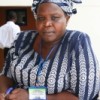
DEVELOPMENT: Accra Agenda for Action – A Step Backwards?
Ahead of the Third High Level Forum on Aid Effectiveness (HLF3), opening in Accra on September 2nd, representatives of civil society at a parallel forum have raised concerns that the HLF could represent a step backwards in efforts to improve aid effectiveness.RIGHTS-GUINEA: “We Can Forgive, But We Have To Know The Truth”
Kadiatou Diallo Sylla shares a shack with her family in Bambeto, a Conakry suburb. She is haunted by memories of her 14-year-old son, an only child: he was killed by the military during anti-government demonstrations in January 2007.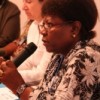
WORLD-DEVELOPMENT: ‘‘It’s the Same Talking and Talking’’
About a 1,000 delegates are expected to take up their seats tomorrow at a high level forum on the effectiveness of aid that opens in Ghana’s capital, Accra. But their arrival has been met with mixed reactions.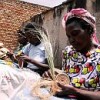
DEVELOPMENT: Peace Baskets Bring Hope to Rwandan Women
In the courtyard of a red brick home in the district of Gitarama outside Kigali, three women sit together on a bench, laughing and gossiping as they wrap lengths of crimson twine around a curl of bunched straw. While it may seem like little more then Rwandan tradition, these weavers represent an economic success the tiny landlocked country has earned by the hands of its women.ECONOMY-NAMIBIA: Plans Afoot as Diamonds Dwindle after 100 years
Namibia’s once rich diamond deposits are dwindling after a century of exploitation, forcing miners to look for the hard stones offshore while the country’s fledgling cutting and polishing sector could shrink as fewer and smaller stones are found.TRADE-AFRICA: The Struggle Continues Over EPAs
The economic partnership agreements (EPAs) are being given a bad name for nothing, according to Ghanaian parliamentarian JB Danquah.« Previous Page — Next Page » *#*

The Week with IPS

NEXT STOP - SDGs
Tracking global progress towards a sustainable world
