Languages
Tuesday, September 8, 2026



News and Views from the Global South
Africa

Senegal: Democracy in the Balance?
Civic space is deteriorating in Senegal ahead of next February’s presidential election. Recent protests have been met with lethal violence and internet and social media restrictions. Senegal’s democracy will soon face a key test, and whether it passes will depend largely on whether civic space is respected.
Fragility & Poverty in Sub-Saharan Africa: Two Sides of the Same Coin
In 1990, about half of the population in Sub-Saharan Africa and South Asia and two-thirds in East Asia and the Pacific were living in extreme poverty (defined as living on less than what today amounts to around $2.15 per person per day).
Pre-Colonial Delicacy Could Help Food Security and Climate Change
Kenya’s fight for food security may have just gone ‘Old School’ as Egerton University dons win a grant to help bring back a pre-colonial delicacy that was gradually sliding its way off consumers’ plates. Their project, dubbed ‘Exploring Potential of Togotia (Erucastrum arabicum), a forgotten African leafy vegetable for nutritional security and climate adaptation in Kenya,’ won the grant in October last year in a bid to help farmers and consumers realise the importance of the crop that many, today, term as a weed.
Kenya: Cost of Living Protests Met with Police Repression
Protests against the high cost of living in Kenya have been met with police violence. Talks are currently underway between government and opposition – but whatever results will fall short unless it brings accountability for the catalogue of human rights violations committed in response to protests.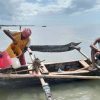
A Common African Approach to Environmental Challenges, Now & for the Future
There has never been a time in human history when collaboration between nations was more sorely needed than now, and there is no place that would benefit more from it than in Africa.
Political Will and Investment Will Score the Goal for Zero Hunger
A world free from hunger is possible, but it demands political will, investment, and effective policies to transform agriculture and rural development, says Alvaro Lario, President of the International Fund for Agricultural Development (IFAD).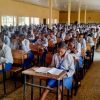
Nigeria to Expand Education Access Through a Student Loan Scheme
Wisdom Ajah, an 18-year-old senior secondary school graduate living in Karshi, a satellite town in Nigeria’s Federal Capital Territory, dreams of a university education that will secure him a good job after graduation and help support his family. But it is a distant dream considering how many obstacles he has faced trying to acquire a secondary school certificate.
Disappearing Fish Spell Hard Times for Women in Zimbabwe
Zimbabwe's ballooning informal sector has, in recent years, spawned the over-exploitation of the country's natural resources, with the fisheries taking some of the most felt battering.
Taking Stock of Two Decades of Trailblazing Protocol on Women’s Rights in Africa
It promised to be the most defining, groundbreaking, and transformative protocol on African women’s rights. Specific in its approach, broad in its reach, and unique in its all-encompassing nature, covering issues such as HIV/Aids, widow inheritance and property disinheritance in a most unprecedented manner.
Mining Revenues Undermined
The primary commodity price boom early this century has often been attributed to a commodity ‘super-cycle’, i.e., a price upsurge greater than what might be expected in ‘normal’ booms. This was largely due to some minerals as most agricultural commodity price increases were more modest.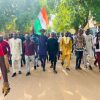
France, Russia, ECOWAS in Battle for Soul of West Africa
On July 26 2023 a man named Colonel-Major Amadou Abdramane, flanked by soldiers with military fatigues, appeared on Niger's national television to announce the execution of a coup. It was the country’s fourth coup since it gained independence from France in 1960.
Zimbabwean Farmers Turn to Agroecology to Feed Their Families
When Nelson Mudzingwa arrived in the Shashe farming area in Mashava in Masvingo, about 294 kilometres from the capital Harare, in the early 2000s, the land was barren, with no hope that the soils could be suitable for farming.
How Nigeria’s Legal System is Failing to Safeguard Widows’ Rights
In February this year, Chichi Okonkwo not only lost her husband but was stripped of everything they owned together. Her husband was severely injured in a car accident about a month earlier. Despite being rushed to a hospital in Enugu, where they resided, he succumbed to his injuries weeks later. To compound her grief, Okonkwo’s late husband's male siblings forcibly entered her home in the city a few hours after his passing, confiscating her husband’s land documents, car, money, clothes, and marriage certificate.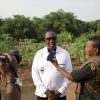
Clock Is Ticking For Food Security In Africa, Says New IITA Head
“My key message is really simple,” says Dr Simeon Ehui, the newly-appointed Director General of the International Institute of Tropical Agriculture (IITA), which works with partners across sub-Saharan Africa to tackle hunger, poverty and natural resource degradation.
Women Shatter Gender Barriers in Uganda’s Fish Farming Industry
In a groundbreaking turn of events, women in Bugiri District, Eastern Uganda, have defied societal norms and broken into the traditionally male-dominated fish farming industry.
Scramble For Africa: It’s Not 1884 All Over Again, Is It?
Not all wars are fought on the battleground. The Cold War has taught us that certain wars could go on for decades, without overt violence. Perhaps, we are in the middle of another one with China as the new rival to the United States of America. This time, the ‘battlefield’ is Africa.
Afghan Girls, Women Deprived of Education, Find Hope in Africa
When providing education to her small group of Afghan girls, who had been studying at a boarding school back home, became tenuous, Shabana Basij-Rasikh, relocated them to Rwanda.
Humanitarian Aid Efforts Continue in Niger Despite Military Coup
Nicole Kouassi, the UNDP resident representative in Niger, is constantly faced with the challenge of coordinating aid delivery to 4.3 million people in need. On Wednesday, Kouassi woke up and learned this must happen in a country where the president had just been overthrown. She said she did not see warning signs of a coup.
It’s Time to Invoke “Responsibility to Protect” in Sudan
When war broke out in Khartoum, the capital of Sudan, in April 2023, those of us who know the region well feared what would happen to the west, in Darfur. In 2003, former Sudanese President Omar al-Bashir called on the Janjaweed Arab militia to quell an uprising in Darfur.
Celebrating Deaf Pride: Embracing Our Survival in a Mute System
Every July, the disability community honors its history, accomplishments, and experiences during Disability Pride Month. One such group is the deaf community in Uganda, which makes up 3.4% of the population.
TB Preventive Treatment: the Need for Choice
Before COVID-19 came along, the two most lethal infectious diseases were HIV and tuberculosis (TB). Even though HIV still lingers, with 1.5 million people contracting the infection every year, epidemiologists point to the availability of many HIV prevention options as a primary reason for the decreasing caseload.« Previous Page — Next Page » *#*

The Week with IPS

NEXT STOP - SDGs
Tracking global progress towards a sustainable world
Tracking global progress towards a sustainable world
