Languages
Wednesday, November 18, 2026



News and Views from the Global South
Europe
EUROPE: The Appetite Is for Money
Faced with the prospect that a number of banks could collapse, European Union governments have this week approved a rescue plan worth more than 1,800 billion euros (2,460 billion dollars). Faced with a food crisis which has seen a major leap in the numbers of people suffering from hunger, the EU's policy makers are mulling over a proposal to give 1 billion euros to farmers in poor countries.DEVELOPMENT: Poverty – Time to Act
"Our voices must reach the ears of the leaders who govern us," says Marina Ponti, describing this year’s campaign by the Global Call to Action Against Poverty (GCAP).DEVELOPMENT: Standing Up for Rights
Millions are being called to quite literally stand up for their rights in a global day of action against poverty Friday this week. The organisers are hoping that this simultaneous protest will be a step to collective power.GEORGIA-RUSSIA: Talks Off to Uneasy Start
Talks to put an end to the conflict in Georgia came up against foreseeable difficulties due to the obstinacy of both sides, although at least the process has gotten off the ground, said a European diplomat who closely followed the opening of negotiations Wednesday.CLIMATE CHANGE: EU Members Changing Their Mind
Plans by the European Union to slash its greenhouse gas emissions by one-fifth encountered serious difficulties this week as some of the bloc's governments deemed the measures too costly.FRANCE: No Angolans at “Angolagate” Trial
After a decade's delay, the defendants on trial for arms trafficking to Angola include figures of the French élite and an Israeli billionaire, but not a single leader from the vast African country has been summonsed by the Paris court judge.ENVIRONMENT: Going Beyond Climate Change
While the financial mayhem continues to draw the headlines, the cost of persistent biodiversity loss has yet to be established. But it is believed to be bigger than that of the meltdown, and in many cases also irreparable.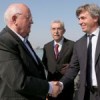
MEDIA: Time for a Global Glasnost, Says Gorbachev
Former Soviet president Mikhail Gorbachev has warned against the danger of letting the global financial crisis and other emergencies overshadow media attention on climate change.TRADE-AFRICA: Red Faces Over EPAs Red Herring
Senior European Union officials have admitted being embarrassed at how the bloc’s own procedures are delaying them from signing economic partnership agreements (EPAs) with Africa.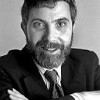
ECONOMY: Nobel Honours Man Who Told Bush to "Please Go Away"
Paul Krugman, a professor at Princeton University who is best known for his New York Times columns - frequently involving scathing assaults on the policies of the George W. Bush administration - was awarded the 2008 Nobel Memorial Prize in Economic Sciences for his research on international trade and economic geography.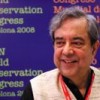
Q&A: 'Engagement, Not Collaboration With Business'
The IUCN has elected Ashok Khosla its new president. Widely recognised as a bridge between conservation and development, theory and practice, the traditional and the new, and between the North and the South, Khosla chairs the India-based Development Alternatives Group, a non-profit organisation established in 1983 "for creating large-scale sustainable livelihoods." He is also president of the Club of Rome, a global think-tank and centre of innovation and initiative.EU: Defiant Guyana to be Punished
The European Union is preparing to impose swingeing taxes on goods imported from Guyana as punishment for the Caribbean island's refusal to accept a free trade accord.ENVIRONMENT: Because Oil Is Not Green
Several environmental organisations have asked the International Union for Conservation of Nature (IUCN) to stop accepting funding from Shell, the giant international oil company.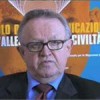
DEVELOPMENT: Overdue Award Goes to the Right Man
The Finns had almost waited for the Nobel Peace Prize for Martti Ahtisaari too long. It finally came as a happy surprise, amidst speculation it would go this year to Asia.RIGHTS-SPAIN: Digging Up Past Atrocities
When it seemed that the atrocities committed during the 1936-1939 Spanish civil war and the 1939-1975 dictatorship of General Francisco Franco were buried once and for all, the debate has been reopened.RIGHTS: EU Parliament Acts Against Child Trafficking
The European Union needs to develop a programme against child trafficking, the bloc's only directly elected institution has declared.ENVIRONMENT: ‘Fertilising’ the Ocean Could be a Cure That Kills
Environmentalists are challenging dubious new proposals to reduce the concentration of carbon dioxide in the atmosphere.
ENVIRONMENT: Iceland Finds New Ways to Trap Carbon
At the Hellisheidi geothermal power station, located about 30 km east of Reykjavik, Icelanders are developing novel ways of capturing carbon dioxide (CO2) and hydrogen sulphide (H2S) that are emitted from the plant.Q&A: 'State Secrecy Over Death Penalty Must End'
The call for a universal moratorium on executions made by the U.N. General Assembly last year is a landmark. But the ultimate goal of worldwide death penalty abolition could be delayed unless the new General Assembly goes further.ENVIRONMENT: Stepping Beyond Carbon Footprints
Do those 8,000 tonnes of carbon footprints arising from participation in the World Conservation Congress in Barcelona show the way beyond Kyoto? Will the marathon congregation significantly reduce biodiversity loss and halt creeping desertification?CLIMATE CHANGE: EU Could be Greener
The outcome of a crucial European Parliament vote on tackling climate change this week was not as negative as many green activists had feared. Yet it also suggested that the rhetoric of European politicians on how they must exercise leadership to ward off the threat posed by rising temperatures is not being matched with decisive action.« Previous Page — Next Page »


The Week with IPS

NEXT STOP - SDGs
Tracking global progress towards a sustainable world
Tracking global progress towards a sustainable world
