Languages
Wednesday, November 18, 2026



News and Views from the Global South
Europe
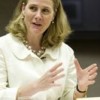
Q&A: Money Crisis May Hit Development Assistance
The global financial crisis and rising food prices are certain to impact Latin America despite the growth in recent years, says Pamela Cox, the World Bank's vice-president for Latin America and the Caribbean.ENERGY: Governments Must Lead on Renewables, says Shell CEO
Royal Dutch Shell, with an annual turnover of more than 350 billion dollars from extracting oil and gas, mainly in third world countries, says it is up to governments rather than companies like Shell to take the lead in finding solutions for a sustainable energy future.SERBIA: Women Farmers Doubly Disadvantaged
Among disadvantaged women in Serbia, none seem worse off than farmers, a new study shows.ENVIRONMENT: To Build a School, Save the Hippo
As the Wechiau community living along the banks of the Black Volta river in Ghana discovered, looking after the hippopotamus can build schools and bring electricity.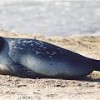
BIODIVERSITY: Mammals Face Extinction Crisis
One in four mammals on Earth is at risk of disappearing forever, according to the new "Red List of Threatened Species" released by the Geneva-based International Union for Conservation of Nature (IUCN) on Monday.ENVIRONMENT: Climate Action Could Escape Financial Crisis
Enter the global financial crisis - exit action on climate change? That lingering apprehension is not shared by Pamela Cox, the World Bank's vice-president for Latin America and the Caribbean.MEDIA-TURKEY: Messenger Comes Under Attack
Many sections of Turkish media critical of the government say Prime Minister Recep Tayyip Erdogan is bent on silencing them through intimidation - or controlling them through purchase.BELARUS: Still Out in the Cold
Belarusian President Alexander Lukashenko has failed to win the support of European Union (EU) member states and the United States following elections last month, that international observers found largely incompatible with democratic standards.TRADE: Little Scope For Europe-Asia FTAs
Plans to conclude free trade agreements (FTAs) between the European Union and several Asian economies are unlikely to be realised in the near future, a senior Brussels official has conceded.ENVIRONMENT: Twisted As Unnaturally as the Banks
The financial meltdown in most of the industrialised world presents an opportunity for a new economic model that would end short-sighted search for high returns, according to leading economists attending the IUCN World Conservation Congress here.MIDEAST: Where Water Leaves a Bitter Taste
Palestinian villagers drink unsafe agricultural water rather than trusting water provided by an Israeli company, says Buthaina Mizyed, who has worked in Arraneh village near the conflict-laden West Bank city of Jenin.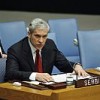
POLITICS: Kosovo’s Independence Bid Could End Up in Court
The rift between Serbia and the breakaway province of Kosovo is deepening ahead of a U.N. General Assembly session on Wednesday, when member states will decide whether to accede to Serbia's request for a ruling by the International Court of Justice (ICJ).ENVIRONMENT: EU Stepping Back from Cleaning Up
Most of the European Union's promised cuts in greenhouse emissions could be undertaken outside the bloc under a proposal to be considered by law-makers this week.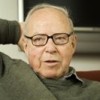
Q&A: When Intelligence Is Used Unintelligently
All eyes were on Hans Blix, the seemingly unflappable Swede, on TV screens around the world before the U.S.-led invasion of Iraq in 2003.CZECH REPUBLIC: Communism Alive, Despite Isolation
The government's frequent use of the 'communist card' against opponents is casting a shadow on its lustration attempts in a country where an isolated but strong communist party persists.SPAIN: Elderly Rights on Track, But Still Long Way to Go
On the International Day of Older Persons, celebrated Wednesday, elderly people in Spain can look back and say that their situation has improved significantly over the last few years, but that measures still need to be taken to attain full respect for their rights.EUROPE: Preparing to Get at Resources of the Poor
European Union officials are drawing up a new strategy for giving multinational companies greater access to minerals and wood located in poor countries.
SPAIN: Some Retailers Have Still Not Caught Up With Fair Trade Boom
Fair trade has grown in leaps and bounds since the mid-1990s but retailers such as El Corte Ingles, the department store chain with the most sales in Europe, are still not giving consumers the choice to buy these products.RIGHTS-CZECH REPUBLIC: Life on Perpetual Hold for ‘Lifers’
Eighteen years after the death penalty was abolished in the Czech lands, little has been done to prepare anyone convicted of the gravest crimes for their eventual return to society.GREECE: Refugees Kept At Sea
When the people of Patmos blocked a group of refugees landing on their island last Sunday, they raised questions about both refugees and about Greece that have not gone away.
Q&A: 'Little Hope of Fair Election'
Opposition leader Alexander Milinkevich fears signs that the elections due in Belarus this Sunday will not be free and fair. President Alexander Lukashenko's government continues to stifle the media, he says.« Previous Page — Next Page »


The Week with IPS

NEXT STOP - SDGs
Tracking global progress towards a sustainable world
Tracking global progress towards a sustainable world
