Languages
Thursday, November 19, 2026



News and Views from the Global South
Europe
GERMANY: A 1968 Legacy Lives On
Forty years ago, student activists set out to change German society. Driven by their charismatic leader Rudi Dutschke, left-wing students in Berlin set up the Extraparliamentary Opposition (APO) to fight for a different society, a different political system and a different way of dealing with the nation's Nazi past.BRAZIL-SPAIN: This Country Reserves the Right of Admission
Increasing numbers of Brazilians are being refused entry at Spanish airports, sometimes in humiliating fashion, as the influx of Brazilian immigrants to Europe grows, and the deportations are causing diplomatic friction between the two countries.RUSSIA: Price Fuels Gas War
A renewed Russian-Ukrainian gas conflict has been provisionally averted, but as Ukrainian politicians struggle for control of the gas sector, the next months are likely to bring more price wars.TRADE-AFRICA: France to Push For Extension of EU Farm Subsidies
France is expected to push for the further entrenchment of trade-distorting agricultural subsidies when it ascends to the presidency of the European Union (EU) on July 1 this year.SERBIA: Russians Rediscovered as Old Friends
In the world of politics there is much talk now of the "traditional friendship between Russia and Serbia", meaning Russia's support to Serbia over the Kosovo crisis. But close ties go back much further - Serbia became home to thousands of Russians who fled communism 90 years ago.DEVELOPMENT: NGOs Confront EU Over Regional Deals
On his arrival at a Joint Parliamentary Assembly of EU and ACP countries in Slovenian capital Ljubljana this week, EU Development Commissioner Louis Michel was confronted with an array of parliamentarians and civil society activists carrying the message, 'Brussels-made EPAs will not fit ACPs'.MIDEAST: Germany Backs Israel All The Way
It was a show of unbridled support that Israelis, used to being criticised for their treatment of the Palestinians, especially by European leaders, are not accustomed to.GREECE: Social Security Reforms Spark Unrest
Millions of workers participated in a general strike Wednesday on the eve of a parliament vote on pension and social security reforms. Despite vehement opposition, the government voted the reform through with 151 votes, the absolute minimum required for passing the legislation.KOSOVO: Irredentist Ripples Spread Out
While the world wonders whether Kosovo's proclaimed independence will indeed constitute a precedent, its initial effects on other frozen conflicts in Europe are beginning to be felt.KYRGYZSTAN: Opposition Runs Separate Parliament
A nation of five million, Kyrgyzstan has ended up with two parliaments: the official one, and the second that many consider the more legitimate one.RIGHTS: Europe ‘Looking the Other Way’
Formal discussions on human rights between the European Union and several governments are at risk of turning into a "meaningless ritual", an internal EU paper has admitted.TURKEY: Ruling Party Risks 'Closure'
After four military interventions since 1960, another elected Turkish government risks being overthrown - this time by the judiciary.GLOBALISATION: So, Back to Regulation, Then
The financial crisis around the world marks the end of neo-liberal globalisation and the beginning of a new era of regulation of the global economy, political leaders and economists say.ENVIRONMENT-PORTUGAL: Enjoying the Outdoors in a Greener Lisbon
Steered by a city government that proudly proclaims its environmental credentials, the Portuguese capital is planning to develop wind energy, restore and connect its green areas, and promote clean transport and the outdoor life.SPAIN: Heading the List of Remittance Senders
Migrants living in Spain sent nearly 13 billion dollars in remittances back to their home countries in 2007, 19.5 percent more than in 2006, says a new report by the Banco de España, Spain’s Central Bank. That makes this country the third largest remittance sender in the world in absolute terms, after the United States and Saudi Arabia, and the top sender in relative terms.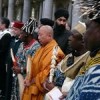
RELIGION: Beyond Tolerance, Togetherness
She was the white Christian woman who rose to preach in a mosque - the Malcolm Shabazz mosque in Harlem, New York – addressing close to 3,000 mostly Afro-American Muslims. Ten years later, about 40,000 people of all faiths, and many religious leaders from around the world, gathered in Rome to say 'thanks' to Chiara Lubich, who dedicated her life to the ideal of unity between nations, religions and races.HEALTH: EU Complains Again About Affordable Medicine
The European Union has made a fresh complaint to Thailand over policies aimed at guaranteeing that the poor are not deprived of vital medicines.RUSSIA: Black Sea Fleet Sailing Into Uncertain Waters
The long-term presence of the Russian Black Sea Fleet in Ukrainian territory touches a sensitive nerve in a country that is asserting its independence from Russia by seeking NATO membership.KOSOVO: Violence Sparks Collision Course
Increased unrest following the unilateral declaration of independence by Kosovo is leading to fears of further violence in the Balkans.
Q&A: Europe Could Be Missing the Green Signal
Tackling climate change was presented as the most pressing task facing European Union governments during 2007. German Chancellor Angela Merkel, who held the EU's rotating presidency for part of the year, underscored how alarming the problems associated with melting glaciers and rising sea levels are when she declared: "It's not five minutes to midnight. It's five minutes after midnight".RUSSIA: Not Seeing Eye-to-Eye with US on Missiles
U.S. Secretary of State Condoleezza Rice and Secretary of Defence Robert Gates have held meetings in Moscow that some foreign policy and military experts say are unlikely to produce significant results.« Previous Page — Next Page »


The Week with IPS

NEXT STOP - SDGs
Tracking global progress towards a sustainable world
Tracking global progress towards a sustainable world
