Languages
Friday, November 20, 2026



News and Views from the Global South
Europe
G8: Facing Summit Failure, Germany Braces Itself
Facing the probability that this year's G8 summit will be a failure - mainly due to U.S. opposition to an international consensus on environmental, financial, and African cooperation issues - the German government, host of the event, is scaling down the expectations that it helped to stir in the first place.CENTRAL AFRICA: Not Ready to Negotiate Trade with Europe
Central Africa seems an unlikely candidate for a free trade deal with the European Union.POLITICS: U.S. Base Splits Europe Again
U.S. President George W. Bush is visiting the Czech Republic and Poland this week as part of Washington's ongoing diplomatic effort to convince the region's leaders of the need for a missile defence system in Eastern Europe - revealing a potential new division amongst European countries.HEALTH-RUSSIA: More Funding, But HIV/AIDS on the Rise
Russia's HIV infection rate continues to rise - most notably in the heterosexual and non-drug-using populations - despite steady increases in funds to fight the disease. Experts and medical researchers say dramatic changes in sexual attitudes and behaviour are essential if the trend is to be reversed.G8: Despite Germany’s Tight Controls, Violence
Over the last several weeks the German government tightened controls on civil society groups and leftist anti-globalisation activists in order to prevent, as the official lines goes, "violent disruptions" of the G8 summit of industrialised countries that Germany is hosting this week.POLITICS: Blair Bids Farewell to Africa
Opinions appear divided about outgoing British Prime Minister Tony Blair's legacy concerning Africa - this as the leader ended his last official visit to the continent Friday. The five-day trip took him to Libya, Sierra Leone and South Africa.BULGARIA: Eye on Justice as New Political Star Emerges
Justice Minister Georgi Petkanov announced he will resign after the weekend because of health reasons, saying "work at the ministry is extremely hard." Meanwhile, a rising politician who has staked a claim as an anti-crime crusader is making his way towards the prime minister's chair.DEVELOPMENT: G8 Makes Room at Table for Emerging Five
The five strongest developing countries - Brazil, China, India, Mexico, and South Africa - will have a place at the Group of Eight summit of the richest countries Jun. 6-8 in Heiligendamm, Germany, both as partners and as competitors of the industrialised world.Q&A: Russia’s Children Remain “Highly Vulnerable”
"While UNICEF is happy that children's rights are commemorated on Jun. 1, we would like to see every day of the year be 'International Children's Day', particularly in Russia, where children remain highly vulnerable," says Carel de Rooy, the United Nations agency's representative in Russia and Belarus.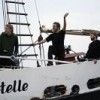
G8: Sailing Against Ecological Debt
As leaders of the world's eight richest countries prepare to meet in Germany's Baltic resort of Heiligendamm next week, a Fair Trade ship has left the shores of Finland and is on the high seas heading towards the summit venue.TRADE-AFRICA: Europe Looks to Encourage Diaspora Investment
Africa's robust diaspora in Europe will soon have an investment facility to help people make direct investments to better develop their home countries thanks to a new study by the Brussels-based Africa Caribbean Pacific (ACP) Business Climate (BizClim) facility.DEATH PENALTY: A Life Defending Lives
In 2000, when French journalist and publisher Michel Taube founded 'Ensemble contre la peine de mort' (Together against the death penalty), his vision was that the group would become a world voice in the fight for the universal abolition of capital punishment.SERBIA: Quiet Welcome of Foreigners Belies Insular Image
Serbia may be viewed by some as intolerant and somewhat nationalistic due to its role in the wars of disintegration of former Yugoslavia, but many of the people arriving from distant foreign lands are finding a hospitable home here.PORTUGAL: Strike Takes Aim at Socialist Government’s “Neoliberal” Policies
The economic decline of Portugal's middle class, the growing marginalisation of the poorest of the poor, the uncertainty facing young people and drastic measures - described by critics as "neoliberal" - adopted by the socialist government form the backdrop to Wednesday's general strike in this southern European country.G8-AFRICA: Farm Subsidies a Taboo Subject?
In the preparations for this year's summit of the Group of Eight most industrialised countries, to take place Jun. 6-8 in the Baltic seaside resort of Heiligendamm, Germany, aid for Africa has topped the agenda. But the farm subsidy factor is likely to be avoided in the debate.WEST AFRICA: Currency Integration Still A Few Years Off
Gone are the days when the scowling face of dictator Mobutu Sese Seko gazed out from the face of Zaire's paper currency, a denomination that inflation and corruption eventually made so worthless it was issued in notes of 5 million.CLIMATE CHANGE: Europe and Asia Seek Differentiated Goals
Developing countries led by China and India insist on "differentiated" commitments in any future arrangements to address climate change, arguing that the rich countries bear a "bigger responsibility" to make deeper cuts in greenhouse gas emissions.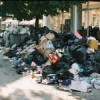
BULGARIA: A Capital That Can’t Handle Its Mess
On several occasions over the past two years, the streets of the Bulgarian capital Sofia have been literally covered with trash. The city of one million is one of the few European capitals without a waste processing system.TRADE-AFRICA: Electricity Producers Get Ready to Power Up
European investment in Africa's electricity markets may soon get the boost it needs, from infrastructure to integration.CIVIL SOCIETY: The Geopolitics of Post-Soviet Activism
Representatives of civic groups from the post-Soviet region admit that their organisations are sometimes more closely following the democratisation line set by donors than the aspirations of their societies.CIVIL SOCIETY: It’s Better to Act, But Good to Talk
On the face of it, nothing really 'happened' at the Civicus world assembly, other than the announcement that secretary-general Kumi Naidoo would quit. But that announcement did not need a world assembly. Perhaps the symbolic locking up in a cage to draw attention to civil society activists was something supplied by way of a 'happening'. The rest was, and was expected to be, no more than talk.« Previous Page — Next Page »


The Week with IPS

NEXT STOP - SDGs
Tracking global progress towards a sustainable world
Tracking global progress towards a sustainable world
