Languages
Friday, November 20, 2026



News and Views from the Global South
Europe
DEVELOPMENT: EU Looks Away from Pakistan
Pakistan is the world's seventh largest country but it does not receive a proportionate level of attention from European Union officials dealing with foreign relations.SLOVAKIA: Right-Wing Extremists Gain Ground
Right-wing extremism is on the rise in Slovakia. Activists complain not enough is being done, while from Europe fingers are pointed at the left-wing government's controversial alliance with extreme-right nationalists.MIDEAST: ‘EU Placing Palestinians in Debt’
The European Union's freeze on direct aid to the Palestinian Authority has led to sharp increases in debts owed by families in the West Bank and Gaza, the relief agency Oxfam has alleged.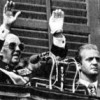
SPAIN: First Free Elections Still an Example, 30 Years On
On the eve of the 30th anniversary of Spain's first free elections after the end of the dictatorship of Francisco Franco (1939-1975), they remain an outstanding example that transitions from de facto regimes to democracy can be peaceful and orderly.RUSSIA: Talking Its Own Language
Russia is looking to promote its language and culture as a way to improve its image abroad.BALKANS: Linking Arms With Iraq
Weapons from the Balkans wars of the 1990s are beginning to arm conflict in Iraq and Afghanistan, well-placed officials have revealed.POLITICS: For U.S. Base, Bush Finds Czech Enthusiasm, Polish Reserve
U.S. President George W. Bush this week discussed a U.S. missile base in Eastern Europe with Polish and Czech officials, but the results were merely words, and the two European countries showed some naivety as international players.CULTURE-FINLAND: ‘Living Books’ Help Fight Prejudice
Books cannot talk back to a reader and answer all of their questions. So if one is seeking concrete information on, say, a gay person, the library is perhaps the wrong place to visit.TRADE-EU: Africans Speak Out Against EPAs as Unwelcome
When European campaigners suggest that a free trade deal could harm the poor, they typically encounter a frosty reaction from civil servants in Brussels. Still, no one tries to muzzle them.RUSSIA: Putin to Stand Firm at G8 Summit
Russian President Vladimir Putin is prepared to reaffirm his disagreement with Washington's view of Russian democracy, reiterate objections to the proposed U.S. missile shield in Eastern Europe and give more meaningful explanations on the rules of the international community at the Group of Eight (G8) summit under way in Germany this week, analysts say.DEVELOPMENT: The ‘Good Guys’ Chastise the G8 ‘Villains’
"You shouldn't have any doubts, the good guys are us," says Patrick, 20, dressed in jeans, t-shirt, and a sport jacket, with a flamboyant pink Mohawk haircut, as he reads a pamphlet on development aid for Africa.
MEDIA: Young Journalists Explore What It Means to Be Muslim in Italy
With the help of a new monthly magazine, 'Yalla Italia' (Come On, Italy), some young second-generation Egyptian, Moroccan and Tunisian immigrants are attempting to explore and address the stereotypes considered an obstacle to their full integration in this predominantly Catholic European country.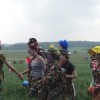
G8: Cacophony on Global Warming
The summit of the heads of government of the eight most industrialised countries opened Wednesday in this Baltic seaside resort, surrounded by impressive security measures, and dominated by a total cacophony on the group's efforts to curb climate change.G8: Despite Differences, Mexico Comfortable as G5 Emerging Power
The Mexican government says it feels comfortable forming part of the five countries identified by the world's richest nations as the "emerging powers." However, it has marked differences and even conflicts with China and Brazil, two other members of the so-called Group of Five (G5)G8: Poverty Reduction and Climate Change Inextricably Linked, Say Activists
In the final hours before this week's Group of Eight (G8) summit gets underway in Germany, activists have underscored the need for progress with both climate change and poverty alleviation - key items on the meeting's agenda - for there to be real improvement in Africa's living conditions.G8-BRAZIL: Guest Brings Biofuel Arguments to Summit
As a guest at the G8 summit this week in Germany, Brazilian President Luiz Inácio Lula da Silva will present arguments to convince the leaders of the world's eight richest countries of the importance of biofuels in the fight against global warming.G8: U.S. Again the Odd Man Out on Climate
When leaders of the world's most advanced economies - also known as the Group of Eight (G8) - tried to set new targets to fight climate change at their summit in Britain in 2005, the United States balked.G8-RUSSIA: Dissent Within, Confrontation Without
As if the summit of the eight most industrialised countries did not have enough problems in fulfilling its own agenda this week, the group's members are also aligning in a confrontation along international borders and actions that recall those of the Cold War.RUSSIA-AFRICA: Debt Write-Off Boosts Closer Trade Ties
Long seen as funding the continent's wars and doing little other than seeking out petroleum and mineral resources, Russia is now looking to kick-start better trade relations with Africa, and has made its first move by writing off the majority of the continent's debt.G8: Legislators Detail Their Hopes for a Climate Accord
Legislators from the G8 countries - Britain, France, Germany, Italy, Japan, Canada, United States and Russia - are hoping against hope that an historic breakthrough on climate change will be achieved at the Heiligendamm summit this week.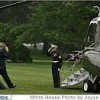
G8: Bush Struggles to Regain Leadership at Summit
An ever-deteriorating situation in Iraq, a hostile Democratic Congress and a changing of the guard in some key allies may all combine to bring about a more cooperative, and perhaps more subdued, President George W. Bush at the summit of the Group of Eight most industrialised nations.« Previous Page — Next Page »


The Week with IPS

NEXT STOP - SDGs
Tracking global progress towards a sustainable world
Tracking global progress towards a sustainable world
