Languages
Sunday, October 4, 2026



News and Views from the Global South
Global

Why Does African Leadership Lack Coordination on Reparations?
Professor Jude Osakwe—a Nigerian scholar at the Namibian University of Science and Technology (NUST) and Continental Chairman of the Nigerians in Diaspora Organisation Africa (NIDOAF)—has reiterated the absolute truth over Reparations for Africa, noting that African governments have consistently expressed only 'emotional solidarity' over Reparations instead of tackling and addressing, with seriousness, this pertinent issue within the context of diplomacy.
Only 1 in 7 Countries is Led by a Woman– as Global Political Power Remains Dominated by Men
Across the world, women remain vastly under-represented in political leadership, with the most powerful decisions still overwhelmingly made by men. In 2026, only 28 countries are led by a woman Head of State or Government, while 101 countries have never had a woman leader, according to the latest data released by Inter-Parliamentary Union (IPU) and UN Women.
One in Four Migratory Species Under Threat, But Conservation Efforts Can Reap Rewards
Global wildlife is facing a deepening crisis as the latest United Nations assessment warns that nearly half of the world’s migratory species are in decline due to human activity, habitat destruction, and climate change.
The Implausible Regime Change in Iran and How the War Affects the World
The US/Israeli war on Iran might be like messing with a hornets’ nest, spreading fear and chaos all around. The Israeli government claimed that the war was a “preventive” measure to address an immediate threat of Iran constructing a nuclear bomb. However, this war has obviously been meticulously planned over a long period of time and it now seemed to be the right time to put this plan into action. The Iranian air defences had been weakened through earlier attacks, while recent Israeli strikes decapitated Hezbollah’s Lebanese leadership, Iran’s allies north of Israel. With Gaza destroyed and Syria’s unreliable Assad gone, Netanyahu had succeeded in securing his party’s coalition with the far-right and could continue to count upon the support of the Trump Administration, providing Israel with a free hand vis-à-vis the Palestinians and turning a blind eye to the massacre of civilians. The U.S. is continuously supporting Isreal with missile-defence systems, coordination, cooperation, and intelligence sharing.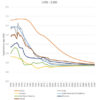
The Most Appropriate Response to Falling Birthrates? Embrace Them
As birthrates continue to decline in many industrialized countries, anxious governments are running out of schemes to keep women procreating.
The Cost of Being Seen: Exposure versus Exploitation
I have often been asked a simple but important question: How can we make it sustainable if we are not being compensated for it?
Rubio Seduces Europe with Imperial Nostalgia
US Secretary of State Marco Rubio’s Munich speech last month seemed to seduce the European elite behind President Trump, against the ‘Rest’, especially the resource-rich Global South.
Gender Discrimination: It’s Time to Flip the Narrative
We have heard it all: • When a woman raises her voice, she’s too emotional. • When she stands her ground, she’s too difficult. • When she leads, she’s too ambitious. • If she wears dark suits they whisper ‘why does she always look like a man’ • But oh my gosh! if she shows up in a colorful dresses and high heels….
Global Arms Flow Jump Nearly 10 per cent as European Demand Soars due to Transfers to Ukraine
The ongoing military conflict between Ukraine and Russia—which began February 2022, with no visible signs of ending—has triggered major arms transfers to Europe.
International Women’s Day 2026: Justice for Women and Girls Needs Action and Political Will
On International Women’s Day (March 8), global leaders and advocates gather around the rallying cry to strengthen justice systems for all women and girls in a time of increasing pushbacks on gender equality.
International Women’s Day 2026: A Resistance Stronger than the Backlash
Consider what International Women’s Day looked like a few years ago, and what it looks like now: the same date, the same global moment of reflection, but a vastly changed global landscape. Gender rights are facing the most coordinated and wide-ranging attack in decades. Anti-rights forces are dismantling protections secured after generations of struggle, destroying infrastructure built to address gender-based violence and realise reproductive rights and rewriting legal frameworks to roll back rights, with a specific focus on excluding transgender people. This is the result of a deliberate, carefully crafted, handsomely funded and globally coordinated strategy.
International Women’s Day 2026: This Year’s International Women’s Day Calls for Electing a Woman as the next Secretary-General
As we observe International Women’s Day (IWD) this year, the global community does so in a time of continuing turbulence, conflicts and uncertainty about the future of our planet.
International Women’s Day 2026 The Gender Architecture of Betrayal: Stop Elite Impunity
International Women’s Day 2026 (IWD 2026), which was commemorated March 8, under the theme, "Rights. Justice. Action. For ALL Women and Girls", calls for action to dismantle all barriers to equal justice: discriminatory laws, weak legal protections, and harmful practices and social norms that erode the rights of women and girls. It demands an end to systemic violence and misogyny, including calls for justice for Epstein survivors.
As La Niña Fades, WMO Experts Warn That El Niño Could Set New Global Heat Records
Earlier this week World Meteorological Organization (WMO) announced that the weakening conditions of La Niña conditions are beginning to fade, with climate conditions transitioning toward ENSO-neutral —a phase in which neither El Niño nor La Niña is present and oceanic and atmospheric conditions in the tropical Pacific remain near average. The agency noted that this shift could lead to the development of El Niño later in the year, a pattern typically associated with rising global temperatures and an increased risk of extreme weather events worldwide.
Heralding an Era of Religious Wars
In recent months, the language surrounding the escalating confrontation between the United States, Israel, and Iran has taken on a tone that should trouble anyone concerned with global peace.
The Impact of Artificial Intelligence in Nuclear Decision-Making
As artificial intelligence (AI) threatens to dominate every aspect of human lives —including political, economic, social and cultural --there is also the danger of the potential militarization of AI.
International Women’s Day 2026 No Country in the World has Reached Full Legal Equality for Women and Girls
On 8 March 2026, International Women’s Day, UN Women issues a global alert: justice systems meant to uphold rights and the rule of law are failing women and girls everywhere. Women globally hold just 64 per cent of the legal rights of men, exposing them to discrimination, violence, and exclusion at every stage of their lives.
The Architecture of Hope Under Siege: One Year of Global Aid Dismantling
A year has passed since a 90-day freeze on U.S. foreign assistance signaled the deepening of a structural dismantling of international solidarity. Today, the "existential threat" to the freedom of association I warned of in my report to last year's General Assembly (A/80/219) is no longer a warning; it is a lived reality.
How do we Navigate Asia-Pacific’s Climate-Cyber Polycrisis?
Communities globally are increasingly exposed to overlapping threats. Extreme weather, health emergencies and cyberattacks are occurring more frequently and simultaneously, often interacting in ways that amplify risks and strain response systems.
A New World Order Where Might is Right
As the build-up for a proposed “new world order” continues, a lingering question remains: will the country with the most powerful military reign supreme? The United Nations remains politically impotent. The UN charter is in tatters. The sovereignty of nation states and their territorial integrity have been reduced to political mockery. And the law of the jungle prevails—be it Palestine, Ukraine, Venezuela or Iran.
UN Leaders, Diplomats Warn of Middle East Instability Following Weekend Air-Strikes in Iran
The United States and Israel launched a joint military strike on Iran on February 28. Iran followed with military strikes on Israeli bases and on Arab Gulf states, including Bahrain, Oman, and the United Arab Emirates. The realized threat of a new war has caused alarm for the security situation in the Middle East and its impact on civilian populations.« Previous Page — Next Page »


The Week with IPS

NEXT STOP - SDGs
Tracking global progress towards a sustainable world
Tracking global progress towards a sustainable world
