Languages
Wednesday, October 14, 2026



News and Views from the Global South
Global

As Attacks on Women Defenders Intensify, so Must Our Support
A global crackdown on civic freedoms is intensifying – and women are on the frontlines of the attack. CIVICUS’s 2025 People Power Under Attack report analyses the extent to which freedoms of association, expression and peaceful assembly are being respected or violated. The report reveals that people in 83 countries now live in conditions where their freedoms are routinely denied, compared to 67 in 2020. In 2020, 13 per cent of the world’s population lived in countries where civic freedoms were broadly respected; now it’s more like 7 per cent. Among the most documented violations in 2025 were detention of human rights defenders, journalists and protesters, and women human rights defenders (WHRDs) were among the most affected.
UNDP’s Digital Rights Dashboard: A Conversation Starter on Human Rights in the Digital Age
Within a generation, digital systems have changed much of how we learn, work and participate in civic life, especially in more connected regions. This shift is unfolding at different speeds in developing countries, but the direction of travel is unmistakable.
CIVICUS 2025 Report Reveals Widespread Attacks on Civic Freedoms Worldwide
Over the course of 2025, global civic space conditions have deteriorated sharply, with most countries experiencing some degree of obstructed civil liberties. As authoritarian governments strengthen their hold and have even escalated the use of military force to suppress public dissent, civilians report facing increasing limitations of freedoms of association, peaceful assembly, petition and religion, as well as notable crackdowns on press freedoms.
Funding for Human Rights Organizations – including at the Grassroots Level – have Been Slashed Worldwide
Human rights are underfunded, undermined and under attack. And yet. Powerful. Undeterred. Mobilizing. This year no doubt has been a difficult one. And one full of dangerous contradictions. Funding for human rights has been slashed, while anti-rights movements are increasingly well-funded.
A New UN Secretary-General Needs the Blessings of the US–or Get Vetoed
When there was widespread speculation that a UN Under-Secretary-General (USG), a product of two prestigious universities—Oxford and Cambridge—was planning to run for the post of Secretary-General back in the 1980s, I pointedly asked him to confirm or deny the rumor during an interview in the UN delegate’s lounge.
International Funding for 30×30 Biodiversity Target Falls Billions Short of Global Goals
A new study and interactive dashboard released today in Nairobi at the seventh session of the United Nations Environment Assembly (UNEA) finds that current international financial flows remain billions of dollars short of what is required to achieve the global biodiversity target of protecting and conserving at least 30 percent of the world’s land and ocean by 2030 (30x30).
The Daunting Tasks Ahead for the New UN Secretary-General
The election of the next Secretary-General of the United Nations comes at a highly inopportune moment in 2026, when the UN is being bypassed, and multilateralism—with the UN at its core—is under increasing challenge from some of the world’s most powerful states and leaders.
UN Pact for the Future Requires Global Solidarity and Localized Solutions
More than one year since its adoption, the UN Pact for the Future is held up as a critical framework for countries to address today’s issues through global cooperation. Its agenda for global governance and sustainable development is ambitious, and it is for this reason the Pact poses implementation challenges when it comes to the direct impact on local communities. It will require the joint efforts of governments, civil society and international organizations to achieve the goals laid out in the Pact.
The New Fragility: Peacebuilding Meets Digital Democracy
Established democracies are exhibiting governance stresses that were once associated primarily with fragile and conflict-affected states. Polarisation is weakening institutional trust, fragmenting civic norms, and reducing societies’ ability to solve problems collectively. This is the new fragility. At the same time, governments and civil society organisations are adopting digital tools to support public participation. These deliberative technologies hold real promise, but in polarised environments they also carry risks. Their success depends on the same principles that have guided peacebuilding efforts for decades.

Africa’s Industrial Future is Within Reach: What we Need now is Intentional Investment
Africa enters 2025 at a pivotal moment in its development. The ambition to transform the continent’s economies through sustainable industrialization, regional integration, and innovation is clearer than ever, and is picking up pace. The foundations are being laid. Industrial strategies are expanding, regional integration is progressing, infrastructure projects are advancing, and a young, dynamic private sector powers local economies.
UNGA’s Long-Drawn Revitalization Efforts Need a Meaningful Outcome, Not Another Repetitive Regularity of an Omnibus of Redundancy
From its inception, the UN General Assembly (UNGA) has been engaged in improving its working methods, mindful of, as early as in 1949, “… the increasing length of General Assembly sessions, and of the growing tendency towards protracted debates.”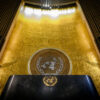
UN80 is Less a Reform Than a Survival Manual
Let’s just say the quiet part out loud: the UN is not reforming because it suddenly woke up one morning inspired by efficiency. It’s reforming because the Organization is broke. Not metaphorically broke. Not diplomatically broke. Actually broke. The kind of broke where arrears sit at $1.586 billion and everyone pretends that’s just an unfortunate bookkeeping hiccup instead of the fact that the lights are flickering.
Any Resumption of US Tests May Trigger Threats from Other Nuclear Powers
President Donald Trump's recent announcement to resume nuclear testing rekindles nightmares of a bygone era where military personnel and civilians were exposed to devastating radioactive fallouts.
Businesses Impact Nature on Which They Depend — IPBES Report Finds
Nature is a double-edged sword for global business. A groundbreaking report will reveal how businesses profit from exploiting natural resources while simultaneously impacting biodiversity.
Fresh Lens For Nuanced Multifaceted Climate Solutions Needed
“I see more philanthropic support aligning with systems thinking, linking climate stability, biodiversity protection, Indigenous leadership, and community resilience,” says Michael Northrop, Program Director at the Rockefeller Brothers Fund.
Why the UN Environment Assembly is Essential to a Safer, More Resilient Planet
As geopolitical challenges and tensions escalate globally, one thing is clear: fragmented politics will not fix a fractured planet. This is why the United Nations Environment Assembly (UNEA) – the world’s highest decision-making body on the environment – is so critical to address our shared and emerging environmental threats.
Resumption of Nuclear-Explosive Testing: A Dangerous Path
In a Truth Social post that reverberated around the world, on October 29 President Donald Trump wrote: “Because of other countries’ testing programs, I have instructed the Department of War to start testing our Nuclear Weapons on an equal basis.”
International Volunteer Year 2026: An Opportunity to Reimagine Volunteerism?
This coming International Volunteer Day (IVD), celebrated every year on 5 December, is special because the United Nations will launch the International Volunteer Year 2026 or IVY 2026.
‘Seven Million People Have Taken to the Streets to Stand up for Democracy’
CIVICUS discusses US civil society action under the second Trump administration with Bridget Moix, General Secretary of the Friends Committee on National Legislation, the oldest faith-based lobbying organisation in the USA, advocating for peace, justice and environmental stewardship. Bridget has participated in the No Kings movement, a nationwide grassroots response to democratic backsliding and attacks on rights.
Graduation Must Be a Springboard, Not a Stumbling Block
As we gather in Doha for the High-Level Meeting on “Forging Ambitious Global Partnerships for Sustainable and Resilient Graduation of Least Developed Countries,” the stakes could not be higher. A record number of fourteen countries-equally divided between Asia and Africa are now on graduation track. Graduation from the Least Developed Country (LDC) category is a landmark national achievement—a recognition of hard-won gains in income, human development, and resilience. Yet, for too many countries, this milestone comes with new vulnerabilities that risk undermining the very gains that enabled graduation.
Vulnerable Populations Will Suffer With UNAIDS Early Closure
“It’s like adding fuel to an already burning fire,” says Aditia Taslim. “We have not recovered from the impact of the US funding cuts earlier this year, and closing down UNAIDS prematurely will only make things worse, especially for key populations and other criminalized groups, including people who use drugs,” Taslim, who is Advocacy Lead at the International Network of People Who Use Drugs (INPUD), tells IPS.« Previous Page — Next Page »





The Week with IPS

NEXT STOP - SDGs
Tracking global progress towards a sustainable world
Tracking global progress towards a sustainable world
