Languages
Friday, October 16, 2026



News and Views from the Global South
Global

The World Social Summit in Doha: Time to Act
Qatar hosted the Second World Summit for Social Development from 4–6 November. According to the United Nations, more than 40 Heads of State and Government, 230 ministers and senior officials, and nearly 14,000 attendees took part. Beyond plenaries and roundtables, more than 250 “solution sessions” identified practical ways to advance universal rights to food, housing, decent work, social protection or social security, education, health, care systems and other public services, international labor standards, and the fight against poverty and inequality.
Hollow Promises or Hope?
COP30 Brazil – Moment of Truth for the Planet
COP30 Brazil, though shadowed by the absence of many world leaders, remains a pivotal milestone in the global fight against climate change, tasked with building on the Paris Agreement’s momentum. Yet the glaring lack of commitment, coupled with withdrawals from the accord, casts a grim shadow over the future. The planet continues to warm, and scientists warn that current targets may not prevent a catastrophic temperature spike. While the summit’s focus on implementation not just new promises—is a welcome shift, it’s clear: words alone won’t cool the Earth.

US Stands Alone Defying UN Vote on Nuclear Test Ban Treaty
The US took another step backward --to break ranks with the United Nations-- when it voted against a draft resolution calling for the entry into force of the Comprehensive Nuclear-Test-Ban Treaty (CTBT). The negative vote followed an announcement by President Trump last month that the US plans to resume nuclear testing after a 33-year hiatus. The US stood alone on the UN vote, which was supported by almost all member States in the General Assembly's First Committee.
A Tale of Two Cities – Belém, Nairobi and Why Global Tax Justice Must be at Center of Climate Crisis Response
The climate crisis is getting worse and requires fundamental changes to societies, economies, and our global financial architecture in response. While extreme economic inequality is on the rise – the world's billionaires now hold more wealth in the world than every country except the U.S. and China – the impacts of climate change are also unequally felt, with the poor in the Global South and North most at risk.
The Top Climate Leaders Are Now in The Global South
When world leaders now gather in Belém, Brazil for the UN climate conference, expectations will be modest. Few believe the meeting will produce any breakthroughs. The United States is retreating from climate engagement. Europe is distracted. The UN is struggling to keep relevant in the 21st century.
COP30: The Age of Irrationality in Climate Policy
I have been working on climate policy since the late 1990s. I was in the room when Europe’s early carbon market discussions were shaping the architecture that would eventually underpin the Kyoto Protocol.
In the Heart of the Amazon: COP 30 and the Fate of the Planet
My recent visit to Brazil coincided partly with the Conference of the Parties (COP) 30, the 30th United Nations Climate Conference in Belém. Although I did not attend COP 30, I was very fortunate to visit the Amazon.
World Must Pay to Make America Great Again
US President Trump’s economic strategy for his second term aims to get the rest of the world, especially its wealthy allies with greater means, to pay more to help strengthen the US economy.
The Silent War Before COP30: How Corporations Are Weaponising the Law to Muzzle Climate Defenders
As the world prepares for the next COP30 summit, a quieter battle is raging in courtrooms. Strategic Lawsuits Against Public Participation (SLAPPs) are the fossil-fuel industry’s new favourite weapon, turning justice systems into instruments of intimidation.
Turning Indigenous Territories From ‘Sacrifice’ Zones to Thriving Forest Ecosystems
A report by the Global Alliance of Territorial Communities (GATC) and Earth Insight paints a stark picture of how extractive industries, deforestation, and climate change are converging to endanger the world’s last intact tropical forests and the Indigenous Peoples who protect them.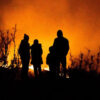
Brazil’s Biofuels Push Undermines Environmental Integrity at COP30
President Prabowo Subianto welcomed his counterpart Luiz Inacio Lula da Silva of Brazil to Jakarta recently to strengthen ties between the fast-growing economies.
US Skips High-Level Presence at COP30 Climate Summit
“Has the world given up fighting climate change?” was a rhetorical question posed recently by the New York Times, perhaps with a degree of sarcasm. It might look that way, says Christiana Figueres, a founding partner of the nongovernmental organization Global Optimism, “as US president Donald Trump blusters about fossil fuel, Bill Gates prioritizes children’s health over climate protection, and oil and gas companies plan decades of higher production.”
What’s Now Needed is Political Courage, Says UN SG Guterres at COP30
Political courage is the biggest obstacle to limiting the rise in global average temperature to no more than 1.5°C, said UN Secretary-General António Guterres.
Dating with Modern Technologies: Opportunities and Challenges
Dating websites, mobile apps, social networks, and cell phones offer numerous opportunities for dating, developing relationships, having encounters, and finding partners with more and more people relying on these platforms. However, modern technologies with their scale, speed and easy have also brought about dating challenges for both men and women.
Nuclear Disarmament Conversations Cannot Lose Traction
In recent days, nuclear state leaders have flouted the regulations and norms around nuclear non-proliferation and are flirting more openly with nuclear might in the name of projecting strength.
The World’s Forests Cannot Wait: Why COP30 Must Center Indigenous Peoples’ and Local Communities’ Leadership
As world leaders prepare to gather in Brazil for COP30 next week, they will convene in the heart of the Amazon -- a fitting location for what must become a turning point in how the world addresses the intertwined crises of climate change and biodiversity loss.
Power-Sharing —Boomers and Gen Z Face Off at the ICSW
The message is clear: today’s youth are not “wishy-washy.” They are not just the future—they are the present, full partners in shaping it, and “power-sharing” is the new mantra. The veterans of activism are being reminded not merely to listen but to hear and to leave their egos at the door.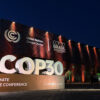
Deliver Emission Cuts, or Risk Locking the World Into ‘Catastrophic Warming’
The world is falling dangerously short of meeting the Paris Agreement goals, with global greenhouse gas emissions rising to record levels and current national pledges still far off the mark, the United Nations Environment Programme (UNEP) said in its Emissions Gap Report 2025: Off Target.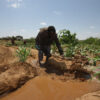
COP30: New Faces, Old Issues: What Must Change if Global Climate Talks Are to Deliver Justice for Africa
Three decades after the first Climate COP, the multilateral climate process – which was intended to serve as an instrument of justice and a guardian of the planet’s atmosphere – has fallen far short of its goals.
COP30: The Real Solution to Climate Change Could be Through International Law
At COP15, the developing countries were calling for the temperature to not rise above 1.5 degrees and they ignored the Copenhagen Accord which agreed to 2.0 degrees
At Rome’s Colosseum, Faith Leaders Confront a World at War — and Dare to Speak of Peace
In the shadow of Rome’s Colosseum — once a monument to imperial violence — religious leaders from across the world gathered this week to deliver a message that felt both ancient and urgent: peace must once again become humanity’s sacred duty.« Previous Page — Next Page »





The Week with IPS

NEXT STOP - SDGs
Tracking global progress towards a sustainable world
Tracking global progress towards a sustainable world
