Languages
Friday, October 16, 2026



News and Views from the Global South
Global
COP30 Belém: Turning Promises into Action
 From the 10th to the 21st of November 2025, the 30th session of the Conference of the Parties (COP30) will be hosted in Belém, Brazil.
Rajagopal PV’s Blueprint for Another World: Peace
"If nations can have defense ministries, why not peace ministries?" asks Rajagopal PV, the soft-spoken yet formidable founder of Ekta Parishad. "We are told to see issues through a gender lens—why not a peace lens? Why can’t we imagine a business model rooted in non-violence or an education system that teaches peace?”
A Unified Oceanic Commitment to Tsunami Preparedness
On a quiet July morning in Severo-Kurilsk, a coastal town in the East of the Russian Federation, the sea began to retreat unnaturally fast. Within minutes, tsunami sirens blared and 2,700 residents evacuated to higher ground. Waves up to five meters inundated the port and fish factory, but no lives were lost. The town’s survival reflected years of investment in early warning systems, community drills, and resilient infrastructure. The 2025 Kamchatka tsunami demonstrated what preparedness can achieve when science, governance, and community action align.
As COP30 Nears, We Need All Effective Climate Solutions
A new global study has challenged a key assumption in climate planning: that the planet’s geological “carbon vault” is vast enough to hold all the carbon dioxide (CO₂) we might one day choose to bury underground after we remove it from the atmosphere. It isn’t.
Financing Tropical Forests now is a COP30 Solution that’s Already Working
As the world prepares for COP30 in Belém, all eyes are on Brazil’s proposed Tropical Forests Forever Facility (TFFF)—a bold plan to reward countries for keeping forests standing. It represents a vital part of the long-term vision we need for global forest protection.
Humor, Courage, and Coffee: Inside Asia’s Independent Media Resistance
In Pakistan, journalism is a risky profession—and the danger only intensifies if you’re a woman, young, and a freelancer, says 30-year-old Saba Chaudhry, a journalist from a village near Narowal, in Punjab province.
Challenging Elites, Defending Democracy: Oxfam’s Amitabh Behar Speaks Out
Speaking to IPS on the sidelines of the International Civil Society Week in Bangkok (November 1–5), Amitabh Behar, Executive Director of Oxfam International and a passionate human rights advocate, highlighted his concerns about rising inequality, growing authoritarianism, and the misuse of AI and surveillance. Yet, he expressed optimism that, even as civic spaces shrink, young people across Asia are driving meaningful change. He also shared his vision of a just society—one where power is shared, and grassroots movements lead the way.
Strengthening Indigenous Lands Rights Key in Solving Deforestation in Amazon
Strengthening Indigenous land rights will protect more forest in Brazil’s Amazon and avoid large amounts of carbon emission, according to new research released ahead of COP30.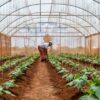
Food Systems Are the Missing Link in Social Development
Food has always been political. It decides whether families thrive or fall into poverty, whether young people see a future of opportunity or despair, whether communities feel included or pushed aside. Food is also a basic human right – one recognized in international law but too often unrealized in practice. Guaranteeing that right requires viewing food not as a form of emergency relief, but as the cornerstone of sustainable social development.
As Civil Society Is Silenced, Corruption and Inequality Rise
From the streets of Bangkok to power corridors in Washington, the civil society space for dissent is fast shrinking. Authoritarian regimes are silencing opposition but indirectly fueling corruption and widening inequality, according to a leading global civil society alliance.
The Biggest Single Contributor to the UN Budget is also the Biggest Single Defaulter
The United States, the largest single contributor to the UN budget, is using its financial clout to threaten the United Nations by cutting off funds and withdrawing from several UN agencies. In an interview with Breitbart News U.S. Representative to the United Nations, Ambassador Mike Waltz said last week “a quarter of everything the UN does, the United States pays for”.
US Threatens to Resume Nuclear Testing while Past Tests Have Devastated Victims Worldwide
The lingering after-effects of nuclear tests by the world’s nuclear powers have left a devastating impact on hundreds and thousands of victims world-wide.
From Slogans to Systems: Five Practical Steps for Turning Social Development Commitments into Action at Doha and Beyond
Thirty years ago, world leaders gathered in Copenhagen and made a promise: people would be at the center of development. This November, Heads of State and Government will meet again in Doha, Qatar, for the Second World Summit for Social Development or WSSD2.
Will COP30 Reenergize Nigeria’s Great Green Wall Project?
In 2017, 45-year-old Jabiru Muhammed could hardly contain his excitement when the village head of Batu in Jigawa State, northwestern Nigeria, announced that their community would work with officials from the National Agency for the Great Green Wall (NAGGW) to plant trees across a large stretch of land in the village.
Children’s Education Must Be Put At The Forefront of Climate Discussions At COP30
In 2024, the climate crisis has disrupted schooling for millions of students worldwide, weakening workforces and hindering social development on a massive scale. With extreme weather patterns preventing students from accessing a safe, and effective learning environment, the United Nations (UN) and the Geneva Global Hub for Education in Emergencies (EiE Hub) continue to urge the international community to assist the most climate-sensitive areas in building resilient education systems that empower both students and educators.
Adaptation Finance Shortfalls Leave Developing World Exposed
Hurricane Melissa made landfall in Jamaica yesterday—the strongest hurricane to impact the island on record since 1851—with expectations of tens of thousands of people being displaced and devastating damage to infrastructure. The tropical storm, slightly downgraded but nevertheless devastating, made landfall in Cuba today as UNEP’s newly released Adaptation Gap Report 2025: Running on Empty shows that the finance needed for developing countries to adapt to the climate crisis is falling far behind their needs.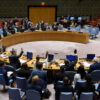
A Power Imbalance Frozen in Time: The Case for Security Council Reform
In June 2025, the international community celebrated the 80th anniversary of the signing of the United Nations Charter. On October 24, we celebrated UN Day, commemorating its ratification. This is an opportune moment to reflect on how far we have come, and the ground we have yet to traverse.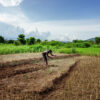
Indigenous Communities Are the Frontlines of Climate Action—It’s Time COP Listened
I had hoped to attend this year’s Conference of the Parties (COP) in person, to stand alongside fellow Indigenous leaders and advocate for the rights of our communities.
Data Centre Investments Bad Deals
Opposition to data centres (DCs) has been rapidly spreading internationally due to their fast-growing resource demands. DCs have been proliferating quickly, driven by the popularity of artificial intelligence (AI).
The Time for a Decade of Island Resilience is Now
As biodiversity loss including ocean degradation, pollution and climate change threaten our planet, islands, and particularly global small island nations, often don't get the spotlight they deserve. Often labeled as vulnerable, the world’s small island nations are in fact powerful beacons of resilience.
Eyes in the Sky: How Satellites Are Helping to Reduce Emissions from Livestock
Thousands of years ago, we looked to the stars for guidance — constellations like Taurus and the Pleiades signalled the changing of the seasons and the best times to plant, harvest and move animals.« Previous Page — Next Page »





The Week with IPS

NEXT STOP - SDGs
Tracking global progress towards a sustainable world
Tracking global progress towards a sustainable world
