Languages
Sunday, October 18, 2026



News and Views from the Global South
Global
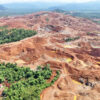
The Dangers of Green Mining
Even amidst the regressive resistance of the current U.S. administration, the world is shifting toward a green energy future. As governments pledge to phase out fossil fuels, companies tout electric vehicles, and financiers pour billions into solar, wind and batteries, it seems the necessary transition from fossil fuels to clean energy is finally picking up pace.
Foreign Agent Laws: The Latest Authoritarian Weapon Against Civil Society
When thousands of Georgians filled the streets of Tbilisi in 2023 to protest against their government’s proposed ‘foreign agents’ law, they understood what their leaders were trying to do: this wasn’t about transparency or accountability; it was about silencing dissent. Though the government was forced to withdraw the legislation, it returned with renewed determination in 2024, passing a renamed version despite even bigger protests. The law has effectively frozen Georgia’s hopes of joining the European Union.
Global Forest Loss: Far Off Track From Global Commitments
The Forest Declaration Assessment 2025 warns that global forest loss remains alarmingly high, with little sign of improvement.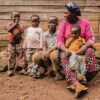
World Food Programme Warns of Emergency Levels of Hunger Amid Severe Funding Cuts
In 2025, unprecedented cuts to foreign aid and humanitarian funding have exacerbated global hunger crises, leaving millions without access to food or basic services. Funding shortfalls have forced aid agencies to scale back or suspend lifesaving programs in some of the world’s most food-insecure regions, particularly across the Global South—exacerbating already dire conditions caused by conflict, displacement, economic instability, and climate shocks.
Women’s Leadership at the Heart of Disaster Risk Reduction
Climate and environmental challenges are hitting harder and more often, reshaping people’s lives around the world. While disasters touch everyone, their impacts are not felt equally. The most marginalized, especially women and girls, are too often the first to suffer and the last to recover.
Is the UN “Bloated, Unfocused, Outdated and Ineffective”?
The US hostility towards the UN is threatening to escalate, as a cash-starved world body is struggling for economic survival. Addressing the UN’s Administrative and Budgetary Committee last week. Ambassador Jeff Bartos, U.S. Representative for U.N. Management and Reform said: “President Trump is absolutely right – the United Nations can be an important institution for solving international challenges, but it has strayed far from its original purpose”.
A Hungry World Knows No Borders
When crops fail, people move not by choice, but by necessity. As families are displaced by droughts and failed harvests, the pressures do not always stop at national boundaries. In short, hunger has become one of the most powerful forces shaping our century.
It’s Time to Unbury the IMF’s Hidden Gold
Countries across the Global South face an accelerating climate crisis, tepid growth, and unsustainable levels of debt. Yet hopes of finding support at the International Monetary Fund’s (IMF) Annual Meetings in Washington are dim. The IMF is tightening its purse strings — even as it leaves untouched a vast treasure of more than 3,000 tons of gold that offers a prime opportunity to stabilize the global economy.
World Bank and Other MDBs Need to Tackle Rich Country GHG Emissions to Support Development
The World Bank and other multilateral development banks recently have begun reconsidering their self-imposed restrictions on financing fossil fuel projects. This change is being prompted in part by the new U.S. administration and is also supported by developing country experts. Yet, the reality remains that greenhouse gas emissions (GHG) from fossil fuels, and specifically the climate change they induce, can severely undermine multilateral development bank projects and overall developing country growth prospects.
Global South Can Rebalance Climate Agenda in Belém, Says Gambian Negotiator
The Gambia's lead negotiator on mitigation believes that COP30 presents a unique opportunity to rebalance global climate leadership.
From Algorithms to Accountability: What Global AI Governance Should Look Like
Recent research from Stanford’s Institute for Human-Centered AI warns that bias in artificial intelligence remains deeply rooted even in models designed to avoid it and can worsen as models grow. From bias in hiring of men over women for leadership roles, to misclassification of darker-skinned individuals as criminals, the stakes are high.
Quo Vadis UN @80?
The United Nations turned 80 this year. What should have been a moment of pride and celebration at the high-level session of the UN General Assembly in September 2025 turned instead into an occasion of bitter irony.
Abusive Governments Set to Win Seats in Human Rights Council
Egypt and Vietnam are on track to secure seats on the United Nations Human Rights Council despite being woefully unfit for membership. The UN General Assembly will elect members to the UN’s premier rights body in a noncompetitive vote on October 14, 2025.
UN’s Cost-Cutting Mergers Come Under Scrutiny While Search for Locations Worldwide Continues
Faced with a severe liquidity crisis and a hostile Trump administration, the UN continues to merge some of its multiple agencies, and move them out of New York, relocating to Europe, Africa, Asia and the Middle East. Perhaps the first two agencies to be merged will be UN Women (created in 2010) and the UN Population Fund (created in 1967), with some staffers moved to Bonn and others to Nairobi.
Science-Informed Policy Action Key to Biodiversity Conservation
Global biodiversity is disappearing at breakneck speed and, in the process, threatening the future of humanity. The loss is not a future threat but a present crisis that Dr. Luthando Dziba, the new Executive Secretary of the Intergovernmental Platform on Biodiversity and Ecosystem Services (IPBES), believes can be tackled with science-based policy action.
Civil Society on the Edge
The collapse of aid architecture is one of the greatest dangers for civic space. This shift is not accidental but systemic, reflecting deliberate policy choices – not only by the US but accelerated by its decisions- that prioritize security agendas over human rights and solidarity.
Wealthy Nations Urged to Curb Climate Finance Debt For Developing Countries
In recent years, international climate financing has declined sharply, leaving billions of people in developing nations increasingly vulnerable to natural disasters and unable to adapt effectively. With major cuts in foreign aid, these communities are expected to face the brunt of the climate crisis, while wealthier nations continue to reap economic benefits.
Two-Thirds of Climate Funding for Global South are Loans as Rich Nations Profiteer from Escalating Climate Crisis
New research by Oxfam and the CARE Climate Justice Centre finds developing countries are now paying more back to wealthy nations for climate finance loans than they receive—for every USD 5 they receive, they are paying USD 7 back, and 65 percent of funding is delivered in the form of loans.
Explainer: COP30’s ‘Granary of Solutions’ Will Be Showroom of World’s Best Climate Fixes
Once a year, the COP presidency or the role held by the Minister of Environment from the host government at a Conference of the Parties (COP) meeting, sets out on an ambitious, year-long journey in hopes of delivering the climate deal of a lifetime.
When Women Lead, Peace Follows
We meet on the eve of the twenty-fifth anniversary of UN Security Council resolution 1325—a milestone born of the multilateral system’s conviction that peace is more robust, security more enduring, when women are at the table.
It’s Past Time to Make Polluters Pay
I was 16 years old when Super-Typhoon Haiyan tore through my community in Eastern Samar in the Philippines. It remains one of the deadliest storms in history, killing more than 6,000 people and displacing millions. My community lost everything: Loved ones, family homes and land, our ways to earn a living and rebuild, and our sense of safety all vanished overnight.« Previous Page — Next Page »





The Week with IPS

NEXT STOP - SDGs
Tracking global progress towards a sustainable world
Tracking global progress towards a sustainable world
