Languages
Wednesday, November 25, 2026



News and Views from the Global South
Global
POLITICS-BURMA: A Poll, Yes, But Not Political Change
In teashops and markets, the national election due this year in Burma is the talk of the town, so much so that Thuzar, who did not take part in the 1990 poll, is quite eager to cast her vote this time.CLIMATE CHANGE: The U.N.’s Boys’ Club
U.N. Secretary-General Ban Ki-moon's decision to appoint a 19-member, all-male high-level advisory group on Climate Change Financing (CCF) has triggered strong protests from women's groups and non-governmental organisations (NGOs) outraged by the composition of the panel.DEVELOPMENT: Bad Water More Deadly Than War
Bad water kills more people than wars or earthquakes, declares Anders Berntell, executive director of the Stockholm International Water Institute (SIWI).
Q&A: Tapping Women’s Enterprise to Topple Rural Poverty
Employees at the International Fund for Agricultural Development (IFAD) may have cause to fear for their jobs after Yukiko Omura was appointed vice president of the United Nations' rural poverty agency in February.WORLD CUP: But South Africa Will Win
Less than a hundred days to go, and the world looks on, often more with scepticism than anticipation.DISARMAMENT: Japan Pushes for Progress in U.S. Nuclear Review
Japanese parliamentarians and activists pin high hopes on the hotly debated and much anticipated U.S. Nuclear Posture Review (NPR) to which the Barack Obama administration is reported to be giving finishing touches.DISARMAMENT: Despite Recession, Global Arms Race Spirals
The global financial crisis has not deterred some of the world's developed and developing nations from bolstering their military arsenals with expensive new weapons systems, including sophisticated fighter planes, combat helicopters, submarines, armoured vehicles and air defence systems.HEALTH: U.S. AIDS Fund Flat-Lining, Groups Complain
The debate between those who favour investment in AIDS treatment and those who favour investment in its prevention came to the forefront Thursday at a U.S House of Representatives hearing on U.S. investments in HIV/AIDS in Africa.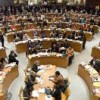
RIGHTS: Gender Confab Marked by Political Uncertainties
When a two-week meeting on gender empowerment concluded at U.N. headquarters Friday, there were several lingering questions crying out for answers.BIODIVERSITY: Lucrative Shark Trade Under Scrutiny
As climate change transforms the acidity and oxygen levels of the world's waters with devastating effects for some marine species, others are facing an even more immediate threat from human consumption.RIGHTS: U.S. Concerned Over Curbs on NGOs, Press, Internet
Releasing its annual report on the state of human rights around the world, the U.S. State Department Thursday said it was increasingly concerned about curbs imposed by foreign governments on civil society groups, the press, and Internet use.POLITICS: Sri Lanka Garners Support Against U.N. Probe
Sri Lanka, which won a grueling decades-long battle against one of the world's most ferocious terrorist organisations last May, has scored a diplomatic victory in its ongoing war of words with the United Nations.EGYPT: U.N. Slams Abuse of Emergency Law
Despite diplomatic maneuvering designed to block any review of its human rights record, a United Nations special rapporteur has told the U.N. Human Rights Council that proposed changes in Egypt's constitution "would create a permanent legal state of emergency".
Q&A: Equality Is Feminism
"I think that Islam has been misinterpreted. No Islamic law says violate women's rights and repress women," says Nobel Peace Prize laureate Shirin Ebadi. "Democracy, human rights and women leadership are absolutely not hostile to the Islamic doctrine." And women in Iran are well aware of that, she says.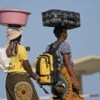
RIGHTS: Africa’s Success Stories in Gender Empowerment
Whenever gender empowerment is a vibrant topic of discussion internationally, some of the countries in Europe, Asia and Latin America are invariably singled out for their success stories in politics, education, health care or civil liberties even as Africa is mostly left out of political reckoning - and wrongly so.ASIA: Religious Advocates Heed the Call of New Media
Not even religious advocates and leaders and can say no to the power of online media, whose call they are heeding in order to spread various messages of spirituality.FINANCE: Self-Policing of Extractive Industries a “Dismal” Failure
An international initiative that seeks to reform how governments profit from their natural resources should not reduce its existing standards of membership solely because candidate countries have been reluctant or incapable of meeting them, Human Rights Watch (HRW) said on Tuesday.
RIGHTS: “Famine Marriages” Just One Byproduct of Climate Change
The negative fallout from climate change is having a devastatingly lopsided impact on women compared to men, from higher death rates during natural disasters to heavier household and care burdens.
ENVIRONMENT: Violent Backlash Against Climate Scientists
Climate change science has come under full-scale attack in a last-ditch effort to delay or prevent action by the U.S. government against global warming, experts warn.
RIGHTS: Middle East Women Ahead But Not Home
Male leaders fail to break the Mideast impasse. Enter women from Israel and the Palestinian territories working together. And... it would have been nice to say they succeeded where the men failed.RIGHTS: Fewer Jobs, Less Money, Same Old Story
"What do I get from them? Nothing but bullsh*t," says Nupur Acharya, reflecting about how she is treated by her husband and two grown sons on daily basis.« Previous Page — Next Page »


The Week with IPS

NEXT STOP - SDGs
Tracking global progress towards a sustainable world
