Languages
Wednesday, November 25, 2026



News and Views from the Global South
Global
RIGHTS: This Eerie Economic Calm
The problem now, almost, is to find a way to relive the peak of that economic crisis of September 2008. The current move back to business of old – on the face of it anyhow – could well turn out to be a longer-running difficulty than the crisis it supposedly left behind. A difficulty far greater for women than for men.
RIGHTS: Burmese Rape Survivors Speak Out
"Seven Burmese military soldiers attacked me and three of my friends," said Chang Chang, from the northern Kachin State of Burma.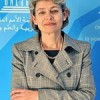
Q&A: Qualified Women Have Better Chance in Top Jobs
Irina Bokova, who was elected director-general of the U.N. Educational, Scientific and Cultural Organisation (UNESCO) last September, heads the Paris-based agency at a time when the world body has placed a high priority on gender empowerment.
BIODIVERSITY: CITES Faces Political Storm over Tuna Ban
The vast majority of the species protected by the Convention on International Trade in Endangered Species of Wild Fauna and Flora, or CITES, live on land, but as marine species come under increasing pressure from unsustainable fishing and a range of climate change-related threats that focus is beginning to shift.RIGHTS: U.S. Criticised over Soaring Housing Costs
On Friday, the richest and most powerful country on earth was the subject of a damning report submitted to the U.N. Human Rights Council in Geneva.
CLIMATE CHANGE: Arctic Shelf Leaking Potent Greenhouse Gas
The frozen cap trapping billions of tonnes of methane under the cold waters of the Arctic Ocean is leaking and venting the powerful greenhouse gas into the atmosphere, new research shows.EUROPE: Economists Blame Germany for Mediterranean Crisis
Germany’s obsession with maintaining a trade surplus, in line with its mercantilist traditions, is one cause for the severe economic crisis that has gripped several Euro-Mediterranean countries, say economists.
RIGHTS-CHINA: For Dissident’s Wife, A Time of Waiting
Long before Liu Xiaobo, China’s most prominent political dissident and co- author of the Charter 08 call for political reform, was sentenced to 11 years in prison for "incitement to subvert state power," his wife, Liu Xia, had accepted his fate.
RIGHTS: Arab Women Caught Between Extremes
The status of women in a predominantly male-chauvinistic Arab world continues to fluctuate from one extreme to another.RIGHTS: U.N. Women’s Agency Remains Politically Paralysed
A longstanding proposal for the creation of a special U.N. agency for women - officially called a "gender entity" - is apparently moving at the sluggish pace of a paralytic snail.
ENVIRONMENT: Wanted – An Effective Multilateral System
The echoes of failure still sounding from the Copenhagen summit on climate change in December are spurring efforts to reform the international legal framework. Civil society groups are demanding a new, more agile system that is both influential and effective.POLITICS: U.S. Still Noncommittal on Landmine Treaty
As the 11th anniversary of the Mine Ban Treaty entering into effect came and went Monday, the United States remained one of only 37 countries to have yet to sign on to the agreement.
RIGHTS: Saudi Arabia Faulted for Feudal Justice
Against the backdrop of a two-week U.N. meeting on gender empowerment, the London-based Human Rights Watch (HRW) has blasted the government of Saudi Arabia for its feudal system of justice where women continue to be victimised because of their gender.HEALTH: Neoliberalism not Liberal Enough for AIDS Investments
Neoliberal economic ideas have grown increasingly dominant over the last 30 years. During that same time, the spread of HIV/AIDS has reached an epidemic crescendo.
RIGHTS: Rise and Fall of Gender Empowerment
The 45-member Commission on the Status of Women (CSW), presiding over one of the largest gatherings of women at the United Nations, listened Monday to dozens of speakers spelling out the successes and failures of gender empowerment worldwide.U.S.: Healthcare Should Include Abortion Access, Women Say
Last fall, the push to reform healthcare in the United States was all but hijacked by one of the country's most passionate recurring cultural debates.
RIGHTS: Women More Educated, Not More Equal
When it comes to female education rates, progress has been made around the world, and in many countries girls and young women have outnumbered and outperformed boys and men at all levels of schooling for decades. Nevertheless, these advances have yet to translate into greater equity in employment, politics and social relations.
Q&A: “We Can’t Continue to Pay Lip Service to Gender Equality”
During consultations of the 45-member U.N. Commission on the Status of Women (CSW) here, one of the lingering issues that is surfacing is the success - or failure - in the implementation of the 1995 Beijing Platform for Action on gender empowerment.RIGHTS-GERMANY: ‘Catholic Church Protects Paedophile Priests’
The Catholic Church has for decades protected paedophile priests and clerics who sexually abused children from judiciary prosecution, according to German theologians, law experts, and internal church documents.DEATH PENALTY: On Trial for Their Lives – by Public Opinion
The death penalty remains an apparently fixed feature in many societies because it enjoys the approval or consent of a large majority of the population, or is based on supposed ancestral values or traditions.DEATH PENALTY: Post-Genocide Countries Ban Executions to ‘End Revenge’
More than 1,000 activists and experts attending this week's Fourth World Congress Against the Death Penalty in this Swiss city are building a network of cooperation to support local organisations campaigning for human rights in countries that retain capital punishment.« Previous Page — Next Page »


The Week with IPS

NEXT STOP - SDGs
Tracking global progress towards a sustainable world
