Languages
Friday, October 16, 2026



News and Views from the Global South
Global
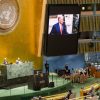
When the truth becomes a lie: What Trump’s election means for the world as we know it
On the day following the US election, UN Secretary General, Antonio Guterres issued a brief statement commending the people of the United States for their active participation in the democratic process. He wisely omitted mention that the election of Donald J. Trump – who attempted to overturn the people’s mandate by inciting an insurrection in 2021 - is a major setback for the UN’s worldwide quest to advance human rights and the rule of law. Trump is a self-avowed admirer of authoritarian strongmen like Russia’s Vladimir Putin and Hungary’s Viktor Orban who disdain international norms that the UN seeks to uphold.
UN Climate Summit Needs Action – not a COP-Out
The Paris Agreement on climate change is a decade old this month. While there has been progress - with new net zero pledges and new technological solutions, we are still grappling with the reality that global temperatures continue to soar. 2023 was the hottest year ever on record.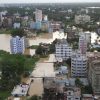
Cities Will Be Hit Hardest By Climate Change, UN Report Warns
Cities are in a unique position, simultaneously the biggest emitters of greenhouse gasses and the most affected areas of the greenhouse effect. As a new UN report shows that rapid urbanization and industrialization have adverse effects on the environment, causing a rise in sea levels, prolonged rainfalls and flooding, and an increase in overall temperature. The coastal areas that cities most often inhabit face the brunt of these effects, with marginalized populations being the most vulnerable.
UNEP: Nations Must Step Up Adaptation—Starting with Bold Finance Action at COP 29
The United Nations Environment Programme’s (UNEP) 2024 Adaptation Gap Report has warned that adaptation actions are not keeping pace with the surging demands of a warming planet. Released ahead of the COP29 climate conference in Baku, Azerbaijan, the report—titled Come Hell and High Water—projected a bleak future where vulnerable communities bear the brunt of climate-induced hardships.
Sic Transit Gloria Mundi: Preserving the Cultural Heritage
pyramids is the monument I have made,
a shape that angry wind or hungry rain
cannot demolish, nor the innumerable ranks
of the years that march in centuries.
I shall not wholly die:
some part of me will cheat the goddess of death.

World Inequality Still Rising Despite Some Convergence
Despite earlier income convergence among nations, many low-income countries (LICs) and people are falling further behind. Worse, the number of poor and hungry has been increasing again after declining for decades.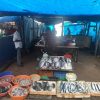
Voices from the Margins: Small-Scale Fishers Demand Rights, Recognition at COP16
Small-scale fishers play a fundamental role in feeding people—they use sustainable methods of catching and processing fish products and are a significant force in the employment and livelihoods of millions of people internationally—yet, until now, they have been excluded from climate and biodiversity conferences.
Diverse Diets Are Essential for Nourishing a Healthy Planet as Well as Healthy People
It’s often said that we are what we eat. However, our diets are also a reflection on the health of our food systems, the environment and agricultural biodiversity.
Navigating the Waves: Strengthening Tsunami Preparedness in a Changing Climate
This year’s World Tsunami Awareness Day presents a moment of reflection 20 years on from the catastrophic Indian Ocean Tsunami in 2004. The tsunami resulted in 225,000 fatalities across 14 countries and emphasized the urgent need for effective tsunami preparedness, especially in the face of growing climate change challenges.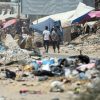
Democracy’s Dilemma: Can We Overcome Short-Termism to Build Lasting Peace?
While the expansion of democracy is a key condition for peace, the Achilles’ heel of democracies is that their leaders are constrained by electoral calendars, forcing them to push for peace or delay, whereas autocracies can afford to play the long game to achieve the favorable outcomes they desire.
COP16 Delivers on Indigenous Peoples, Digital Sequencing, But Fails on Finance
The curtains fell on the 16th Conference of the Parties of UN Biodiversity (COP16) on Sunday without any formal closing. In a voice message, David Ainsworth, the Communications Director of the UNCBD, confirmed that the COP was suspended due to a lack of quorum in the plenary and would be resumed sometime later. However, before being suspended, the parties managed to adopt a historic decision to open the door for Indigenous Peoples (IPS) and local communities (LCs) to influence the global plan to halt the destruction of biodiversity.
Knife-Edge November: Teetering on the Climate Abyss
Standing high on the vertiginous edge of the future and looking down into a volcanic seething of approaching doom, it is a totally understandable desire to want to close your eyes, walk away and turn on the sports channel. If you have one.
Lead for Learning: Decisive Leadership Urgently Needed To Improve Education Globally
Global education is facing a critical moment amid severe setbacks. Millions of children are out of school, learning levels are falling, and millions are leaving school without the skills they need. New out-of-school figures reveal that global progress in reducing the number of out-of-school children has been just 1 percent since 2015, leaving 251 million behind.
Defending Biodiversity in Armed Conflict: Can COP16 Meet the Expectations?
José Aruna, a forest defender from Sud Kivu province in the Democratic Republic of the Congo (DRC), remembers the night in September 2019 when a group of heavily armed men barged into his house in the middle of the night. Aruna and his wife—6 months pregnant at the time—were in bed when he heard sounds of boots on the front yard and quickly knew something was about to happen.
The World’s Demographic Sky Is Not Collapsing
Alarmists, mainly politicians, economists and wealthy elites, are announcing that the world’s demographic sky is collapsing. The world’s demographic sky is not collapsing but simply changing.
Food Security Is Key To Making ‘Peace with Nature’
As countries are meeting in Cali, Colombia, for the 2024 UN Biodiversity Conference (CBD COP 16), the fate of biodiversity hangs in the balance, and with it, the sustainability of our food systems.
Chickens as Well as Cheetahs: Biodiversity Conservation Must Also Include Livestock
As the UN’s COP16 biodiversity conference continues, the temptation is to focus on the wild flora and fauna under threat. But there is another, less obvious yet just as critical biodiversity crisis unfolding around the world that also deserves attention.
This Is Not a Drill. Fascism Is on the Ballot. But…
The conclusion that Donald Trump is a fascist has gone mainstream, gaining wide publicity and affirmation in recent weeks. Such understanding is a problem for Trump and his boosters.
By Choosing What We Eat, We Choose the World We Want To Live In
“How we prepare and eat food should not be at the expense of our biodiversity,” says 3-Michelin-starred chef Mauro Colagreco, who is on a mission to change our relationship with food and what we choose to eat. Colagreco, the owner of Mirazur, an award-winning restaurant in Menton, France, is a tribute to gastronomy. Among other world rankings, Mirazur's fine food and service have earned it first place in the World's 50 Best Restaurants. In the 2020 edition of the "100 Chefs" world ranking, Colagreco's peers named him the Best Chef in the World and Chef of the Year in 2019.
At COP16, Biodiversity Credits Raising Hopes and Protests
At the end of the first week at the 16th Conference of Parties on Biodiversity (COP16), finance emerges as the biggest issue but also shrouded in controversies. On Saturday, as the COP moved closer to its most crucial phase of negotiations, resource mobilization—listed under Target 19 of the Kunming-Montreal Global Biodiversity Framework (KMGBF)—took centerstage, with most parties demanding faster action, greater transparency and the adoption of true solutions to halt biodiversity loss.
IMF isn’t doing enough to support Africa: billions could be made available through special drawing rights
At the 2021 UN Climate Summit, Barbados prime minister Mia Mottley called for more and better use of special drawing rights (SDRs), the International Monetary Fund’s reserve asset.« Previous Page — Next Page »





The Week with IPS

NEXT STOP - SDGs
Tracking global progress towards a sustainable world
Tracking global progress towards a sustainable world
