Languages
Saturday, October 17, 2026



News and Views from the Global South
Latin America & the Caribbean

COP30: Urgent Financing to Transform Agrifood Systems
Climate change is no longer a future threat; it is a reality that is reshaping agrifood systems and compromising global food security. Its impacts are evident in both the quantity and quality of food, affecting agricultural yields, water availability, pest emergence, disease spread, and fundamental processes such as pollination. Even changes in atmospheric CO₂ concentration are altering crop biomass and nutritional value.
Sidelined—Quilombos Fight on for Health of World’s Largest Rainforest
Just 30 minutes from where the UN climate negotiations are unfolding in the port city of Belém, Afro-descendant communities are engaged in a fierce struggle for the full recognition and legal titling of their ancestral territories—critical as their security and livelihoods are compromised by businesses wanting to set up contaminating landfill sites and drug cartels.
Cold or Heat, A Disputed Roadmap to Leave Fossil Fuels Behind in COP30
The heat in the Hangar Convention Center of the Amazonia, in the northeastern Brazilian city of Belém, has reached the negotiation rooms of the climate summit. Over the past 72 hours, one of the most delicate and significant discussions of this climate meeting has been taking place: the path to progressively abandon the production and use of coal, gas, and oil.
Explainer: Inside COP30’s 11th Hour Negotiations for Legacy-Building Belém Climate Deal
At a Conference of the Parties, where science intersects with politics, reaching agreements is often a tricky business. What is inside the last-minute negotiations as the COP presidency tries to get the parties to agreement at the final plenary?
Why Climate Finance Is Vital for the Implementation of NDCs in Africa
Funding cuts from the United States, the United Kingdom and Europe have left a funding gap in climate change programmes across Africa.
Faith Leaders Endorse Fossil Fuel Non-Proliferation Treaty at COP30
Decades ago, a little girl was born in a place called Cleveland, Ohio, in the heart of the United States of America. Born to a woman from the deep South, the place of Martin Luther King, her mother left her ancestral lands for the economic opportunities in the north.
Pope Leo XIV Greetings to the Churches of the Global South Gathered at the Amazonian Museum of Belém

I greet the particular Churches of the Global South gathered at the Amazonian Museum of Belém, joining the prophetic voice of my brother Cardinals who have taken part in COP 30, telling the world with words and gestures that the Amazon region remains a living symbol of creation with an urgent need for care.

Pan-African Activist Advocates for Climate-Resilient Food, Education Systems at Belém Talks
“I am the founder of the ‘I Lead Climate Action Initiative,’ which is a Pan-African movement that carries out grassroots-based climate action to address the climate crisis in Africa. We advocate for the restoration of Lake Chad, the world’s largest environmental crisis through research and engagement,” says Adenike Titilope Oladosu.
‘No Land Rights, No Climate Justice,’ Say Activists at Peoples’ Summit
Brazilian Indigenous leader and environmentalist Cacique Raoni Metuktire appealed for support for Indigenous peoples and their land. From the podium of the Peoples’ Summit, Cacique Raoni warned negotiators at the UN climate conference in Belém that without recognizing Indigenous peoples’ land rights, there will be no climate justice.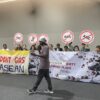
Africa Wants Health to Be at the Center of Adaptation Finance
With the COP30 Presidency prioritizing health at the United Nations climate summit in Belém, African leaders are calling for finance to be channeled towards improving the health systems of developing countries.
Kashmir’s Small Farmers Endless Wait for Climate Justice
In the fertile fields of Jammu's R.S. Pura, rice farmer Mohd Yaseen Khan stares at a cracked irrigation canal, battered by erratic rainfall. “One day heavy rain, next week a dry spell,” he says, dusting his palms. “Our crop suffers. Our costs rise.”
Snatching Victory From Jaws of Defeat Through Belém’s Mutirão Approach
Mutirão first entered the global climate discourse in Ambassador André Corrêa do Lago’s first letter to the world, which was sent in March 2025 as part of his COP30 presidency.
‘This People’s March for Climate is For My Son’s Future’
In the scorching heat and humidity, Canru Pataxo marched with his one-year-old son firmly held in his arms.
Shepherded by Anxious Security in Humidity-fueled Heat, Activists Plead for Climate Justice
Farmer and climate activist from Nigeria, Melody Areola, is beating the heat in Belém and voicing farmers’ rights in climate discussions. As the UN Climate Conference, COP30, in Brazil approaches the end of its first week, activists like Melody are making their voices louder.
‘Just Transition Must Make Climate Work for People Living its Consequences’
An open letter by more than 1,000 organizations from 106 countries, including trade unions, Indigenous leaders, feminist and youth movements, Afro-descendants, peasant groups, environmental advocates, disability networks and community organizations, to all States Parties to the United Nations Framework Convention on Climate Change is calling for a people-centered Just Transition.
Belém’s Hunger, Poverty Declaration Places World’s Most Vulnerable Populations at Centre of Global Climate Policy
A young woman at COP30 speaks about retracing her father’s footsteps. At only 16, her father and her grandfather were among the first families displaced by an unfolding climatic crisis of erratic weather and worsening climate conditions that goes on to date from their ancestral village in Sundarbans. Nearly 60 years later, she is on a mission to reclaim her ancestral lands.
As COP30 Takes Place, Can Africa Draw Lessons from Brazil on How It Develops Its Livestock Sector?
As the world gathers in Brazil for the UN climate talks, the country’s livestock sector - one of the largest in the world - is understandably in the spotlight.
Latin America: a Test Case for Aligning Climate Action, Food Security and Social Sustainability
The urgency of linking climate action with social and wider environmental priorities is clear. Climate change, environmental degradation and violent conflict are often deeply connected and even mutually reinforcing. At the same time, climate action can either support or undermine efforts to improve social justice and halt environmental degradation.
We’re All in the Same Storm, Different Boats, Says Young Activist With Disability
At the UN Climate Conference venue in Belém, young activist João Victor da Costa da Silva is trying to make his case heard by negotiators. The 16-year-old Da Silva has a specific request for the parties: the needs of young people with disabilities should be addressed through the lens of climate justice.
Brazil is Breathing Life into Climate Commitments—Human Rights Lawyer
Binaifer Nowrojee, a human rights lawyer and the president of the Open Society Foundations (OSF), has lauded the Brazilian government “for significant steps taken to breathe life into the climate commitments.”
Poor Countries Welcome Loss and Damage Fund’s Call for Requests, Warn It Falls Short of Needs
Least Developed Countries have hailed the debut call for proposals for the Loss and Damage Fund, which was launched on 11 November at the United Nations climate summit known as COP30 in Belem, Brazil.« Previous Page — Next Page » *#*


The Week with IPS

NEXT STOP - SDGs
Tracking global progress towards a sustainable world
Tracking global progress towards a sustainable world

