Languages
Monday, November 16, 2026



News and Views from the Global South
Middle East & North Africa

MIDEAST: A Weekly Walk to the Border
It is another sweltering morning in Gaza. Despite the heat, a tenacious group of women, men and children gathers near the bombed Agricultural College in Beit Hanoun for the weekly march to the "buffer zone", the 300 metres flanking the Gaza-Israel Green Line border which Israeli authorities have declared off-limits to Palestinians.MIDEAST: Egypt-Israel Gas Pipeline Targeted
The pipeline that carries Egyptian natural gas to Israel was attacked by unknown perpetrators on Monday (Jul. 4), the third such incident since the Jan. 25 Revolution that ended the rule of longstanding former president Hosni Mubarak.
MIDEAST: Mosques Carry the Scars of War
"The mosque was just 100 metres from our house. We prayed there every day, five times a day. But it was more than a house of prayer," says Mohammed, a Beit Hanoun resident, of one of the 34 mosques completely destroyed during the 23-day Israeli war on Gaza in 2008-2009.BAHRAIN: U.S. Experts Sceptical Over Dialogue
As Bahrain's government launches its much-touted "national dialogue" with members of civil society, experts here are expressing scepticism that it will defuse growing tensions in the strategically located Gulf kingdom, let alone promote genuine reform.
GREECE: Activists Protest Ban Confining Gaza Freedom Flotilla to Port
Some 30 Spanish activists are occupying the embassy of their country in the Greek capital to demand that their government pressure Greece to allow the Freedom Flotilla II – "Stay Human" to set sail for the Gaza Strip.MIDEAST: Germany to Deliver Weapons to Saudi Arabia
The decision by the German government to deliver 200 state-of-the-art armoured tanks to Saudi Arabia, despite the Wahhabi monarchy’s human rights record and its recent violent intervention in Bahrain to repress the popular rebellion against the local ruling family there, illustrates the rhetorical nature of Western support to the so called Arab democratic spring.LIBYA: Civilians Killed in Misurata Shelling
At least 11 people have been killed and dozens more wounded in shelling by forces loyal to Muammar Gaddafi, the Libyan leader, around the besieged rebel enclave of Misurata, the rebels say.MIDEAST: Women on a Political Backslide
Following five months of bitter political wrangling, Lebanon’s Prime Minister Najib Mikati finally announced a new government in mid-June. But while many Lebanese feel relieved over the long overdue appointments, gender equality campaigners despair that there is not a single female among 30 ministers appointed to the new Cabinet. It has further ruffled activist feathers that this glaring omission has failed to elicit the condemnation they are demanding.Syrian Opposition Remains Divided on Engagement
Despite countless attempts by the Bashar al-Assad regime to subdue the sporadic protests that have appeared across Syria since February, the demonstrations have consistently grown in both size and intensity.MIDEAST: Children Find an Island of Near Normalcy
It is a warm spring day as citizens go about their business. Colourful bougainvilleas climb the building housing the Yaffa Community Centre (YCC). Inside the centre’s kindergarten children play while older students attend a class at the media centre. A group of foreigners is touring the attractively decorated building and getting a brief introduction to its history.
MIDEAST: From the Sea to the Pond
"Farmed fish are now better than sea fish in Gaza. They shouldn't be, but because of the sewage in Gaza's sea and the Israeli fishing restrictions, farmed fish are cleaner and healthier than sea fish."EGYPT: Anger Grows Over Slow Pace of Justice
The violence that engulfed downtown Cairo last week and left over 1,000 civilians injured took everyone by surprise, but was not unexpected. It had been brewing for nearly five months.BAHRAIN: Rifts Weaken Women’s Protest
Women activists in Bahrain have acknowledged their poor showing in the recent unrest as well as in efforts to fight sectarianism, and blamed it on rifts within their organisations.MIDEAST: Dancing in a Palestinian Bubble
It’s Thursday night, the beginning of the weekend in the Muslim world, and time to party and let one’s hair down in Ramallah, the occupied West Bank’s isolated bubble and de facto capital.MIDEAST: Gaza Flotilla Move Sinks
The besieger is besieged, such is the forlorn fact emanating from the order by Greece to block the ships docked at its ports from setting sail to the Palestinian strip of land, and that fact seems to have sealed the Flotilla's fate.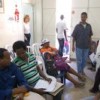
MIDEAST: Israel Denies Healthcare to Refugees
Medication and pillboxes fill two white bookcases, lining the wall behind a volunteer Israeli doctor. He talks to a patient in Hebrew about the man’s medical condition, as another man is examined behind a curtain that divides the small office. In the next room, at least 40 people – mainly of Eritrean and Sudanese origin – sit quietly on plastic chairs, waiting for their turn to be seen.Syria’s Once Profoundly Secular Society Shaken Up
Since pro-democracy protests began last March, Syria’s once profoundly secular society has been shaken up, with deep divides splitting up communities along sectarian lines.Late Spring May Come to Morocco
As Moroccans head to the polls to vote in a referendum on reforms offered by King Mohammed VI in the wake of the Arab Spring, the debate continues as to whether the proposed changes are merely cosmetic or will pave the way for a viable democracy.EGYPT: Parties Proliferate in Political Spring
The liberalisation of Egypt's political process following the Jan. 25 Revolution has led to a proliferation of new political parties, both religiously-oriented and secular. Within the last five months, four new parties have officially launched, while at least 16 others are currently in the pipeline.Undisclosed Beheading at Heart of Indonesian, Saudi Row
Indonesia, which has an estimated 1.2 million emigrants in Saudi Arabia, is deeply troubled that Saudi Arabia beheaded one of its citizens in a death penalty sentence without even contacting the government in Jakarta.LEBANON: Indictments Issued in Hariri Death Probe
A United Nations-backed court has handed down indictments requesting the arrest of four members of the Shia movement Hezbollah in connection with the 2005 killing of former Lebanese Prime Minister Rafik al-Hariri, according to media reports.« Previous Page — Next Page »


The Week with IPS

NEXT STOP - SDGs
Tracking global progress towards a sustainable world
Tracking global progress towards a sustainable world
