Languages
Tuesday, November 17, 2026



News and Views from the Global South
Middle East & North Africa
African Union Urges Libya Dialogue
The Libyan government has agreed to a range of proposals from the African Union at a high level meeting held in Addis Ababa Friday, including democratic reforms and talks with the rebels.Deaths as Syrian Forces Fire on Protesters
Syrian security forces have opened fire on anti-government protesters in the city of Sanamin near Daraa, killing at least 20 people, according to one witness.TURKEY: Old Colonial Rivalries Revive over Libya
Turkey's volte-face Thursday evening to make a sizeable military contribution to NATO's intervention in the Libyan crisis, after two weeks of fierce opposition to the Alliance's mingling with Arab affairs, has further blurred Ankara's position in the North African conflict.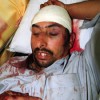
Foreign Labourers Targeted Throughout Bahrain
As protests in Bahrain continue, increasingly migrant workers are being victimised in violent hate crimes.
LIBYA: Obama Doctrine of Multilateralism on the Line
As the North Atlantic Treaty Organisation (NATO) prepares to assume command and control of military operations in Libya after five days of the United States at the helm, U.S. President Barack Obama's doctrine of multilateralism is on the line.No Plans for Regime Change in Libya, Assures U.N. Chief
U.N. Secretary-General Ban Ki-moon brushed aside widespread speculation that the U.S.-led military attacks on Libya is part of a much-wider plan with a hidden political agenda: the ouster of Muammar el-Gaddafi from power.EGYPT: Virginity Checks Are Army’s Latest Weapon
Fresh-faced Salwa El-Hosseiny had joined protesters in Cairo's Tahrir Square when a plainclothes officer grabbed her and dragged her to army officers stationed in a nearby museum.OP-ED: Libya Intervention Threatens the Arab Spring
Despite its official U.N.-granted legality, the credibility of Western military action in Libya is rapidly dwindling. Within just 48 hours of the start of the bombing campaign, the U.S. and its allies lost the support of the Arab League.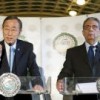
LIBYA: U.N. Chief’s Ambivalent Role in the No-Fly Zone
When the U.N. Security Council adopted a wide-ranging resolution last week recommending humanitarian and military action inside Libya, both U.N. Secretary-General Ban Ki-moon and Arab League Secretary-General Amr Moussa were assigned key roles in "coordinating" the implementation of the mandate.Egyptians Endorse Constitutional Change Amid Mounting Polarisation
Egyptians overwhelmingly endorsed a raft of proposed constitutional changes in a nationwide referendum on Saturday. But while the vote -- the first since the Feb. 11 ouster of longstanding president Hosni Mubarak -- was hailed as the freest in recent Egyptian history, it also served to polarise public opinion along broadly sectarian lines.Israel Accused of ‘A Form of Ethnic Cleansing’
"If the regime that encourages incitement, racism and anti-democracy is not toppled soon, we will find that the future is already here," says Israeli columnist Sefi Rachlevsky in the Israeli daily 'Haaretz'.Libyan Rebels Form “Interim Government”
Libya's pro-democracy fighters have formed an "interim government" even as forces backing the country's leader, Muammar Gaddafi, press ahead with attacks against them.Settlers Observe ‘Day Of Rage’ Pouring Wrath On Palestinians
Israeli settlers observed their own 'Day of Rage' last Thursday, launching reprisal attacks on Palestinians for the recent murder of a settler family in an illegal Israeli settlement in the occupied West Bank, and the demolition of a settlement structure by the Israeli authorities.
African Union at a Loss Over Libya
On Saturday, the U.S., France and the UK launched attacks on Libya's air defences and other targets following U.N. Resolution 1973. The three African members of the Security Council voted for the resolution, but a chorus of criticism has greeted the air strikes.
YEMEN: Selling Freedom Tea at Change Square
Popcorn, peanuts, protest posters, tons of tea and the ubiquitous Yemeni flag dominate the anti-government sit-in demonstration outside Sana'a University as entrepreneurs have sought to meet the demands of protesters.Obama Leaves Door Open to Regime Change in Libya
The fate of Libyan leader Muammar Gaddafi remains up in the air after the United States and its allied partners began missile strikes over the weekend to impose a no-fly zone (NFZ) in the North African country.LIBYA: Conflicting Interests Cloud Military Intervention’s Objectives
Conflicting national and electoral interests as well as clashing military and political objectives and potential are jeopardising the U.S.-Europe led military mission to implement the no-fly zone over Libyan territory, as stipulated by U.N. Security Council resolution 1973.
Regional Support Erodes for Air War on Libya
When the United Nations Security Council Resolution (UNSCR) imposing a no-fly zone in the airspace of the Libyan Arab Jamahiriya passed Thursday by a predicted 10-0, no one stopped to ask what ends the means of military force hoped to achieve.Top Army Commanders Defect in Yemen
Several top Yemeni army commanders have declared their support for anti-government protesters seeking the resignation of the country's president, Ali Abdullah Saleh.EGYPT: Revolutionary Youth Give Clinton The Cold Shoulder
U.S. Secretary of State Hillary Clinton last week paid a highly-publicised visit to Cairo's Tahrir Square, the epicentre of Egypt's recent popular uprising. But young leaders of the revolution declined an invitation to meet with her, citing Washington's tepid support for anti-government protesters over the course of the 18-day rebellion.LIBYA: Uprising Revives Entrenched Racism Towards Black Africans
Libyan President Muammar Gaddafi's use of African mercenaries to quell the uprising against his autocratic regime has revived a deep-rooted racism between Arabs and black Africans.« Previous Page — Next Page »


The Week with IPS

NEXT STOP - SDGs
Tracking global progress towards a sustainable world
Tracking global progress towards a sustainable world
