Languages
Thursday, October 15, 2026



News and Views from the Global South
Middle East & North Africa

Biden Is a Genocide Denier and “Enabler in Chief” for Israel’s Ongoing War Crimes
For three weeks, President Biden has played a key role in backing Israel’s war crimes while touting himself as a compassionate advocate of restraint. That pretense is lethal nonsense as Israel persists with mass killing of civilians in Gaza.
What is Happening in Gaza is “Inhumane, illegal, and Unacceptable”
Last August, 91 UN member states, “in a demonstration of solidarity and commitment”, signed a U.S.-Led Joint Communiqué condemning the Use of Food as a Weapon of War. Roughly 345 million people – in 79 countries – face acute food insecurity, often caused or exacerbated by armed conflicts, the US said, pointing out that the joint communiqué was born out of the United States’ resolve to once again use its UN Security Council presidency to draw attention to conflict-induced food insecurity.
A Tug of War and Peace in Yemen
For the first time since the beginning of a war that claimed the lives of over 220,000 people, a senior Houthi delegation travelled from Yemen to Saudi Arabia’s capital Riyadh in mid-September.
The Hamas-Israel Conflict
The world and the Middle East do not need another violent conflict. This is a region that has experienced far too much violence over the years. Hamas’ desperate attacks on innocent civilians was intended to provoke an Israeli overreaction that would, among other things, jeopardise Israeli diplomatic negotiations with the Gulf States and Saudi Arabia and create generalised anxiety within Israel. It was also aimed at demonstrating Hamas’ military capacity and vengeance for years of a humiliating blockade of Gaza. Kidnapping Israeli civilians was callous and brutal but part of a plan to use hostages as bargaining chips around the release of Palestinian prisoners in Israel.
The Palestinians Subject to 56 Years of Suffocating Occupation
The situation in the Middle East is growing more dire by the hour. The war in Gaza is raging and risks spiralling throughout the region. Divisions are splintering societies. Tensions threaten to boil over. At a crucial moment like this, it is vital to be clear on principles -- starting with the fundamental principle of respecting and protecting civilians.
The Road to Hell is Paved with Not-So-Good Intentions: Quo Vadis Israel-Palestine?
“God Is Truth” – Mahatma Gandhi. The bloodletting in Israel-Palestine is nothing new, perhaps the ferocity and intensity has become much worse and more frenetic. Ever since the Zionist project to establish a Jewish nation took hold in 1948, and flourished thereafter, the local inhabitants, mostly Arab Muslims and Christians, were displaced in the power equation and became dispossessed in every sense of the word.
Damning Evidence of War Crimes in Gaza
Amnesty International (AI), one of the leading human rights organizations, has accused Israeli forces of continuing “to intensify their cataclysmic assault on the occupied Gaza Strip.”
American Weapons Used in Gaza Trigger War Crime Accusations Against US
The widespread use of American weapons by Israel, which has killed thousands of civilians in Gaza, has triggered accusations of war crimes against the United States. But US has always escaped these charges in contemporary military conflicts –particularly in the killing fields of Afghanistan and Iraq --and also in the use of American weapons in Yemen where thousands have been killed.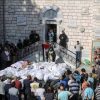
Gaza Humanitarian Crisis Worsens Even As First Aid Convoys Arrive
The ongoing violence in the Gaza Strip has resulted in a humanitarian crisis described as "catastrophic" – and even as aid arrived, strikes intensified.
In Gaza, Civilians Have No Escape from Bombs and Missiles– & No Water or Food Either
The humanitarian situation in and around the Gaza Strip—which continues to unfold as we speak—can only be described as an utter catastrophe.
Egypt Sacrifices Part of UNESCO Site for Road Development
The Egyptian government is clearing a vast area in Historic Cairo, a UNESCO World Heritage Site, to make way for new main roads and flyover bridges, which it says will improve traffic flow in the sprawling, congested megacity. The developments are being pitched as part of an effort to modernize Egypt and connect the heart of the capital with a new administrative one being built 45km (28 miles) to the east.
Israel Must Remember Its Moral Values in Its Quest to Crush Hamas
Israel will recover over time from its colossal intelligence failure and its tardiness in responding militarily to Hamas’ massacre. But it cannot do so unless it upholds its moral values and makes every effort to spare the lives of innocent Palestinians as it pursues Hamas’ destruction
UNRWA Warns of Unprecedented Humanitarian Catastrophe in Gaza
As of today, my UNRWA colleagues in Gaza are no longer able to provide humanitarian assistance. As I speak with you, Gaza is running out of water and electricity. In fact, Gaza is being strangled and it seems that the world right now has lost its humanity.
Working to Relieve the Trauma of Syrian Earthquake Orphans
Seven-year-old Salim al-Bakkar was orphaned in the earthquake that struck southern Turkey and northern Syria on February 6, 2023. Saved by members of the civil defense team who pulled him from the rubble, doctors had to amputate his left leg – which had been crushed in the 7.7 magnitude quake that killed more than 55,000 people and destroyed at least 230,000 buildings.
Alarm Raised as Israel’s Ground Military Invasion, Blockade of Gaza Strip Looms
It is a bloodbath and unmitigated mayhem as heavy fighting unfolds between Israeli forces and the Palestinian group Hamas which has taken the world by surprise. Amidst raids, rockets and sustained fierce gunfire, bombs, and death, a humanitarian crisis is unfolding. Now, both sides are warned to consider the impact of their actions on the civilian population.
“Israel’s 9/11” is a Slogan to Rationalize Open-Ended Killing of Palestinian Civilians
When Israel’s ambassador to the United Nations spoke outside the Security Council on Sunday, he said: “This is Israel’s 9/11. This is Israel’s 9/11.” Meanwhile, in a PBS NewsHour interview, Israel’s ambassador to the United States said: “This is, as someone said, our 9/11.”
Afghan Women Speak Out About Life and Resistance Two Years After the Taliban Takeover
The Taliban takeover of Afghanistan on 15 August 2021 has devastated millions of Afghans. But women and girls have been particularly affected by progressively restrictive decrees that have created a virtual system of gender apartheid.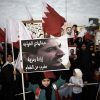
Bahrain’s Political Prisoners: Resistance Against the Odds
Maryam al-Khawaja’s journey home ended before it had begun: British Airways staff stopped her boarding her flight at the request of Bahraini immigration authorities. Maryam was no regular passenger: her father is veteran human rights activist Abdulhadi al-Khawaja, in jail in Bahrain for 12 years and counting.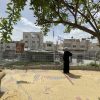
Barriers to Movement are the Never Ending Normal for Palestinians
Sundus* scans the news before she heads home, checking for signs that her 30-minute commute could turn into a four-hour-long slog. Any incident could make travel difficult. Sometimes Sundus waits for her father to call and tell her if the checkpoints around their home are open. After living in Hebron, a city in the West Bank, for the last 20 years, she is used to planning her day around unpredictability.
Population Increase in Egypt: A Blessing That Has Become a Curse
The population of Egypt increased from 104 million in November 2022 to 105 million in June 2023, according to the Central Agency for Public Mobilization and Statistics (CAPMAS). This represents the growth rate for the country, where the poverty rate is 27.3 percent. The population increase means that every 245 days, it increases by one million, or 3 people per minute.
Women’s Lives and Freedom in Iran: Gains, Losses and Lessons One Year On
On September 16 Iranians everywhere commemorated the first anniversary of Mahsa Jina Amini’s murder by the country’s notorious ‘guidance patrol’. Arrested for being badly covered, the 22-year-old was beaten so violently, she died from brain injuries. This violence and the regime’s obfuscation of its crime unleashed a 40-year-long pent-up fury among Iran’s women and girls. Protests ensued in cities and towns across the country’s length and breadth. Young and old men, who in past generations had shown limited empathy for the daily humiliations and systemic discrimination facing women, joined. Amini’s Kurdish origins prompted the mobilization of Iran’s Kurds, Baluch, and other minorities. As protesters’ images flooded social media, the #WomenLifeFreedom movement was born. With the regime cracking down, killing over 500 people, raping, injuring, and threatening countless others, young Iranians’ message to the world was ‘be our voice’. The world responded.« Previous Page — Next Page »





The Week with IPS

NEXT STOP - SDGs
Tracking global progress towards a sustainable world
Tracking global progress towards a sustainable world
