Languages
Friday, October 16, 2026



News and Views from the Global South
Middle East & North Africa

Iran: One Year on, What’s Changed?
It’s a year since a photo of 22-year-old Mahsa Amini – bruised and in a coma she would never recover from after being arrested by the morality police for her supposedly improperly worn hijab – went viral, sending people onto the streets.
Twenty Years on from the UN Bombing in Baghdad, What’s Changed?
Twenty years ago this month, a colleague saved me from a likely gruesome death. He insisted I stay in his Baghdad office of the World Food Programme (WFP) for a hot drink. “You can't leave us without trying the tea I made for you! The best in Iraq.”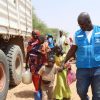
Want to Prevent Atrocities? Think Locally. Act Locally
When I first travelled to the Middle Belt of Nigeria, I listened to harrowing tales of murdered family members, physical injury, sexual violence, displacement, and hopelessness. In the years that have passed, these stories have only continued to stack up.
Can Netanyahu Rise to The Unparalleled Historic Occasion & Normalize Israeli-Saudi Relations?
The prospect of normalization of relations between Israel and Saudi Arabia will have enormous implications on Israel and the entire region. Since it will certainly take a personal sacrifice to put Israel’s national interests first, the question is, will Prime Minister Netanyahu muster the courage to do what’s best for the country
#AfghanGirlsVoices Campaign to Elevate Voices of Young Afghan Girls on Global Stage
Two years ago, the then 19-year-old Somaya Faruqi and the Afghan Robotic Team travelled from Herat City to Kabul, the heart of Afghanistan—the Taliban had taken over Herat city, cutting off electricity and internet. The all-girls team’s great passion for science, technology, engineering, and math (STEM) had driven them to Kabul to rehearse for a competition.
International Inertia Follows Israeli Assault on Jenin in the West Bank
The likelihood of further confrontations remains high following a major Israeli military assault on an impoverished camp of more than 23,500 Palestinian refugees in Jenin in the north of the occupied West Bank earlier this month. The landlocked Palestinian territory, located between Israel to the west and Jordan to the east, has been illegally occupied, according to international law, following the invasion by Israel 56 years ago.
In Northern Syria, Palestinians Fund Settlements in Occupied Kurdish Areas
The video shows an empty house with even the door frames and windows torn out. Graffiti on the wall recalls that the building was once requisitioned by the Sham Legion, an Islamist faction from northern Syria.
Hopes for Renewal Dashed in Turkey
Turkey’s election hasn’t produced the change many thought was on the cards. Now women’s groups, LGBTQI+ people and independent journalists are among those fearing the worse. Recep Tayyip Erdoğan, who has led the country for two decades, first as prime minister and then as president, prevailed in the 28 May runoff poll, taking around 52.2 per cent of the vote, with his opponent, Kemal Kılıçdaroğlu, on 47.8 per cent.
The Privilege of Making a Choice
A civilian student named Saber was caught in the crossfire in Khartoum. He had two choices: either flee and lose everything; or die. But within a moment his option to choose was violently denied: he died.
A “New” Saudi Arabia? Changes on the Screen and in Reality
The World changes, though prejudices and misconceptions remain. In 1996, political scientist Samuel Huntington published The Clash of Civilizations and the Remaking of World Order, in which he predicted that people’s cultural and religious identities would become the primary source of conflict in a Post–Cold War World. Huntington’s allegations have been contradicted by a number of critics, among them American Palestinian professor Edward Said, who lamented their extreme cultural determinism, which omitted the dynamic interdependency and interaction of cultures. Said’s own Orientalism depicted a generalised “Western view” of Arab cultures as “static and undeveloped”, while European culture was considered to be “developed, rational, flexible, and superior.” Literature and movies have depicted Arabs as exotic men riding camels and horses through the desert, and their women as dangerously seductive objects of male desire. Eventually, the exotic men turned in to being terrorists, and/or depraved oil-rich magnates, while Muslim women were presented as veiled, enigmatic, and oppressed.
The Saudis’ New Geostrategic Doctrine
The resumption of diplomatic relations between Saudi Arabia and Iran, and the Saudis’ diplomatic overtures toward Syrian President Bashar al-Assad, are part and parcel of the Saudis’ overall reassessment of their geostrategic interests, which rest on three distinctives goals: regional stability, exerting greater regional and international influence, and uninterrupted oil exports. These three fundamental goals are tightly linked and are within the Saudis’ reach.
Privatization: Egypt’s Only Weapon To Survive the Repercussions of the War in Ukraine
Egypt intends to sell shares in 32 state-owned businesses within a year, including three banks, two military-owned businesses, and numerous businesses in the energy and transportation sectors. This is part of the administration's efforts to reduce the role of the state in the economy and attract foreign capital.
Political Settlement First, Refugee Return Second
Europe’s current approach to facilitating refugee returns and containing new arrivals from Syria is based on wishful thinking. Europeans have come to terms with the fact that a political settlement for Syria’s 12-year conflict is not on the horizon.
Bahrain’s Botched Whitewashing Attempt
The Inter-Parliamentary Union (IPU), an organisation whose motto is ‘For democracy. For everyone’, just held its global assembly in a country with a mock parliament and not the slightest semblance of democracy. For Bahrain’s authoritarian leaders, the hosting of the IPU assembly was yet another reputation-laundering opportunity: a week before, they’d hosted Formula One’s opening race.
The Fight for Yemen’s Future Is a Global Responsibility
As Yemen enters its ninth year of war, its people are facing a humanitarian crisis of horrifying proportions. In my role as Oxfam's Yemen Country Director, I have witnessed firsthand the effects of the humanitarian catastrophe, worsened by economic collapse and sharp increases in the cost of food and other essential commodities.
A Plan for the Gulf States to Power a Low-Emissions Revolution
This year’s United Nations Climate Change Conference, COP 28, will be hosted by the United Arab Emirates, which, together with its Gulf neighbors, enjoys abundant solar, natural gas and financial resources. At the same time, many poorer countries are struggling to generate the additional affordable electricity they need to power their development — especially as wealthier nations halted their overseas financing for high-emitting coal power plants.
Iraq in 2023: Challenges & Prospects for Peace & Human Security
Over the past two decades Iraq has been affected by several waves of intense conflict and violence. The 2003 invasion of Iraq by a multinational coalition led by the United States and United Kingdom toppled the Ba’athist regime of Saddam Hussein.
Parliamentarians Pledge to Act on Grim Realities of Child Marriage, Gender-Based Violence
Child marriage, gender-based violence (GBV), sexuality education, religion, and tradition came under the spotlight during a conference, Arab and Asian Parliamentarians’ Meeting to Follow-Up on ICPD25 Commitments: Addressing Youth Empowerment and Gender-Based Violence, held in Jakarta, Indonesia.
Israel Today and A Possible Israel Tomorrow
Israel of today as a Jewish and democratic state is a contradiction of terms and as such may possibly become transformed into a genuinely democratic Israel tomorrow with justice and equality for all.
Earthquake Relief Efforts in Syria Shouldn’t Overlook Those With Disabilities
A few days ago, I saw a photo shared to Twitter of Sham, a young Syrian girl rescued from under the rubble in northwest Syria, sitting upright in her hospital bed, According to the Syrian Civil Defense, a volunteer humanitarian group also known as the White Helmets, Sham will lose both her legs because of injuries from the quake.
Gender Central to Parliamentarians’ Programme of Action
The post-COVID-19 period has been a crucial one for members of parliament who have their work cut out to ensure that issues that arose during the pandemic are addressed, especially concerning the ICPD25 commitments and programmes of action for universal access to sexual and reproductive rights, gender-based violence and building peaceful, just and inclusive societies. Across the world, progress toward achieving the SDGs by 2030 was impacted during the pandemic.« Previous Page — Next Page »





The Week with IPS

NEXT STOP - SDGs
Tracking global progress towards a sustainable world
Tracking global progress towards a sustainable world
