Languages
Friday, November 20, 2026



News and Views from the Global South
Middle East & North Africa
POLITICS: Does Iran Have Bush Over a Barrel?
If U.S. President George W. Bush wants to boost Republican chances of holding on to the White House and keeping Democratic gains in Congress to a minimum in the November elections, he might consider taking an attack on Iran before the end of his administration "off the table".POLITICS-US: Hawks Belie Iran's "Existential Threat" to Israel
New arguments by analysts close to Israeli thinking in favour of U.S. strikes against Iran cite evidence of Iranian military weakness in relation to the U.S. and Israel and even raise doubts that Iran is rushing to obtain such weapons at all.MIDEAST: Israelis Assault Award Winning IPS Journalist
Mohammed Omer, the Gaza correspondent of IPS, and joint winner of the 2008 Martha Gellhorn Prize for Journalism, was strip-searched at gunpoint, assaulted and abused by Israeli security officials at the Allenby border crossing between Jordan and the West Bank on Thursday as he tried to return home to Gaza.MIDEAST: Olmert Survives Again, For Now
Embattled Israeli Prime Minister Ehud Olmert won yet another reprieve this week, just hours before the parliament was set to vote to dissolve itself in a move that would almost certainly have led to new elections and Olmert's ouster from office.MIDEAST: Hamas and Hezbollah Gain, Almost Hand in Hand
Hezbollah's dramatic seizure of Beirut last month stunned observers and dealt a heavy blow to Washington's Lebanese allies. In Cairo, analysts compared the episode to last year's takeover of the Gaza Strip by Palestinian resistance faction Hamas, noting that both actions were pre-emptive - rather than offensive - in nature.RIGHTS-US: Anti-Torture Campaign Wins Influential Backers
On the eve of the International Day in Support of Victims of Torture, a bipartisan group of some 200 religious leaders and former top U.S. national security and military officers launched a campaign for a presidential order to outlaw torture and cruel and inhumane treatment of all detainees.US/IRAQ: A Blueprint for Withdrawal
Proponents of a U.S. military withdrawal from Iraq routinely brush off criticisms that their ideas are "irresponsible". But until today, the charge that withdrawal cannot be accomplished responsibly - and just how that would be done - has never been coherently answered.MIDEAST: Aid Pledged to Strengthen West Bank Police
International donors have promised to channel more aid to the Palestinian Authority (PA), particularly to strengthen the police and the judiciary.MIDEAST: Israel Training to Attack Iran
Israeli defence experts were not surprised by a New York Times report over the weekend that the Israeli air force had recently conducted what appeared to be a rehearsal for an attack on Iran's nuclear facilities.POLITICS-IRAQ: Fear of US-Sunni Ties Undercut Security Talks
The threat by the government of Iraqi Prime Minister Nouri al-Maliki earlier this month to reject the U.S.-Iraq status of forces and strategic framework agreements was prompted in part by U.S. demands for access to bases that were unacceptable to a highly nationalistic Iraqi population.LEBANON: After Accord, the Inevitable Bickering Begins
A month has gone by since the May 21 Doha agreement between warring Lebanese factions, which ended a week-long civil conflict that erupted on May 7, and led to the death of 67 people. Painstakingly brokered in Qatar's capital with the support of the Arab community, the peace deal also stipulated the election of consensus president Michel Suleiman. But ever since, Lebanese politicians have been bickering relentlessly over ministries in the future government.IRAQ: Whoever Wins, They Lose
Iraqis seem divided on who they would like to see as the next U.S. president, but few believe that either will end the occupation.
Q&A: State Main Opponent of Abolition in Morocco
Ambiguous statements and contradictory policies make it impossible to predict when Morocco will abolish the death penalty. But the "great confusion" on the issue is not deterring human rights activists pressing forward with their public campaigning - especially among the youth.MIDEAST: Ceasefire Makes Israelis Uneasy
The rockets being fired into Israel from Gaza have stopped for now. So have the Israeli raids into the coastal strip. But the majority of Israelis are deeply sceptical that the truce with Hamas, which went into effect last Thursday, will endure. Many also believe that it represents a major achievement for the Islamic movement, not for Israel.MIDEAST: Answering Attacks With Smiles and Smileys
East of Beit Sahour in Ush Ghrab, the tree line stops and the bronze, rocky desert begins. In a flat clearing on this hilltop, a small, abandoned military post is being slowly transformed from an assorted collection of cement-grey barracks into a virtual oasis for the region's children, families and tourists.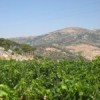
LEBANON: Wine Flows Under Hezbollah's Shadow
Pine trees adorn majestic mountain flanks separating south Lebanon from the Chouf region in the village of Jezzine. Amid the shrubbery, lush vines, their crisp leaves tinted emerald green, bear the promise of a future harvest as the grapes start to form on the twisted branches. Bordering known Hezbollah strongholds, wine production seems to be thriving, in an area where the peaceful co-existence between the culture of the vine and the 'party of God' is indeed a paradox.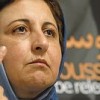
Q&A: "Neglecting Democracy Is More Dangerous Than Nuclear Weapons"
While the United States and Britain are talking about tougher sanctions on Iran, including sanctions on its gas and oil industry - Tehran's major source of revenue - Shirin Ebadi, the 2003 Noble Peace Prize laureate and international human rights defender, argues that this tactic has not weakened the government, but the Iranian people.US/MIDEAST: Respite on the Road to Nowhere?
An informal truce between Israel and Hamas went into effect early Thursday morning, temporarily suspending a year of fighting that has left more than 600 Palestinians - many of them civilians - and 18 Israelis dead.MIDEAST: New Ceasefire Could Ease the Burden
An Egyptian proposal for a "calming" of hostilities, or tahdia, between Israel and Palestinian resistance faction Hamas officially came into effect Thursday. The deal follows several months of three-way talks between Israeli officials, Palestinian delegations and Egyptian mediators.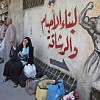
POPULATION: Iraq Still a Major Source of Refugees in 2007
Despite a marked reduction in violence due in part to more aggressive U.S. counter-insurgency efforts in 2007, Iraq was the biggest source of the world's newest refugees for the third year in a row, according to the latest annual report of the U.S. Committee for Refugees and Immigrants (USCRI) released here Thursday.POLITICS: US Concessions Rescue Floundering Iraq Security Deal
Despite apparent serious disagreements reflected in a series of incongruent statements by senior officials of the U.S. and Iraqi governments, they appear to have made a breakthrough in negotiations for a new security pact.« Previous Page — Next Page »


The Week with IPS

NEXT STOP - SDGs
Tracking global progress towards a sustainable world
Tracking global progress towards a sustainable world
