Languages
Friday, October 16, 2026



News and Views from the Global South
Middle East & North Africa

Desert Locust Invading Yemen, More Arab States
Now that Yemenis begin to hope that their year-long armed conflict may come to an end as a result of the Gulf Cooperation Council and the United Nations sponsored round of talks between the parties in dispute, scheduled on 18 April in Kuwait, a new threat to their already desperate humanitarian crisis has just appeared in the form of a much feared massive desert locust invasion.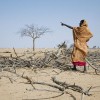
‘Little Boy’ Devouring African Food
There is a ‘Little Boy’ who has nothing to do with the atomic bomb that the United States dropped on the Japanese city of Hiroshima on 6 August 1945. This time it is about another ‘Little Boy’ who has been devastating the harvests in many regions, especially in Africa.
Want to Feel Fit? Eat Falafel, Dahl, Cow Pea and…!
This is not a minor issue. Chickpea, faba bean, lentil, common bean, field pea, mung bean, black gram, pigeon pea, cowpea, and grass pea are the major pulse crops produced globally. And these especially play an important role in food and nutritional security and sustainable agricultural production systems in the drylands, which cover over 40 per cent of the world’s land area and are home to approximately 2.5 billion people.
The Arab Spring: Five Years On
Five years ago the Arab world blew up, and the flames are still raging. What at first had been euphoria quickly turned to chaos. What cannot be denied, though, is that the uprisings were the spark of an epochal change.UN Chief Lauds Oman for Discreet Role in Peace Talks
UN Secretary-General Ban Ki-moon has singled out Oman as perhaps the only Arab country in the Gulf playing a discreet role – mostly behind-the- scenes – in helping resolve some of the military and political conflicts in the war-ravaged region.Yemen’s Health Crisis is “Critical,” Says WHO
The health situation in Yemen has severely deteriorated and is critical, the World Health Organisation (WHO) has reported.
Western Powers Unlikely to Impose Arms Embargo on Saudi Arabia
As hundreds of civilians continue to be killed in the ongoing conflict in Yemen, one of the leading human rights organization is calling for an arms embargo – specifically against Saudi Arabia which is leading a coalition of eight countries battling Houthi rebels in the war-ravaged neighbouring country.DIHAD 2016 Closes With Calls For Better Future Of Those Faced With Wars And Catastrophes
The 13th Dubai International Humanitarian Aid and Development Conference and Exhibition (DIHAD) ended today with keynote speakers drawn from International organizations, technical experts, diplomats and the private sector calling for building a better future and more development for those who are suffering from crisis, wars and catastrophes.
Corruption Swallows a Huge Dose of Water
While the United Nations marked this year’s World Water Day on March 22 focusing on the connection between water and jobs, a new report has rung loud alarm bells about the heavy impact of corruption on the massive investments being made in the water sector.
DIHAD Emphasizes Relief and Development Efforts to Meet Humanitarian Challenges
The Dubai International Humanitarian Aid and Development Conference and Exhibition (DIHAD) opened today with key speakers emphasizing the urgency to discuss innovative solutions to be applied in humanitarian operations. Under the patronage of HH Sheikh Mohammed Bin Rashid Al Maktoum, Vice-President, Prime Minister of United Arab Emirates, Ruler of Dubai, the 13th edition of DIHAD was inaugurated by HE Mr. Ibrahim Bumelha, Cultural and Humanitarian Advisor of HH Sheikh Mohammed Bin Rashid Al Maktoum, and Chairman of DIHAD Higher Committee, President of DISAB, on behalf of UN Messenger of Peace and Chairperson of International Humanitarian City HRH Princess Haya Bint Al Hussein, wife of HH Sheikh Mohammed Bin Rashid Al Maktoum, Vice-President and Prime Minister of the UAE and Ruler of Dubai.
Reaping the Gender Dividend
For the first time, an all-female flight crew recently operated a Royal Brunei Airlines jet from Brunei to Jeddah in Saudi Arabia. Such a feat certainly appears noteworthy in a country where gender segregation is pervasive. When women are still not permitted to drive a car; where there are separate entrances for men and women in banks, is there a possibility of an all-female crew operating a Saudi Airlines plane from Jeddah to Brunei? Not immediately, as there are disturbing signs that the limited gains on the gender front might face reversals.
How to Be Happy… By Decree!
When the United Nations was still getting ready to mark this year’s International Day of Happiness on 20 March, the rulers of an Arab State could have well said: ”but we are ahead and have already created a Ministry for Happiness and appointed a young lady to be in charge of it!”
Will the EU Become a Criminal Union Tomorrow?
The EUropean Union – a criminal? The EU that has peace as its top goal and received Nobel’s Peace Prize? The EU with Schengen and Dublin?
A “Colombian Triangle” for Daesh in Libya?
Besieged by US, UK, French, Russian and Syrian war crafts and ground intelligence, both in Syria and Iraq, the Islamic State of Iraq and Levant (Daesh from its original acronym in Arabic) has reportedly been searching for a new base in the North of Africa, specifically in Libya, in what has been called the “Colombian Triangle.”Civil Wars Threaten to Break up a Volatile Middle East
As civil wars and cross-border military conflicts continue to escalate in the Middle East, Syria, Iraq and Libya are in danger of breaking up —even as the Islamic State in Iraq and Syria (ISIS) continues to make territorial gains in the volatile region.
‘Worse Than World War I’
When the leaders of 28 European states enjoy again this week their exclusive flights, luxurious suites and official limousines, to meet for a new summit in Brussels to adopt a final decision on their proposed plan of using refugees as bargaining chips, 20.000 Syrians will most probably be still starving in the Idomeni camp in Greece, in a situation that has been described as “worse than World War I.”
Turkey’s Crackdown on the Press
On the evening of March 4, heavily armed police forced their way into the headquarters of the Turkish daily Zaman. The hundreds of protesters that had gathered in front of the building in an Istanbul suburb in solidarity with their newspaper were violently dispersed.
Palestinian Refugees from Syria
In the safety of his sister's bare flat in Beit Hanoun, Gaza, 42 year-old Iyad Yusef still shakes his head in disbelief when he recounts the journey that from war-torn Syria, brought him and his family to the relative safety of the blockaded strip.
“Take My Iraqis and Give Me Some Syrians” – Europe to Turkey
In a yet another violation of international laws and their own human values, 28 European countries have just agreed with Turkey to open a new “bazaar” of refugees, this time using the old barter system. i.e. Iraqis and Afghans in exchange of Syrians.
Anti-Mining Protests in Turkey Book Temporary Victory
Over the past weeks, thousands of people across Turkey have protested against the planned construction of a gold mine in Cerattepe, close to the town of Artvin in the northeast of the country. Protesters fear that the mine will cause irreparable damage to the unique natural environment of the region.
New Nuclear Hysteria in the Middle East
Three years ago when the tsunami of panic around Iran's potential capability to develop nuclear weapons reached its peak, a combined diplomatic, media campaign warning that a Gulf Arab state would think of purchasing atomic bombs was spread like an oil spot.« Previous Page — Next Page »





The Week with IPS

NEXT STOP - SDGs
Tracking global progress towards a sustainable world
Tracking global progress towards a sustainable world
