Languages
Tuesday, October 20, 2026



News and Views from the Global South
Middle East & North Africa
SYRIA: Give Peace a Chance
(WAM) - The Gulf Today, a United Arab Emirates (UAE) newspaper has said that years of strife and with millions of its people scattered across the globe, peace is what Syrians yearn for. The country is in ruins and the spreading of radicalism poses major security challenges regionally and globally.Analysis: Kurdish-Led Peace Conference Is Best Hope for Syria
While the war in Syria continues to draw in more outside forces, the work towards finding a political solution to this five-year old conflict carries on. In the past week, no less than three separate conferences were organized by different clusters of opposition groups. Conferences were held in three places: Damascus, Dêrîk – a city in the Kurdish-controlled northern part of Syria – and Riyadh, the Saudi capital, respectively.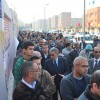
New Poll Highlights Need for Reform in the Middle East
A new public opinion survey undertaken in six Arab countries, Iran, and Turkey finds that people are more likely to blame “corrupt, repressive, and unrepresentative governments” and “religious figures and groups promoting extremist ideas and/or incorrect religious interpretations” for the rise of violent groups like al-Qaeda and the Islamic State than they are to blame “anger at the United States.”
Silence, Please! A New Middle East Is in the Making
When, in June 2006, former US National Security adviser and, later on, Secretary of State, Condoleezza Rice, spelled out the George W. Bush administration new, magic doctrine for the Middle East, tons of ink was poured and millions of words said in a harsh attempt to speculate with what she really did mean by what she called “Creative Chaos.”
Middle East Part II – 99.5 Years of (Imposed) Solitude
One hundred years ago, on 6 May 1916, two men, Briton Sir Mark Sykes and French diplomat François Georges-Picot, were entrusted by their respective governments with a rather exceptional task.
Aspects of Dualism in the Gulf
The crash in oil prices is not the only challenge confronting the Gulf States in West Asia. Economic disorder and lack of opportunity are contributing to instability in the region, stated Bahrain’s minister for industry, commerce and tourism, Zayed Al Zayani, while kicking off the recent IISS Bahrain Bay Forum. He emphasized the need for “unprecedented” economic reform across the Gulf in the wake of the lower oil revenues. These policies include the generation of millions of jobs for the youth in these economies that continue to depend heavily on expatriate labour from India, Pakistan, Bangladesh and Philippines.
The Over-Written, Under-Reported Middle East – Part I: Of Arabs and Muslims
Of all over-written, under-reported issues and regions, the Middle East is perhaps one of the oldest, outstanding ones.Opinion: Battling Iran-Backed Extremists in Yemen
In a region racked by strife, Yemen stands out. It is the poorest country in the Middle East and since March, the plight of my people has been worsened by an inhumane war.
U.N. Rights Commissioner Blasts Harsh Treatment of Refugees
As the flow of migrants continues to rise – from war-ravaged countries in the Middle East, Asia and Africa to Europe – so do the horror stories of the harsh treatment meted out to these refugees.
Opinion: The Nuclear Deal’s Impact on Iranian Domestic and Foreign Policy
As in most countries, in Iran too there are hardliners and moderates. All polls show that a large majority of Iranians support the nuclear deal (or Joint Comprehensive Plan of Action, JCPOA) between Iran and the P5+1 (the United States, Russia, China, Great Britain, France and Germany), while a small but powerful group of hardliners opposes it. The Iranian parliament has finally approved the deal, but after a great deal of controversy and with some reservations.
United Arab Emirates and Cuba Forge Closer Ties
Cuba and the United Arab Emirates agreed to strengthen diplomatic ties and bilateral cooperation during an official visit to this Caribbean island nation by the UAE minister of foreign affairs, Sheikh Abdullah bin Zayed Al Nahyan.
U.N. Continues Condemnation of Civilian Casualties in Yemen
The Saudi coalition, which continues its air strikes against rebels in strife-torn Yemen, is fast gaining notoriety as “the gang that couldn’t shoot straight” – largely because of its misses than its hits.
Palestine President Abbas Warns of ‘Grave Dangers’ in Jerusalem
“I come before you today…compelled to sound the alarm about the grave dangers of what is happening in Jerusalem,” said Palestine President Mahmoud Abbas in his remarks to the United Nations General Assembly on Sep. 30.Human Rights Activists Condemn Houthi Militia’s Atrocities Against Women in Yemen
(WAM) -- Arab and Yemeni human rights activist monitoring the civil war in Yemen say that women have been subjected to grave human right violations at the hands of the rebel Houthi militia and an allied insurgent group under the command of former president Ali Abdullah Saleh.
Solar Power Slowly Making Inroads into Mideast and Africa
To the ordinary eye, it looks like an empty desert but from this spit of endless sand is rising the largest photovoltaic solar project in the Middle East.
Iran’s nuclear deal and the regional countries
Although some regional countries initially opposed the nuclear deal between Iran and the P5+1 (the United States, Russia, China, United Kingdom, France and Germany), once the Joint Comprehensive Plan of Action (JCPOA) was signed by the two sides in July 2015, practically all regional countries welcomed it. After the initial agreement in Lausanne, U.S. President Barack Obama invited all the Gulf Cooperation Council (GCC) leaders to a Camp David summit in May and all of them expressed support for the deal.Report Condemns Atrocities of Houthi Rebels in Yemen
(WAM) - A new report from a human rights group operating in Yemen says that human rights violations have reached unprecedented levels, with more than 3,000 people murdered by the insurgent Houthi militia and its allies in Yemen.
Israel’s Opposition to the Nuclear Treaty with Iran
Relations between Iran and Israel go back almost to the foundation of the State of Israel in 1948. Iran was the second Muslim-majority country to recognize Israel as a sovereign state, following Turkey, and the two countries had very close diplomatic and even military cooperation for many decades.
Iran’s commitments under the Nuclear Treaty are just short of total surrender
Speaking about the framework agreement on Iran’s nuclear programme that was reached between Iran, the P5+1 (China, France, Russia, United Kingdom, United States plus Germany) and the European Union, Joseph Cirincione, a leading nuclear expert and president of Ploughshares Fund, said: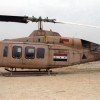
U.S., Russian Arms Supplies to Iraq, Syria a Blessing to Rebel Groups
The United States and Russia are escalating arms sales to two of their major allies in the Middle East – Iraq and Syria – despite fears that some of these weapons may ultimately wind up, ironically, in the hands of armed rebel groups battling government forces.
The Rubicons That Have Been Crossed
In their attempts to sabotage Iran’s nuclear program, the United States and Israel have resorted over time to a number of unorthodox, illegal and in some cases criminal methods to achieve their aims. They have included the following:« Previous Page — Next Page »





The Week with IPS

NEXT STOP - SDGs
Tracking global progress towards a sustainable world
Tracking global progress towards a sustainable world
