Languages
Sunday, October 4, 2026



News and Views from the Global South
Middle East & North Africa

As Gaza Enters ‘Worst-Case Scenario of Famine,’ States Call for Palestinian Self-Determination at General Assembly
As the starvation crisis in Gaza deepens into what aid organizations describe as a “worst-case scenario,” a growing coalition of nations is shifting its rhetoric and policy toward supporting Palestinian statehood. At the United Nations General Assembly this week, the humanitarian emergency has reignited global calls for a two-state solution and reignited scrutiny of the Israeli government’s blockade of aid.
In Syria’s Sectarian Fights for Power, Humanity is the Loser
As sectarian violence rises in Syria, the number of displaced people has climbed exponentially since Syrian forces joined clashes between the Druze and Bedouin groups in the Sweida region.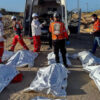
American Inhumanity on Full Display to the World
Why is a grinning Netanyahu, Israel’s Prime Minister, wildly cheered by both Democrats and Republicans whenever he addresses the US Congress, while at the same time in Gaza countless innocent civilians are being killed by American bombs and bullets—and now babies are starving?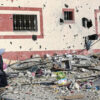
When the System Protects Itself, Not People
In Geneva, nearly 600 UN staff based at the UN Office there held an Extraordinary Staff Union meeting on July 24, 2025, passing a unanimous motion of no confidence in the UN80 reform initiative, the Secretary General António Guterres, and Under Secretary General Guy Ryder—with no abstentions and no dissenting voices (source).
Western Powers Are Complicit in Crimes Against Humanity in Gaza
The West, led by the Trump administration, has enabled the Netanyahu government to commit crimes against humanity and became complicit in the unfathomably horrific disaster that is being inflicted on the Palestinians in Gaza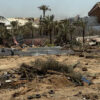
How Israel Lost its Soul
The dramatic story of Israel’s birth in 1948 following the Nazi Holocaust captured the wonder and admiration of the world. Its founders claimed that Israel would be a light to the nations, but now the Jewish State’s identity has gone from being the victim of genocide to perpetrator in less than two generations.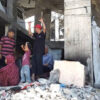
End Impunity for Israeli Crimes Against Palestinians: Demand Targeted Sanctions & Arms Embargo –at High-Level UN Conference
United Nations member countries should use the ministerial-level conference on Palestine on July 28-29, 2025, to publicly commit to concrete actions aimed at ending decades of impunity for Israeli authorities’ violations of international humanitarian and human rights law against Palestinians, Human Rights Watch said today.
‘The Lesson from Gaza Is Clear: When Ai-powered Machines Control Who Lives, Human Rights Die’
CIVICUS discusses the military use of artificial intelligence (AI) in Gaza with Dima Samaro, a Palestinian lawyer and researcher, and director of Skyline International for Human Rights, a civil society organisation (CSO) that defends digital freedoms and human rights in the Middle East and North Africa. Dima serves on multiple boards focused on civic space and surveillance issues, including Innovation for Change’s MENA Hub, the Surveillance in the Majority World Network and the VUKA! Solidarity Coalition, and volunteers with Resilience Pathways to help Palestinian CSOs counter Israeli efforts to restrict civic space and manipulate public narratives.

The Gaza Conundrum: Multilateralism is failing. Here’s why.
“Multilateralism is not an option but a necessity as we build back a better world with more equality and resilience and a more sustainable world."
Israeli Airstrikes Inflame Syria’s Humanitarian Crisis
Over the past week, the humanitarian situation in Syria has significantly deteriorated, with tensions between the Druze religious minority and the Syrian military reaching new peaks. On July 16, Israel launched a series of powerful airstrikes on Syria’s capital city, Damascus, in defense of Syria’s Druze population, further spurring regional instability and exacerbating the dire scale of needs.
Conflict, Climate Change Push Migrants in Yemen to Return to Their Home Countries
Yemen's humanitarian crisis, driven by conflict, economic collapse and climate shocks, leaves migrants desperate to return to their home countries.
WFP Deputy Chief Describes Unprecedented Humanitarian Crisis in Gaza
Carl Skau, Deputy Executive Director of the World Food Programme (WFP), described the dire humanitarian situation in Gaza following his recent visit, speaking at a press briefing at the UN Headquarters on July 11.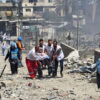
Genocide Made Invisible
Whatever the outcomes of Benjamin Netanyahu’s visit to the White House on Monday and the latest scenario for a ceasefire in Gaza, a bilateral policy of genocide has united the Israeli and U.S. governments in a pact of literally breath-taking cruelty.
Iran— Deja Vu All Over Again
Chest thumping “Mission Accomplished” claims by President Trump that he ordered the world’s biggest conventional bombs to be dropped on a sleeping nation of 90 million people, were premature. To top it off he bragged that Iran’s nuclear capacity was devastated and that the whole nation fired “not a single shot” back.
Bombing Iran Is Part of the USA’s Repetition Compulsion for War War War
Twenty years ago, one day in June 2005, I talked with an Iranian man who was selling underwear at the Tehran Grand Bazaar. People all over the world want peace, he said, but governments won’t let them have it.
The Path to Peace Between Israel and Iran
A deal between the US and Iran is possible if Iran’s bottom line -- its right to nuclear enrichment -- and Israel’s bottom line, guarantees that Iran will never have a nuclear bomb are met. This “win-win” outcome would require Donald Trump’s personal engagement. With weapons turned to plowshares, Trump would be considered for the Nobel Peace Prize.
Israel’s Attack on Iran and Its Potential Fallout
Israel’s attack on Iran’s nuclear facilities may be justified if one takes Netanyahu’s explanation at face value. I doubt, however, if he and Trump have fully considered the ominous regional ramifications of the attack and whether negotiations to limit Iran’s nuclear program would have led to much more positive results.
US Threatens UN Members Seeking a Two-State Solution to the Israeli-Palestine Conflict
The United States, a longstanding and unyielding Israeli ally, is threatening UN member states urging them to keep off an upcoming high-level meeting aimed at recognizing a two-state solution for the Israeli-Palestine conflict. The meeting, to be co-chaired by France, a permanent member of the UN Security Council, and Saudi Arabia, a strong political ally of the US, is scheduled to take place June 17-20.
Military Conflicts at Historic High as US Signals Retreat from World Stage
The world is experiencing a surge in violence not seen since the post-World War II era. 2024 marked a grim new record: the highest number of state-based armed conflicts in over seven decades.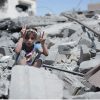
Why Are We Failing to Protect Gaza?
During President Trump’s tour of Gulf monarchies last month, he mentioned Gaza only two times. The first time was in Doha, when he expressed his desire to make Gaza a “freedom zone.” Gaza’s 2.1 million residents, nearly half of whom are children, would like that, too.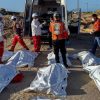
If This Isn’t Genocide, What Is?
For over a year, I refused to ascribe Israel's war against Hamas and the reign of horror it is inflicting on the Palestinians in Gaza as genocide, but now I feel shaken to the core by what I am witnessing. If what I see is not genocide, then I do not know what is.« Previous Page — Next Page »


The Week with IPS

NEXT STOP - SDGs
Tracking global progress towards a sustainable world
Tracking global progress towards a sustainable world
