Languages
Sunday, November 22, 2026



News and Views from the Global South
Regional Categories

Unite Behind Environmental Science: Transforming Values and Behaviour is as Important as Restoring Global Ecosystems
Restoring damaged ecosystems is vital to avoid the collapse of nature’s most valuable contributions to people, but International Day for Biological Diversity 2020 should also be a wake-up call about the importance of addressing our social, economic and systemic values, because it is these that are driving the destruction of nature.
Biological Diversity is Fundamental to Human Health
 This year’s International Day of Biological Diversity falls amid the coronavirus pandemic and the slow easing, in some nations, of a global lockdown. While the lockdown has forced most people to stay at home, there have been reports of more wildlife being spotted - even in once-busy city centres.

Internal Migration: A Literary/Historical View
It is easy to generalize about migration. Populist politicians often portray migrants as strangers and ”our” homeland as a stable entity, rooted in an old agricultural society. When they do so they tend to forget that most of us are in fact migrants who have left that traditional farming community far behind and if it was not we who did so, it was our ancestors.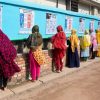
COVID-19: Global Supply Chain Resilience Relies on Soap & Water for Workers
As COVID-19 lockdown restrictions across the globe start to be relaxed, the collective conversation has shifted towards plans for a ‘new normal.’
Why More Must be Done to Fight Bogus COVID-19 Cure Claims
Fake and bogus cure claims are a longstanding, but neglected public health problem. Throughout recorded history, plagues have inspired anxiety and desperation. Time and again, this public nervousness has proved a fertile ground for false cures and claimants to thrive. In this sense, recent claims of COVID-19 cures and antidotes are no exception.
COVID-19 Pandemic and the Pacific Islands
As of 11 AM (AEST) on 20th May 2020 the incidence of COVID-19 virus (henceforth virus) on the Pacific Islands was limited. Active cases (deaths) in some of the Pacific Islands were Australia 7,072 (100), New Zealand 1,503 (21), PNG 8(0), Guam 154 (5), Fiji 18 (0), Timor-Leste 24 (0), French Polynesia 60(0), and New Caledonia 18(0).1 Standards of comparison are not uniform across the region since testing capacities of the various countries differ widely. The low number of cases in the smaller Pacific Islands compared to their larger neighbours, i.e., Australia and New Zealand, reflect both variations in testing standards as well as their smaller population size. The smaller Pacific Islands were also not subject to some of the aberrations experienced by the larger countries, e.g., large number of arrivals from foreign countries in planes and cruise ships.
Logistics: The Backbone of Humanitarian Efforts Fighting COVID-19 in Asia and the Pacific
While most of the world self-isolates at home and skies are emptier than they have been for decades, humanitarian flights transporting life-saving aid are revving up around Asia and the Pacific.
Food Markets in the Caribbean Take Stock of Vulnerability during COVID-19
 The COVID-19 pandemic has raised the spectre of food insecurity as countries and citizens fear a return to the conditions that roiled the international food markets during the 2008 economic crisis.

As COVID-19 Burns, World’s Forgotten Wars Continue to take Toll on Civilians as Well
Earlier this year, just before the coronavirus virtually shut down international travel, I sat under a mesquite tree and listened to a rambling speech by a South Sudanese general at a military base outside of the capital, Juba.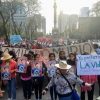
Mexico’s Development Banks Fuel the Fossil Energy Trade
Since 2012, Teresa Castellanos has fought the construction of a gas-fired power plant in Huexca, in the central Mexican state of Morelos, adjacent to the country's capital.
COVID-19 – China Tells World Health Assembly They Did their Best
This week’s 73rd World Health Assembly had member states adopt a resolution to review the global response to the coronavirus pandemic. The World Health Organisation (WHO) will also undergo an evaluation for its response to the outbreak.
To Restore Forests, First Start With a Seed
In 2011, when Rwanda committed to restoring 2 million hectares of land in a global effort to restore 150 million hectares of degraded and deforested areas by 2020 — it seemed like a big ask.
Checkmate! China’s Coronavirus Connection
Coronavirus outbreaks in China and later across the globe have been unprecedented in both its scale and impacts. In the era of changing world order, this pandemic has drawn the global attention towards the threats posed by the non-traditional security challenges.
Will UN Chief & Senior Management Volunteer Pay Cuts in Crisis-Stricken World Body?
As a spiraling financial crisis threatens to undermine the UN’s day-to-day operations worldwide, a proposal being kicked around, outside the empty corridors of the UN, has triggered the question: will senior officials, including the Secretary-General, the Deputy Secretary-General (DSG), Under-Secretaries-Generals (USGs), including 60 heads of UN agencies, Funds and Programs, and Assistant Secretaries-Generals (ASGs), volunteer to take salary cuts— even as a symbolic gesture?
HIV Services Take a Backseat to COVID-19 in Russia
In Russia, which has one of the world’s worst HIV/AIDS epidemics, an already fragile healthcare system is buckling under the pressure of dealing with COVID-19.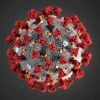
EXCLUSIVE: In the Face of the COVID-19 Pandemic We Are Only as Strong as the Weakest of Us
When the COVID-19 virus travelled from Wuhan, China halfway across the world through Europe, the Americas and beyond in the space of a few weeks, it gave us proof, if one was ever needed, of how tightly interconnected we all are. Not only are our globalized economies interdepended, but also we ourselves are one with the environment around us, and with one another. We are one humankind sharing one planet. And yet, all too often we seem to forget it, as we carelessly revert to misguiding differences between “us” and “them.” Take, for example, the distinction between rich and poor countries, or as economists put it, between advanced economies and least developed countries. In the face of COVID-19, the only difference that matters is if we are sick or healthy. Other than that, we are all the same, regardless of economic status or geographic location.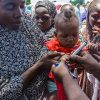
Africa Needs a DOVE Fund: Or Should We Starve So We Can Pay our Debts?
Sub-Saharan Africa has a debt problem. According to the most recent World Bank debt statistics, in 2018 the region had about $493 billion in long term external debt.
Covid-19 Straw Breaks Free Trade Camel’s Back
Economic growth is supposed to be the tide that lifts all boats. According to the conventional wisdom until recently, growth in China, India and East Asian countries took off thanks to opening up to international trade and investment.
The Hotting-Up of the Sino-American Spat: Most Dangerous Side-Effect of Covid-19?
When the United States and China signed the First-Phase of their Trade Agreement in January this year, President Donald Trump called it a “momentous step”, and the world believed they had stepped back from a dangerous brink. But, alas, to cite an idiom that is so current today, it was but a ‘false positive’. As the globe reels from the surgoing COVID-19 pandemic, it is possible that the rapid deterioration of US-China relationship can become one of the worst side-effects of this raging virus.
Coronavirus Leads to Nosedive in Remittances in Latin America
Remittances that support millions of households in Latin America and the Caribbean have plunged as family members lose jobs and income in their host countries, with entire families sliding back into poverty, as a result of the COVID-19 health crisis and global economic recession.
Forced Marriage, Organ Trafficking Rife in Asia Pacific – Part 2
A single mother, Mai (name changed) had the responsibility of providing for her young son and grandparents, who had brought her up in a poor rural province in southern Vietnam’s Mekong Delta. While she was looking for employment, somebody approached her on social media with an offer of a high-paying job in China. When she arrived in China, she was sold into a forced marriage.« Previous Page — Next Page »


The Week with IPS

NEXT STOP - SDGs
Tracking global progress towards a sustainable world
Tracking global progress towards a sustainable world
