Languages
Sunday, November 22, 2026



News and Views from the Global South
Regional Categories

Two-thirds of Tropical Forests ‘Under Threat in Next Decade’
Tropical forests can develop resistance to a warmer climate, but 71 per cent will come under threat in the next decade if global average temperatures reach two degrees Celsius above pre-industrial levels, a new study warns.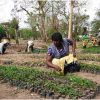
The Consequential Effects of Covid-19 on the Climate Crisis
The tragedy of the coronavirus pandemic and its associated challenges have thrown our world into chaos, with the virus destroying lives and livelihoods in its path.
Young People are Key to a Nicotine-free Future: Five Steps to Stop them Smoking
Tobacco use kills more than 8 million people each year. Most adult smokers start smoking before the age of 20. This implies that if one can get through adolescence without smoking, the likelihood of being a smoker in adulthood is greatly reduced.
COVID-19 – UN Urges World Leaders to Act Now to Avert ‘Unimaginable Devastation’
Unless global leaders act now, the COVID-19 pandemic will cause unimaginable suffering and devastation around the world, the Secretary-General of the United Nations António Guterres said yesterday, May 28. He painted a picture of hunger and famine at historic proportions, with some 60 million people pushed into extreme poverty and half the global workforce -- 1.6 billion people -- left without work, and $8.5 trillion in global output lost.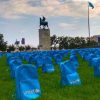
An Appeal to UN’s Budget Committee: It’s no Time to Cut Back on Child Protection
On February 26 this year, 15 South Sudanese children were released from armed groups and handed over to civilian child protection actors, including UNICEF and UNMISS, UN’s peacekeeping operation in South Sudan, who were able to facilitate the children’s safe return to their families.
COVID19 and Its Impact on Pacific Island States
 By now, the impact of COVID19 on our daily lives has been well documented, especially in advanced economies. Anxiety about the future continues to grow everywhere. Much of the corporate news coverage we consume has focused on the toll this pandemic will take on mainland countries. Often neglected, however, is the unique position Pacific Island States find themselves in.

Reproductive Rights of Women and Girls Under Lockdown
Health systems around the world are prioritising health care services and equipment to treat people diagnosed with Covid-19, which means that many procedures deemed to be elective and non-essential are being suspended or simply not provided. Abortion, for instance, has been categorised as a non-essential health service by some States, while others have removed certain restrictions to accessing abortion.
Triple Emergencies of COVID-19, Flooding & Locusts Makes Somalia Susceptible to Human Trafficking
While simultaneously suffering from the coronavirus pandemic, flooding and a locust crisis, Somalia, could well see a rise in the number of people who are susceptible to human trafficking.
Memo from a Multi-Millionaire: Covid-19 Proves Business Case for Taxing the Rich
For the past few decades, many big corporations and very wealthy individuals have operated according to the myth that they are “self-made”, that their success owed nothing to anyone else.
LIVE STREAM: Former Norwegian Prime Minister Brundtland on Pandemic Leadership
 Between 2002 and 2004, the World Health Organization (WHO) faced the first pandemic of the globalized 21st century, SARS (Severe Acute Respiratory Syndrome). Under the leadership of Dr. Gro Harlem Brundtland and through epidemiological, clinical, and logistical coordination, the WHO facilitated a strong and ultimately successful response to the outbreak. Today, the WHO is facing the coronavirus pandemic in an even more globalized and urbanized world, further complicating response and coordination efforts. What similarities do these two pandemics share, and what lessons in leadership might we be able to learn from the past?

Digital Agriculture Benefits Zimbabwe’s Farmers but Mobile Money is Costly
Shurugwi communal farmer, Elizabeth Siyapi (57) can no longer be scammed by unscrupulous middlemen to sell her crops cheaply. Nowadays, before she takes her produce to market she scours her mobile phone, which has become an essential digital agriculture data bank, for the best prices on the market.
UN@75 & the Future We Want
Crises make us think smaller. When everything is uncertain, we turn inward: to our families, our communities, the immediate needs around us. We focus on the essential and the immediate; we survive.
Ensuring Biodiversity Now will Prevent Pandemics Later
A future repetition of the current COVID-19 pandemic is preventable with massive cooperation on international and local levels and by ensuring biological diversity preservation around the world, experts recently said.
No Woman Should Ever Die Giving Life
Consider this. 24 women, children and babies were murdered at a hospital in Kabul, the Afghan capital. Even by standards of a country as accustomed to bloodshed as Afghanistan, the May 12 attack on a Kabul maternity clinic was an event of unmitigated horror.
Innovation Is an Imperative – for Sustainable Food Systems
Hunger and food insecurity continue to rise. The official 2019 statistics refer to 821 million people suffering from hunger all over the world. According the recently launched Global Report on Food Crises, there are further 135 million people facing crisis levels of hunger or worse. WFP estimates that due to the impacts of COVID19, additional 130 million people could be pushed to the brink of starvation by the end of 2020. This means a total increase of 265 million people. If there will be no appropriate and urgent actions, “we could be facing multiple famines of biblical proportions within a short few months”, said David Beasley, WFP Executive Director, addressing the UN Security Council on 21st April.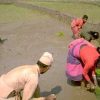
Women are Often an After-Thought in a Humanitarian Crisis
In an interview*, Bina Pradhan, an independent researcher, focuses on gender, macroeconomics and emerging issues of inequality. She is affiliated with the Federation of Business and Professional Women, Nepal (FBPWN), and has been working on the promotion and advancement of women in enterprise development and trade, post-earthquake community reconstruction, and rebuilding people’s lives and livelihoods with a focus on sustainability.
Politics, Profits Undermine Public Interest in Covid-19 Vaccine Race
With well over five million Covid-19 infections worldwide, and deaths exceeding 340,000, the race for an effective vaccine has accelerated since the SARS-Cov-2 virus was first identified as the culprit.
Kenya’s Adolescent Women Left Behind As More Married Women Access Contraception
It was only when 17-year-old Eva Muigai was in her final trimester that her family discovered she was pregnant. Muigai, a form three student who lives with her family in Gachie, Central Kenya, had spent her pregnancy wearing tight bodysuits and loose-fitting clothes that hid her growing baby bump.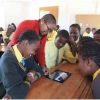
Education Post-COVID-19: Customised Blended Learning is Urgently Needed
Many well meaning education benefactors and commentators in South Africa have expressed that in the light of the COVID-19 pandemic online self-guided learning could solve some of the current teaching problems and address the educational backlog. What learners need, the reasoning goes, is to get free internet access to educational support materials on offer online. Nothing could be further from the truth.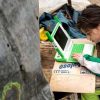
Are the SDGs in Reverse Gear?
When I was a little girl, my mother told us the story of a woman who escaped from a monster by cooking stones: when the monster fell asleep waiting for his dinner, the woman ran for her life.
Crisis Hits Oil Industry and Energy Transition Alike
While it attempts to cushion the effects of the coronavirus pandemic, the Latin American and Caribbean region also faces concerns about the future of the energy transition and state-owned oil companies.« Previous Page — Next Page »


The Week with IPS

NEXT STOP - SDGs
Tracking global progress towards a sustainable world
Tracking global progress towards a sustainable world
