Languages
Saturday, November 21, 2026



News and Views from the Global South

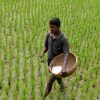
Bangladesh Welcomes a New High Yielding Biofortified Zinc Rice
The Bangladesh National Seed Board has approved the release of the newest biofortified zinc rice variety in the country: the BRRI dhan100. This latest zinc rice variety was developed by the Bangladesh Rice Research Institute (BRRI). HarvestPlus assists BRRI in crop development and breeder seed production of biofortified zinc rice.
Nobel Economist and 100 Experts Condemn Corporate Action against Argentina and Bolivia after Rollback of Failed Pension Privatization
Nobel Laureate Joseph Stiglitz, Juan Somavia, Jeffrey Sachs, Jose Antonio Ocampo and more than 100 high-level development experts have issued a statement protesting insurance corporations suing Argentina and Bolivia over the reversal of their failed pension privatizations at closed sessions of the International Centre for Settlement of Investment Disputes (ICSID) of the World Bank. If Argentina and Bolivia lose the disputes, it means that impoverished citizens and elderly pensioners will have to compensate wealthy financial corporations. Read their letter: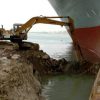
After the Ever Given: What the Ship Wedged in the Suez Canal Means for Global Trade
In the early hours of March 23, the container ship Ever Given was blown off course by high winds on its way through the Suez Canal. At 400 metres long, the Ever Given is longer than the canal is wide, and the ship became wedged firmly in both banks, completely blocking traffic.
Maquila Female Workers in Their Own Words: Fighting COVID and Labor Abuse
A compilation of testimonies collected by Blanca Velázquez Díaz and published by the Ebert Foundation (available at: http://library.fes.de/pdf-files/bueros/mexiko/17328.pdf) offers an account of the harsh reality by which some workers of the maquila industry in the Mexican state of Morelos have gone through over these last twelve months. Their words reflect, undoubtedly, similar experiences of millions of workers in different parts of the country.
A Country with too Many Victims and Few Shelters
In March 2014, Noemi N. took her own life inside a refuge camp in Ciudad Juarez, Chihuahua, where up until now there are no specialized shelters for victims of human trafficking.
A Look at Colombian Coffee Prices One Year on From the Stabilization Fund
It’s been just over a year since the Colombian government launched its landmark price stabilization fund. With a budget of $64 million, the fund was designed to provide a hedge against low prices by subsidizing farmers during periods when prices dropped below production costs.
Humanitarian & Food Aid Can Never be Enough to Manage Cascading Disasters
The intersection of crisis, climate change and COVID-19 has resulted in a “rapid rise in hunger”, according to United Nations World Food Programme (WFP) Deputy Executive Director Amir Abdullah.
Debt Moratoria in the Next Pandemic: Be Prepared, and Be Fair
Imagine it is 2025 and that, unfortunately, another pandemic is sweeping the world. Much like in the 2020 crisis, borrowers have seen their livelihoods upended and are struggling to repay loans.
Centering Equity: A Vision for Global Health in 2021
2020 will be remembered as the year that changed the world, as COVID-19 spared no country, no community, and no person. As the pandemic continues in 2021, there is recognition that some groups are impacted more than others, not just by the virus itself, but also by the socio-economic and access inequities exacerbated by global shutdowns. Globally, countries, and organisations are seeking to build back better and address inequities.
After the Fire: Rebuilding of Rohingya Camp a Race Against Time Ahead of Monsoon Season
 The building that was once the largest health centre in the Kutupalong refugee camp, serving some 55,000 Rohingya refugees 24/7, is now a burnt, distorted shell after a massive fire spread through the Cox’s Bazar camp in Bangladesh this week.
And as the tens of thousands of affected Rohingya return to the empty pieces of land that where once their homes, the need to rebuild — both the health facility and their homes — has added impetus because of the current COVID-19 pandemic and the coming monsoon season.
Hope & Numbers: What will it take to Tip the Scales on Climate Action?
We should be well on the way to solving the climate crisis by now. According to the Paris Agreement, last year should have been the year that all countries presented their commitments to cut carbon emissions for limiting global climate heating to within 1.5oC of pre-industrial levels.
Tech Savvy Youth with High Social-Emotional Skills Succeed in Agriculture – Study Shows
Saheed Babajide, a young animal production graduate and a manager at a national milk production company in Iseyin, Nigeria, is a beneficiary of the government's youth agriculture intervention programme. But he feels he received almost no training during the three years he participated.
End Vaccine Apartheid Before Millions More Die
At least 85 poor countries will not have significant access to coronavirus vaccines before 2023. Unfortunately, a year’s delay will cause an estimated 2.5 million avoidable deaths in low and lower-middle income countries. As the World Health Organization (WHO) Director-General has put it, the world is at the brink of a catastrophic moral failure.
Water Governance and Data Collection is Key to Reach Development Goals
Prioritising water governance and ensuring data collection and investment in groundwater use around the world are some of the key issues that need to be addressed with regards to achieving development goals.
Human Rights Groups Demand an end to Myanmar Military’s Crackdown on Journalists
Two human rights groups have called on the military in Myanmar to release journalists arbitrarily jailed and allow them to work without harassment and prosecution. Amnesty International and the Committee to Protect Journalists (CPJ) told IPS that they will double down on those demands until all journalists are released and the operating licenses of newsgroups are restored.
The UN Food Systems Summit: How Not to Respond to the Urgency of Reform
Global food systems have been failing most people for a long time, and the COVID-19 pandemic has made a critical situation even worse. 265 million people are threatened by famine, up 50% on last year; 700 million suffer from chronic hunger; and 2 billion more from malnutrition, with obesity and associated diet-related diseases increasing in all world regions.
Brexit Shows Why Traders Need Reliable Information But Many Are Ahead of the Game
It’s now almost three months since the United Kingdom entered into a new trade agreement with the European Union. During that time, we’ve seen traders struggle to get to grips with the new arrangements. From lorry drivers having their sandwiches confiscated by Dutch customs officers to estimates of additional paperwork costs of $7 billion a year, and pig breeders watching their meat rot on the quayside for want of the correct forms.
Why Water & Sanitation Systems are Vital for the Economy
This World Water Day, we celebrate the value of water, which at first might be a given: after all, water is the basis of all life. Without water we have no health, wealth, equality, or education.
The Value of Water Goes Far Beyond its Stock Price
In the midst of a global pandemic, when the presence of water in our lives has never seemed more important, its future availability has also never been more uncertain.
Access to Safe Water Never Loses Value
The global community is celebrating World Water Day 2021. In the COVID-19 pandemic era, the importance and value of water for all people has never been clearer. Access to safe water is essential for public health and thriving communities.
Oral Health Should be a Development Priority
The mouth is a barometer of social inequities -- it reflects the injustices in our society. As George Cuvier, an 18th century naturalist said: "Show me your teeth, and I will tell you who you are". To me, as a dentist, the mouth is like a microscope that reveals more than just tooth decay. It exposes us to a world where people lack access to water, health, quality education and live on low income.« Previous Page — Next Page »


Want to keep up with the latest news and views from the Global South? Sign up for IPS Daily News Report for daily emails with our top stories about international development, climate change, gender and more. (Formerly IPS TerraViva since 1993).

The Week with IPS

NEXT STOP - SDGs
Tracking global progress towards a sustainable world
Tracking global progress towards a sustainable world
