Languages
Monday, September 21, 2026



News and Views from the Global South

Ecobreves – ARGENTINA: Better Classification of Agrochemicals Demanded
Social and environmental organizations in Argentina are threatening to hold a street protest if the Ministry of Agriculture, Livestock and Fisheries does not respond to calls for more precise classification of the toxicity of agrochemicals.
CLIMATE CHANGE: The Developing South Holds the Key
Developing countries, which have huge potential for growth and are home to the majority of the world's people still living without electricity, will play a fundamental role in combating climate change, according to some experts.
Cities Join Forces to Fight Global Warming
Given that the world's 40 biggest cities account for eight percent of the global population and 12 percent of global greenhouse gas emissions, local governments play an increasingly important role in confronting climate change.
Using Forests to Bridge the Carbon Gap
As global greenhouse gas emissions rise instead of decreasing, forests play an even more crucial role in fighting global warming, since experts believe it will be impossible to prevent a disastrous increase in global temperature without drastically curbing deforestation.
The South Holds the Key to Climate Change
Efforts to combat climate change should focus on the developing South, because that is where industry, population and the demand for energy are growing, says Christiana Figueres, the UN’s top climate change official.Ecobreves – CUBA: First Eco-Friendly Apartment Block
Construction has been completed on Cuba’s first "green" apartment building, equipped with technology for the more efficient use of water and electricity, thanks to a project supported by the government of Norway and the United Nations Development Program (UNDP).Ecobreves – VENEZUELA: NGO Fights Capture of Dolphins
Environmental activists are calling on the Venezuelan government to prohibit the capture of Amazon river dolphins from the Orinoco River, after four of the animals died between January and April as the result of contaminated water in their pools at the aquarium in Valencia, an industrial city west of Caracas.Ecobreves – BRAZIL: Grape Waste a Potential Source of Income
Grape bagasse and seeds, now viewed as waste products of wine and juice production, could actually be an additional source of income, according to research by the Food Agroindustry department of the Brazilian Agricultural Research Corporation.Ecobreves – HONDURAS: Government Promotes Agro-Forestry Systems
The government of Honduras plans to implement an agro-forestry systems program in various regions of the country. These systems combine trees, agricultural crops and livestock raising, and are aimed at raising food production while mitigating the impacts of climate change.
CHILE: HidroAysen Dam Project is Dividing Communities
The area that will be flooded to build the HidroAysén project's five dams represents barely 0.05 percent of the Chilean region of Aysén. But it is made up precisely of the valleys where the majority of the population lives, according to local residents.
EUROPE: Space Agency Maps Mosquitoes to Combat Tropical Diseases
In times of war, the accurate mapping of enemy positions can be the key to victory. In the war on mosquito-borne diseases such as malaria, mapping the distribution and habitat of mosquitoes can play a crucial role in combating epidemics at the source.Ecobreves – LATIN AMERICA: Concerted Efforts Needed to Protect Whales
Close to 20 Latin American organizations devoted to the conservation of whales are urging Venezuela to resume full membership in the International Whaling Commission (IWC).
HidroAysén Dam Project is Dividing Communities
The effects of the HidroAysén dam project are already being felt in heightened tensions and severed social ties in Chilean Patagonia communities.Ecobreves – MEXICO: Japanese Turtles to be Tested for Traces of Radiation
Mexican scientists fear that loggerhead sea turtles (Caretta caretta) crossing the Pacific Ocean between the coasts of Asia and the Americas could be suffering the effects of the Japanese nuclear disaster.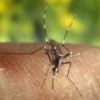
Space Agency Maps Mosquitoes to Combat Tropical Diseases
The European Space Agency will provide epidemiologists with maps of the habitat of mosquitoes that transmit tropical diseases.Ecobreves – BRAZIL: Plant Fibers Make Concrete More Resistant
Concrete blocks can be made more resistant with the addition of fibers from the sisal plant (Agave sisalana), commonly used to make rope and twine, according to research results from the São Carlos School of Engineering at the University of São Paulo.
World Bank Calibrating its Measurement of Sustainability
The World Bank is working to update the mechanisms it uses to measure the effects of the financing it provides, particularly in environmental and social terms, now that it is gearing up to administer the new Green Climate Fund.
BRAZIL: Amazon Dams Mean Progress for Some, Lost Livelihoods for Others
The Amazonian town of Mutum-Paraná, in the northern Brazilian state of Rondônia, is disappearing. Its last remaining buildings must be dismantled before it is flooded by the construction of the Jirau hydroelectric dam on the Madeira River.
Q&A: “The Battle for Patagonia Has Just Begun” in Chile
The HidroAysén hydroelectric project in Chile’s Patagonia region is causing "a credibility crisis for institutionality and (President) Piñera," environmentalist Sara Larraín told Tierramérica.Ecobreves – BRAZIL: Sugar Cane Straw Reduces Greenhouse Gas Emissions
Researchers at São Paulo State University in Brazil have determined that leaving sugar cane straw in the soil after harvesting reduces carbon emissions. They reached this conclusion after having compared two methods of harvesting sugar cane: mechanized harvesting and manual harvesting after the straw has been burned off the sugar cane plants.Ecobreves – CUBA: Exotic Weed Used to Produce Charcoal for Export
The exotic plant known in Cuba as marabu (Dichrostachys cinerea), formerly considered a pesky weed, is now being used to produce charcoal, and there are plans to increase production to 40,000 tons for export to Europe this year, official sources told Tierramérica.« Previous Page — Next Page »


Tierramérica is the main communications platform on sustainable development and the environment in Latin America and the Caribbean. It is produced by IPS Noticias, the agency’s Spanish-language service, which created it jointly with the United Nations Development Programme (UNDP) and the United Nations Environment Programme (UNEP), with later support from the World Bank. The weekly editions of Tierramérica are published in Spanish, Portuguese and English and are picked up and printed by dozens of media outlets in the region. Follow us on Facebook and Twitter.

From the Frontline of Environment
Supported by

Tierramérica en Español

Terramérica em Portuguese

