Languages
Friday, September 25, 2026



News and Views from the Global South

Mexico’s Use of “Green” Financing Questioned
Activists say greater transparency is needed around Mexico’s use of international financing to combat climate change.Ecobreves – BRAZIL: Agrotoxics Used to Save Biodiversity
Environmental organisations have turned to an old enemy, toxic agrochemicals, as an extreme measure to combat invasive plant species that are threatening native flora in conservation areas.Ecobreves – MEXICO: Forest Management Demanded to Prevent Fires
A non-governmental organisation is urging the Mexican government to promote sustainable forest management as a means of preventing serious forest fires.
Q&A: “Brazil Doesn’t Need Poisons to Maintain Food Production”
Brazil could give up its dubious rank as the world’s number one consumer of agrochemicals without decreasing the amount of food it produces for its own people, according to João Pedro Stédile, leader of the Landless Workers Movement (MST).
New Sarcophagus for Chernobyl Will Have to Wait Until 2015
The ruins of the Chernobyl nuclear reactor where an explosion 25 years ago led to one of the worst environmental disasters in history still contain 95 percent of the original fuel load, which remains highly radioactive.
“Brazil Doesn’t Need Poisons to Maintain Food Production”
The Landless Workers Movement in Brazil needs to address problems that go beyond agrarian reform, “which is why we are now involved in agro-ecology and education,” explains MST leader João Pedro Stédile in this interview.
Algae: Could a Primeval Plant Become a Future Fuel, Food, and Bio-Plastic?
Algae are rapidly gaining traction in the private sector and academia as their potential becomes clear.Ecobreves – CUBA: New Economic Model Includes Seed Conservation
At the sixth congress of the ruling Communist Party of Cuba, held in Havana Apr. 16-19, a proposal was adopted to include measures to guarantee the production, improvement and conservation of seeds within the country’s economic policy.Ecobreves – HONDURAS: IFAD Funding for Food Security Programmes
The government of Honduras will receive 37 million dollars from the International Fund for Agricultural Development (IFAD) for sustainable agriculture and food security projects that will benefit 40,000 families in 64 poor municipalities.Ecobreves – BRAZIL: Agro-ecological Techniques Lower Production Costs
Agro-ecological techniques make it possible to produce organic food at a cost that is 84 percent lower than through traditional agricultural methods, according to a research study conducted by the Luiz de Queiroz Higher Institute of Agriculture at the University of São Paulo in Piracicaba, Brazil.
PERU: Guardians of the Dry Forest
Half-shouting over the roar of the old truck we are riding in, Peruvian farmer Pablo Escudero points to a green wall that rises up in the distance and says, "That’s our ‘rain caller’, the place we have fought so hard to create, which will be our legacy to our children."
Impacts of BP Oil Spill Remain Hidden in Mexican Waters
One year after the BP oil spill in the Gulf of Mexico, the worst accidental offshore oil spill in history, the search for damages in Mexican territory remains inconclusive, while scientists continue gathering and testing samples.
PERU: Endangered Monkey Survives in Tiny Private Paradise
A conservation area covering a mere 23.5 hectares has become a refuge for a unique and endangered animal species in the northeastern Peruvian region of San Martín: the Andean titi monkey. This wilderness preserve was created by a local woman who singlehandedly set out to re-establish a small area of native forest.Ecobreves – BRAZIL: Madeira River Home to World’s Greatest Fish Diversity
The Madeira River, the largest tributary of the Amazon, is the river with the greatest diversity of fish species in the world, according to a recent study by the Federal University of Rondônia.Ecobreves – MEXICO: Ban on Toxic Insecticide Demanded
A network of environmental organisations is calling on the Mexican government to prohibit the sale of the insecticide endosulfan.Ecobreves – ARGENTINA: Campaign to Oppose Nuclear-Generated Electricity
A network of environmental organisations in Argentina has launched a campaign to get electricity users to tell their service providers that they do not want electricity generated by nuclear power.Ecobreves – HONDURAS: More Military Troops to Fight Forest Fires
The Honduran Congress has authorised the creation of a contingent of 2,000 military troops specialised in controlling and combating forest fires.
BRAZIL: Sugar Cane Fertilises Its Own Soil
The mechanisation of sugar cane harvesting, originally aimed at curbing the pollution caused by the burning of cane fields, has resulted in an added bonus: it has helped to improve soil quality, according to growers and technical experts in the southern state of São Paulo, where most of Brazil’s sugar and ethanol is produced.Ecobreves – OIL: Cuba Promises Environmental Safeguards in the Gulf of Mexico
Cuba has pledged to adopt all necessary environmental safeguards as it prepares to begin drilling five oil wells in the Gulf of Mexico, which it shares with Mexico and the United States.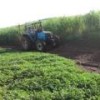
Sugar Cane Fertilises Its Own Soil
Sugar cane growers and technical experts in southern Brazil highlight the environmental benefits of a crop that continues to draw harsh criticism from other quarters.Ecobreves – VENEZUELA: Sigatoka Disease Spreads Through Banana Plantations
Heavy, sustained rainfall outside the normal rainy season has triggered an upsurge in the spread of Mycosphaerella fijiensis, the fungus that causes Black Sigatoka disease, in banana plantations south of Lake Maracaibo in northwestern Venezuela.« Previous Page — Next Page »


Tierramérica is the main communications platform on sustainable development and the environment in Latin America and the Caribbean. It is produced by IPS Noticias, the agency’s Spanish-language service, which created it jointly with the United Nations Development Programme (UNDP) and the United Nations Environment Programme (UNEP), with later support from the World Bank. The weekly editions of Tierramérica are published in Spanish, Portuguese and English and are picked up and printed by dozens of media outlets in the region. Follow us on Facebook and Twitter.

From the Frontline of Environment
Supported by

Tierramérica en Español

Terramérica em Portuguese

