Languages
Sunday, October 4, 2026



News and Views from the Global South

Ecobreves – VENEZUELA: Toxic Cloud Over Ciudad Guayana
A cloud of waste particulates is soaring this month over Ciudad Guayana, a city located 600 kilometers southeast of Caracas.
Fighting for Argentina's Glaciers as They Retreat
In two decades, Argentina's glaciers have lost an average of 10 to 15 percent of their area.
MEXICO: Responsible Tourism in a Lost Rural Paradise
It's a mixture of volunteer work and tourism. The visitor pays to spend a few weeks in contact with nature and carry out the chores of an organic farm. The idea behind it all is to cultivate environmental awareness.
Mexican Fishers Throw a Lifeline to Lobsters
Faced with the voracious international demand for lobsters from the Mexican Pacific and Atlantic, fishers and environmental organisations have come together to institute sustainable lobstering practices -- although the financial benefits are slow in coming.Ecobreves – BRAZIL: Bio-Controls of Pests Without Extermination
A system for controlling pests without harming the environment or even killing off the attacking species is under development by the National Institute of Science and Technology, an association of Brazilian universities.Ecobreves – ARGENTINA: Activists Demand Law to Protect Glaciers
Environmental organizations in Argentina are demanding the enactment of a law to protect the country's glaciers from large-scale mining.Ecobreves – HONDURAS: Hydroelectric Dam's Reservoir Reduced
The Honduran government decided to start controlled openings of the floodgates at the country's principal hydroelectric dam, "El Cajón," located in the northwestern department of Cortés, to prevent a worsening of floods in the wake of the intense rainfall of recent weeks.
Responsible Tourism in a Lost Rural Paradise
A global network of small farms is promoting organic and sustainable farming, as well as responsible consumption habits, giving a boost to a new kind of tourism.
Brazilian Dam Would Put Peruvian Jungle Under Water
Seen from up high, the route to Puente Inambari looks like a green serpent -- long, robust and sinuous. The Amazon jungle that dominates this landscape will be underwater if one of the largest hydroelectric dams in Peru (and all Latin America) is built.
Environmental Forensics for BP Gulf Spill
Stealthy submarine gliders slide through the depths of the Gulf of Mexico with the precision of birds of prey. Robot-like rovers search for droplets of oil thousands of metres under the surface. Powerful computerised analysers send instant results to scientists on board the ship above. All of this to assess the impact of disaster.
Laws No Help to Amazon Animals, or People
Strict laws prevent Brazil's Amazon river dwellers from making use of wildlife that is otherwise destroyed by natural causes anyway, say experts.Ecobreves – BRAZIL: New Technique for Reducing Dumps
A new garbage treatment system, developed by Ronaldo Izzo, a researcher at the Federal University of Rio de Janeiro, could reduce the area covered by dumps by 75 percent. The technique consists of treating the waste and using it to make the soil of the landfill impermeable.Ecobreves – VENEZUELA: University Forest Expropriated
Venezuela's National Lands Institute confiscated the land of the Central San Nicolás University's field research station, some 1,400 hectares dedicated to agricultural studies. The institute then settled 51 rural families there.Ecobreves – HONDURAS: Indigenous Groups Denounce Logging in Protected Areas
Representatives of the Federation of Xicaques and Tolupanes Tribes denounced the illegal incursion of loggers into the forests where Honduran indigenous communities live, in the central department of Francisco Morazán and the northern department of Yoro.Ecobreves – BRAZIL: City Beaches Could Disappear
Rising sea levels and the lack of sedimentation are leading to the disappearance of many of Brazil's beaches, according to geographer Dieter Muehe, who authored a study of the problem.Ecobreves – ARGENTINA: Massive Fish Die-Off
More than four tons of dead fish - including the sábalo (Prochilodus lineatus), tararira (Hoplias malabaricus), pejerrey (Odontesthes bonariensis) and catfish - appeared last week in the reservoir of the Hondo River in northern Argentina, apparently killed by industrial pollution.Ecobreves – HONDURAS: Fund for Climate Disasters in the Capital
The Honduran Congress approved 4.5 million dollars in a loan from the Inter-American Development Bank for recovery from the damage caused by heavy rains in Tegucigalpa.
ENERGY: Brazilian Biofuels Run into EU Obstacles
Brazil has begun a counterattack on the European Union's measures for certifying crop-based fuels, which could lead to import barriers for this energy source coming from the South American giant.
ENVIRONMENT: Uruguay Tries to Solve Its Forestry Puzzle
"A Uruguayan consumes 40 kilos of paper per year, compared to 400 kilos consumed by someone in Finland. We produce wood pulp to feed foreign consumption," says sociologist María Selva Ortiz, representative of the environmental group Redes-Friends of the Earth Uruguay.
Brazilian Biofuels Run into EU Obstacles
Brazil leads the world in biofuel production, and now has to deal with European certifications that could end up creating new trade barriers.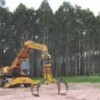
Uruguay Tries to Solve Its Forestry Puzzle
Industrial forestry is a solid productive sector in Uruguay, but activists say that its extensive monoculture plantations are harmful to water sources and soils, as well as workers.« Previous Page — Next Page »


Tierramérica is the main communications platform on sustainable development and the environment in Latin America and the Caribbean. It is produced by IPS Noticias, the agency’s Spanish-language service, which created it jointly with the United Nations Development Programme (UNDP) and the United Nations Environment Programme (UNEP), with later support from the World Bank. The weekly editions of Tierramérica are published in Spanish, Portuguese and English and are picked up and printed by dozens of media outlets in the region. Follow us on Facebook and Twitter.

From the Frontline of Environment
Supported by

Tierramérica en Español

Terramérica em Portuguese

