Languages
Sunday, October 4, 2026



News and Views from the Global South

Brazilian Biofuels Run into EU Obstacles
Brazil leads the world in biofuel production, and now has to deal with European certifications that could end up creating new trade barriers.
Uruguay Tries to Solve Its Forestry Puzzle
Industrial forestry is a solid productive sector in Uruguay, but activists say that its extensive monoculture plantations are harmful to water sources and soils, as well as workers.Ecobreves – BRAZIL: Southern Plains Devastated and Neglected
The Pampa, the biome of prairies in Brazil's far south, has already lost 54 percent of its original vegetation, according to figures from the Ministry of Environment, which show that 2,183 square kilometers were destroyed between 2002 and 2008.
CHILE: Salmon Industry Won’t Give Up
The once booming salmon industry in Chile is trying to get back on its feet after the devastating health crisis that cut production in half. But its long-term viability has been called into question.
BIODIVERSITY: An Ocean of Crustaceans
What lives in the world's oceans? Crabs mostly, according to the Census of Marine Life, a 10-year research effort.
CLIMATE CHANGE: Cancun Conference Holds Out Little Hope in Face of Extreme Weather
Unusually warm temperatures and more frequent and intense droughts and hurricanes... you have seen the headlines. As options dwindle for negotiating a global pact to fight climate change, the United Nations is pointing to today's "extreme conditions."-100x100.jpg "Workers at a Chilean salmon company - Courtesy of Fundación Terram")
Salmon Industry Won't Give Up
The unregulated farming of exotic salmon species in Chile generated a chain reaction that has cast a cloud over this industry -- but now salmon operations are attempting to turn things around.
Extreme Weather Focuses Attention on Cancún Climate Conference
The world's climate is undergoing serious disturbances as talks aimed at a global pact to fight global warming have been cast adrift, warn experts
An Ocean of Crustaceans
Fish represent just 12 percent of all ocean species, according to the Census of Marine Life, to be published in October.Ecobreves – MEXICO: A Boost to Oil-Producing Crops
The Mexican government's plan to promote oil-producing crops like canola is being challenged by experts.Ecobreves – BRAZIL: Bacteria Inventory of the Atlantic Forest
A study by the Oswaldo Cruz Foundation produced the Collection of Bacteria from the Atlantic Forest, Brazil's most deforested ecosystem. The collection marks the beginning of a project to record all of the forest's biodiversity.Ecobreves – ARGENTINA: National Park Expropriated
An Argentine environmental group is challenging a decision by the central province of San Luis, which in late July expropriated a protected area to turn it over to an indigenous community.
PERU: Transparency a Challenge for Mining and Oil
Peru is the only Latin American country that has made steps towards joining the international Extractive Industries Transparency Initiative (EITI), but has a difficult stretch ahead as it tries to overcome industry resistance to reporting profits and the government's own obstacles.
MEXICO: Conservation Gaining Ground on Private Lands
The Mexican government is promoting the notion of private lands dedicated to sustainable use, a tool created in 1997 in this country with great biodiversity, but experts say there are still many shortcomings in the plan.
Private Environmental Protection Gaining Ground in Mexico
Privately managed protected areas cover 34 million hectares in Mexico, more than 17 percent of the country's territory, compared to 25 million hectares of federally protected lands.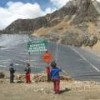
Transparency a Challenge for Peru Mining and Oil
Peru, with its vast mining and petroleum wealth, is progressing slowly in its adherence to the Extractive Industries Transparency Initiative.Ecobreves – HONDURAS: Identifying Geological Faults in Tegucigalpa
A mission of experts from the Japan International Cooperation Agency is in Honduras to identify the main geological faults in the capital and propose actions to reduce the city's vulnerabilities, which have been revealed over the last two months of heavy rainsEcobreves – VENEZUELA: Small Grants Program Arrives
The Small Grants Program of the United Nations will provide support at a maximum of 50,000 dollars to initiatives from non-governmental organizations, academic groups and communities in Venezuela for mitigating climate change and promoting the conservation and sustainable use of biodiversity.Ecobreves – LATIN AMERICA: First Ethics Tribunal for Border Mining
The First Ethics Tribunal on Border Mining in Latin America will hear cases involving Argentina and Chile, Bolivia and Brazil, and Ecuador and Peru in its Sep. 30 sessions in the Chilean capital.Ecobreves – BRAZIL: Plastic Cuts Wastewater Treatment Costs
A polyethylene plastic bracket, to replace the stones and imported synthetic materials used in filtering sewage water, is poised to help Brazil overcome its sanitation problems.
Q&A: Clean Energy and Cultural Survival in Nicaragua
For the past six years, French and U.S. engineers have been installing solar panels and wind turbines in the southeastern Nicaraguan town of Bluefields, promoting clean energy and development among the region's Rama indigenous peoples.« Previous Page — Next Page »


Tierramérica is the main communications platform on sustainable development and the environment in Latin America and the Caribbean. It is produced by IPS Noticias, the agency’s Spanish-language service, which created it jointly with the United Nations Development Programme (UNDP) and the United Nations Environment Programme (UNEP), with later support from the World Bank. The weekly editions of Tierramérica are published in Spanish, Portuguese and English and are picked up and printed by dozens of media outlets in the region. Follow us on Facebook and Twitter.

From the Frontline of Environment
Supported by

Tierramérica en Español

Terramérica em Portuguese

