Languages
Saturday, October 3, 2026



News and Views from the Global South

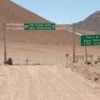
ARGENTINA-CHILE: Citizens Want a Voice in Andean Tunnel Plan
Agua Negra Pass today is an unpaved road that connects Argentina and Chile at 4,800 metres above sea level. But it is only open in the southern hemisphere summer months -- December to March -- and then only to lightweight vehicles.Citizens Want a Voice in Andean Tunnel Plan
The governments of Argentina and Chile are promoting a tunnel through the Andean Mountains, but activists are demanding transparency -- and a voice in the process.
GM Maize Debate Simmers in Cuba
Those who believe the introduction of transgenic crops is only a scientific matter are mistaken, says Cuban agro-ecologist Fernando Funes-Monzote in this exclusive interview.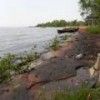
Paraguayan “Jewel” Lake Loses Its Luster
Increasingly murky waters and the proliferation of trash along the shore await visitors to Paraguay's Lake Ypacaraí.Ecobreves – HONDURAS: Speeding Up Environmental Permits
The Honduran Secretariat of Natural Resources and Environment announced a project to eliminate delays in issuing environmental permits.Ecobreves – MEXICO: A Boost to Automotive Efficiency
Four non-governmental organizations in Mexico launched a campaign on vehicle efficiency -- with sights on achieving government regulation on the matter.Ecobreves – ARGENTINA: An Eco-Bus for Buenos Aires
This week the city of Buenos Aires gets its first "eco-bus," which has a hybrid engine that runs on electricity and diesel, emitting 40 percent less greenhouse-effect gas, but costing four times more than a conventional bus.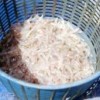
Culinary Traditions Exhausting Spain’s Fisheries
"We have little boquerón (a type of anchovy), little jurel (scad), little salmon," recites a server at a restaurant on the coast in Málaga, the southern Spanish city known for its "small fried fish."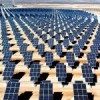
SPAIN: Renewable Energy a Remedy for Economic Crisis
One of the causes of Spain's deep economic crisis is the country's limited ability to export goods with high added value. But the pioneering renewable energy sector has the potential to fill that gap.
Climate Justice Treks from Cochabamba to Cancun
The "people's" climate agenda that the Bolivian government and civil society produced at an April conference in Cochabamba has made its way to the official United Nations negotiating table. But its inclusion in a binding climate treaty is unlikely, say activists.
Renewable Energy a Remedy for Economic Crisis
Spain is one of the world's leading producers of photovoltaic energy, with installed potential of 3,200 megawatts.Ecobreves – BRAZIL: New Weapon Against Mercury Contamination
Removing mercury from water, petroleum and natural gas, without leaving additional toxic waste, is now possible with a technique developed at the Alberto Luiz Coimbra Institute for Engineering Research, at the Federal University of Rio de Janeiro.Ecobreves – MEXICO: Environmental Budget Cuts Face Criticism
The 2011 budget for Mexico's Secretariat (ministry) of Environment and Natural Resources is insufficient to tend to existing and urgent needs, according to the watchdog group Greenpeace Mexico.Ecobreves – HONDURAS: China to Finance Ambitious Hydroelectric Project
The government of Honduras announced the construction of the Patuca I, II and III hydroelectric dam, over the course of three years beginning January 2011 at a cost of one billion dollars financed by a Chinese firm.Ecobreves – ARGENTINA: Infrastructure Plan Ignores Town
Residents of a town of 400 people in the northeastern Argentine province of Chaco faced repression and legal charges for their opposition to an electrical transmission line through their community.
ARGENTINA: Fighting to Save Glaciers as They Retreat
Argentina's glaciers, along with Chile's the most extensive of South America, manifest the damage caused by climate change, while they also face threats from mining and major transportation infrastructure projects. A law to protect them has been postponed yet again.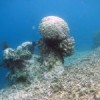
Record Temperatures Killing Caribbean Corals
The waters of the Caribbean Sea are the warmest on record and the region's imperilled corals are bleaching and beginning to die, experts warn.Ecobreves – CHILE: Farmers Fight Brazil-Financed Thermoelectric Plant
A delegation from the Totoral Agricultural Community of the northern region of Copiapó delivered a letter Sep. 8 to Brazil's ambassador in Chile, Mario Vilalva, requesting the Brazilian government withdraw support for the Castilla thermoelectric plant, being built by Brazilian entrepreneur Eike Batista.Ecobreves – HONDURAS: Renewable Energy Contracts Questioned
Communities in the northwestern Honduras and Catholic groups have challenged the decision by Congress to grant 40 renewable energy contracts to companies they say are polluters.Ecobreves – CUBA: Testing Plant-Based Cancer Med
Three hospitals in Santiago, Cuba, began to administer a medication made from the anamú (Petiveria alliacea) plant, also known as guinea henweed, to fight cellular immunodeficiency among patients with cancer and other illnesses.Ecobreves – BRAZIL: Sugarcane Provides 18 Percent of Energy
Nearly half the energy consumed in Brazil comes from renewable sources, thanks in large part to sugarcane, according to the Sustainable Development Indicators of the Brazilian Institute of Geography and Statistics (IBGE).« Previous Page — Next Page »


Tierramérica is the main communications platform on sustainable development and the environment in Latin America and the Caribbean. It is produced by IPS Noticias, the agency’s Spanish-language service, which created it jointly with the United Nations Development Programme (UNDP) and the United Nations Environment Programme (UNEP), with later support from the World Bank. The weekly editions of Tierramérica are published in Spanish, Portuguese and English and are picked up and printed by dozens of media outlets in the region. Follow us on Facebook and Twitter.

From the Frontline of Environment
Supported by

Tierramérica en Español

Terramérica em Portuguese

