Languages
Sunday, November 8, 2026



News and Views from the Global South

Ecobreves – HONDURAS: Financing for Indigenous Farming
From August and for the next five years, the Honduran government will grant loans totaling 15 million dollars to 45,000 indigenous families in the western part of the country in an effort to promote sustainable development projects.Ecobreves – VENEZUELA: Mysterious Oil Spill
An oil spill of unknown origin and quantity has since Jun. 29 affected nine beaches along about 50 kilometers of the northeastern Venezuelan peninsula of Paria, near Trinidad and Tobago.Ecobreves – CHILE: Garbage Collectors, Unite!
On Jul. 11 in Chile, the National Movement of Garbage Collectors was born. With more than 200 members, the celebrated by marching under the slogan "Organized collectors will never be stepped on".
Unknown State of Caribbean's Whales and Dolphins
Accidents involving fishing nets, which kill 300,000 cetaceans -- whales, dolphins and porpoises -- each year, are difficult to estimate in the Caribbean, where artisanal fishing is the norm.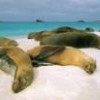
Uncertainty in Carbon Absorption Project Near Galápagos
Just off the environmentally protected Galápagos Islands, a company is preparing to enrich seawater with iron in order to promote phytoplankton growth and the absorption of carbon from the atmosphere.Ecobreves – ARGENTINA: Residents Put Brakes on Real Estate Boom
The residents of the Argentine capital who want to see a halt to the uncontrolled construction have scored a victory in stopping work on about a hundred buildings.Ecobreves – MEXICO: Hydrogen from Organic Waste and Plastics
Mexican researchers are developing a system to produce hydrogen from solar energy, gasification of biomass and plastic waste.Ecobreves – PERU: Oil Firms Asked Not to Contact Isolated Tribes
The Inter-Ethnic Association for the Development of the Peruvian Jungle on Jul. 5 asked international oil companies to refrain from oil exploration in areas inhabited by indigenous tribes who live in isolation by choice.Ecobreves – VENEZUELA: Maracaibo Lake's Eco-Tourism Museum
Artists, scientists, teachers and entrepreneurs in Venezuela's northwestern state of Zulia have set up a foundation to sponsor the Eco-Tourism Museum of Maracaibo Lake, the largest in South America, covering more than 12,000 square kilometers.Ecobreves – BRAZIL: Ethanol Into Plastic
Brazil will use sugarcane ethanol to produce high-density polyethylene (HDPE), used in packaging and in automobile parts. The technology is being developed by the petro-chemical firm Braskem.Ecobreves – CHILE: Worry Over Clandestine Dumps
In the Santiago metropolitan region there are more than 340 clandestine and illegal garbage dumps, occupying a combined area of nine square kilometers that could otherwise be used for 2,000 soccer fields, concluded a study by the private Andrés Bello National University (UNAB).
Science Ignores AIDS in Women, Says Nobel Nominee
In Latin America, women are always one step farther behind, and HIV/AIDS demonstrates this disparity in a cruel way, says HIV-positive activist Patricia Pérez in this Tierramérica interview.
Steel and Eucalyptus Heat Up Eastern Amazon
The Brazilian government's plan to reforest with eucalyptus trees an area of the Amazon that was logged by the steel industry has only added fuel to the fire of decades-old conflicts.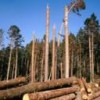
Nicaraguans Plant Trees and Harvest Water
A small Nicaraguan village has recovered its once bountiful water supplies by changing their harmful land-use methods.Ecobreves – ARGENTINA: Pulp Mill Waste Used for Roads
A waste product from the cellulose industry can improve gravel or dirt roads in an environmentally friendly way, says an industrial technology agency in Argentina.Ecobreves – REGIONAL: Tierramérica's New Face on the Web
Tierramérica, the region's leading environmental news service published in some 20 Latin American newspapers, has completely renovated its website.Ecobreves – BRAZIL: Industrialists Ask for Reform of Environmental Laws
The National Confederation of Industry (CNI), Brazil's leading business association, will press the government to change environmental legislation and to speed up issuance of environmental permits.Ecobreves – MEXICO: Plastic Into Gasoline and Fat
Mexican researchers have developed a chemical process to convert plastics into gasoline and fats.Ecobreves – CHILE: Another Pulp Mill Disaster Investigated
The Licancel plant of the Chilean company Celulosa Arauco y Constitución (CELCO), located in the central region of Maule, is accused of responsibility for the deaths of hundreds of fish and aquatic birds in the Mataquito River, where it discharges its waste.Ecobreves – VENEZUELA: Art-Fest for Water
Painting, sculpture, photography, music, literature and performance are part of the Festival of Water, under way Jun. 17-23 in 11 municipalities of the southeastern Venezuelan state of Bolívar.
Civil Resistance Aimed at Saving Colombian Jungle
In the Darién Mountains, near Colombia's border with Panama, some 3,000 Afro-Colombians are working to restore their crops and recover their land, from which they were forcibly expelled 10 years ago.« Previous Page — Next Page »





Tierramérica is the main communications platform on sustainable development and the environment in Latin America and the Caribbean. It is produced by IPS Noticias, the agency’s Spanish-language service, which created it jointly with the United Nations Development Programme (UNDP) and the United Nations Environment Programme (UNEP), with later support from the World Bank. The weekly editions of Tierramérica are published in Spanish, Portuguese and English and are picked up and printed by dozens of media outlets in the region. Follow us on Facebook and Twitter.

From the Frontline of Environment
Supported by

Tierramérica en Español

Terramérica em Portuguese

