Languages
Wednesday, October 14, 2026



News and Views from the Global South
Other Voices
News and Views from our Content Partners

Conference in Vienna: Executive Director of the Geneva Centre received by the Chairman of the Caucasus Muslims’ Board and the Director of the Diplomatic Academy in Vienna
In relation to the organization by the Geneva Centre for Human Rights Advancement and Global Dialogue together with its partners in Vienna on the theme of “From the Interfaith and Inter-Civilizational Cooperation to Human Security”, the Executive Director of the Geneva Centre Ambassador Idriss Jazairy participated in several high-level meetings in Vienna.Myanmar/Bangladesh: Older people denied dignity in camps after facing military atrocities
Tens of thousands of older women and men from ethnic minorities across Myanmar who faced military atrocities and were forced to flee their homes are being let down by a humanitarian system that often fails to adequately address their rights and needs, Amnesty International said in a report published today.
Celebrating 25 years and growing the future together
(UNCCD) - Monday, 17 June is World Day to Combat Desertification. It will be observed all over the world. Download the message from Mr. António Guterres, United Nations Secretary General, by clicking on this link: <https://www.youtube.com/watch?v=pIJf-5FUg4k&feature=youtu.be>
At the intersection of conflict, climate change and energy access
With the advent of the 21st century, there has been a steady rise in energy access all around the globe. For the first time ever, the total number of people without access to electricity fell below 1 billion in 2017 according to the International Energy Agency. Despite the increase in the pace of electrification, 13 percent of the global population, mostly concentrated in sub-Saharan Africa and South Asia, still lack critical access to electricity—a factor linked closely with productivity, health and safety, gender equality and education. Without much greater ambition and more intensified efforts, the Sustainable Development Goal (SDG) 7 that has an objective of “ensuring access to affordable, reliable, sustainable and modern energy for all” will be impossible to attain by 2030.
Burmese Muslims: Still looking for a permanent home!
They are thought to be the world's most persecuted refugees. It is also argued that they are one of the most forgotten too. Some five year ago I saw and met hundreds of inmates from Burma in a Jeddah prison. Thousands of Burmese Muslims from Arakan – often called Rohingyas – were offered a safe haven in Saudi Arabia by King Faisal but with the change in rulers in Saudi Arabia the rules underwent a change too. A permanent abode of peace that was offered to these uprooted Arakanese is now nothing less than a chamber of horrors.
15 shortlisted participants of the Greenpreneurs 2019 program to take part in a 12-week global competition
SEOUL, Republic of Korea (GGGI) – Out of more than 200 participants, 15 were shortlisted from GGGI’s Member countries and countries where GGGI has operations, including Cambodia, Colombia, Ethiopia, India, Jordan, Morocco, Nepal, the Philippines, Rwanda, Uganda, the UAE, and Vanuatu. This year, GGGI is pleased to have a variety of project ideas designed to facilitate the achievement of green growth and climate change action in developing countries, including innovative uses of solar PV systems, recycling solutions, and waste management innovations.
Displaced in South Sudan – A journey of 1,000 kilometers
(UNOCHA) - Conflict, hunger and disease forced nearly 700,000 people to flee South Sudan to become refugees in neighbouring countries in 2017. More than 70 percent of those fled in the first half of 2017, when multiple military offensives occurred in Upper Nile, Unity, Jonglei, and the Greater Equatoria region.
Duel at the Shangri-La dialogue: Implications for us all
(The Daily Star) - The Annual Jamboree of global defence leaders at the Shangri La Dialogue in Singapore is much more than just a talkathon. Amidst the wining and dining, and in the chambers and corridors, policymakers and thought leaders get the opportunity to interact with one another intensely over a weekend. They try to make sense of how the regional critical security and related issues are evolving, against the backdrop of a rising Asia and a burgeoning superpower competition in what is now being increasingly viewed as the “Indo-Pacific Region”. Over the last several years the United States seemed to enjoy a walk-over vis-à-vis the agenda in the absence of senior Chinese protagonists. It invariably resulted in a spot of “China-bashing”, and a consequent erosion of its significance, the high quality of discourses notwithstanding.
Resettling the Unsettled
(The Daily Star) - The Rohingya influx into Bangladesh, described by the United Nations (UN) as the “world’s fastest growing refugee crisis,” has been one of the most discussed humanitarian crises of recent times. According to the United Nations High Commissioner for Refugees (UNHCR), Bangladesh, prior to the latest exodus, had already been hosting more than 300,000 Rohingya refugees.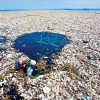
Our oceans: The ultimate sump
(The Daily Star) - Today is “World Oceans Day,” a day observed worldwide to raise awareness about the crucial role the oceans play in sustaining life on Earth. It is also a day to appreciate the beauty of the oceans that “brings eternal joy to the soul.” The oceans are among our biggest resource and also our biggest dumping grounds. Because they are so vast and deep, many of us believe that no matter how much garbage we dump into them, the effects would be negligible. Proponents of dumping even have a mantra: “The solution to pollution is dilution.” Really! In case they don’t know, garbage dumped into the oceans is continuously mixed by wind and waves and widely dispersed over huge surface areas. There is a zone in the Pacific Ocean, called The Great Pacific Garbage Patch, which is a gyre of marine garbage twice the size of Texas. The garbage, mainly microplastics, were carried there by strong currents from other parts of the ocean. This is not the only floating garbage in our oceans. The Atlantic and Indian Oceans have their own garbage patches. Worse yet, the sheer size of the patches is making clean-up efforts an extremely difficult task. Surely, human activities are impacting the oceans in drastic ways. Some of the anthropogenic environmental issues that are affecting the oceans are plastic pollution, oil spills, climate change and noise. One of the most dangerous threats the oceans may face in this century is radioactive pollution.[pullquote]3[/pullquote] Each year, we dump nearly eight million tonnes of plastic—mostly grocery bags, water bottles, yogurt cups, drinking straws and plastic utensils—into the oceans. Recently, plastic has been discovered in the deepest part (11 kilometres) of the world’s oceans, Mariana Trench in the Pacific Ocean. Extremely elevated concentration of PCBs, an environment-damaging chemical banned in the 1970s, have also been found within the sediment of the trench. While it takes hundreds of years for plastics to decompose fully, some of them break down much quicker into tiny, easy-to-swallow particles that can easily be ingested by marine species causing choking, starvation and other impairments. Pollution of the oceans by oil spills has been one of the major concerns for a long time. The primary source of spill is offshore drilling. The process is inherently dangerous and thus, is prone to accidents. When accidents happen, and they do happen without warning, they cause massive damage to the environment—aquatic and shore—that persists for decades to come. Some oil spills happen when tankers transporting petroleum products have accidents. If the layer of the oil is thick enough, it smothers creatures unable to move out from under it. Besides, swimming and diving birds become covered with oil, which mats their feathers, reducing their buoyancy and preventing flight. The insulative value of feathers is also lost and the birds quickly die of exposure in cold water. The world’s largest oil spill was not an accident; it was the result of the Persian Gulf War in 1991. The second worst disaster was the spill by BP’s Deepwater Horizon offshore rig in the Gulf of Mexico in April 2010. Both incidents killed tens of thousands of birds, marine mammals, sea turtles and fish, among others. Land and oceans together absorb slightly more than half of all the carbon dioxide emissions, with the oceans taking a greater share. When carbon dioxide dissolves in water, it forms carbonic acid. Various studies estimate that if we keep on pumping carbon dioxide into the atmosphere at the current rate, then by the year 2100, the water of the oceans could be nearly 150 percent more acidic than they are now. Such a large increase in acidity would upset the productivity and composition of many coastal ecosystems by affecting the key species at the base of the oceanic food webs. It would also reduce calcium carbonate, which is essential for building the shells and skeletons of creatures like mussels, clams, corals and oysters. Because oceans absorb more than 90 percent of the heat that is added to the climate system, sea level is changing, albeit unevenly. It is changing unevenly as oceans do not warm uniformly across the planet, with the southern oceans warming at a faster rate. In addition, global reef systems are slowly migrating poleward as oceans around the world continue to warm. The single most significant contribution to rising sea level is from the thermal expansion of water. Melting ice makes the second most important contribution, but only melting of land-based ice—glaciers, ice caps and ice sheets—is significant. Ice that is already floating in the water—iceberg—makes essentially no change in sea level when it melts, because the greater density of water offsets the volume of ice that is not submerged. Other factors that contribute to the rise in sea level include wind and ocean circulations, depth of the oceans, deposition of sediments by river flows and alteration of the hydrologic cycle by humans. According to some studies, global sea level rose by about 18 cms during the last century. In the worst-case scenario, sea level could rise by two metres by the end of the year 2100. Arguably, rising sea level is among the potentially most catastrophic effects of human-caused climate change. The oceans are no longer “The Silent World” of the famous oceanic explorer Jacques Cousteau. Today, they are being acoustically bleached by noise from seismic blasts used for offshore oil and gas exploration, marine traffic and military sonar. Unlike plastic pollution, noise pollution does not have the visual impact that is needed to spark an outcry and force action. It is an invisible menace that is drowning out the sounds of many marine animals, including fish, use for navigation, communicating with each other, finding food, choosing mates and warning others of potential dangers. Whales and dolphins are particularly vulnerable to noise pollution. The deafening seismic blasts and the ping of sonar are responsible for the loss of their hearing and habitat, and disruption in their mating and other vital behaviours. The disappearance of beaked whales in the Bahamas in recent years have been attributed to testing of US Navy sonar systems in the region. From 1946 through 1993, nuclear countries used the oceans to dispose of radioactive wastes. The United States alone dumped more than 110,000 containers of nuclear material off its coasts. Russia dumped some 17,000 containers of radioactive wastes and several nuclear reactors, including some containing spent nuclear fuel. It is highly likely that radioactive wastes would eventually leak out of the containers because of poor insulation, volcanic activity, tectonic plate movement and several other geological factors. Indeed, last month, UN Secretary General Antonio Guterres confirmed that a Cold War era concrete “coffin” filled with nuclear waste is leaking radioactive material into the Pacific Ocean. Since radiation from nuclear wastes remains active for hundreds of thousands of years, their dangerous effects will linger for a long time and will have lethal impact on marine life. Furthermore, six nuclear submarines—4 Russian and 2 American—lost as a result of accidents are lying at the bottom of the oceans. They represent serious threat of radioactive contamination of the oceans, too. One of the biggest contaminations due to radiation was caused by a series of nuclear tests conducted by the USA on the sea, in the air and underwater at Bikini Atoll in the North Pacific between 1946 and 1958. The French nuclear tests carried out during 1966-1996 in French Polynesia are responsible for other cases of intense radioactive pollution of marine ecosystems. Clearly, we are using the oceans as the ultimate sump, partly because their very immensity seems to preclude any long-term effect, and partly because they belong to no one. This cannot continue indefinitely because in order for us to survive, we have to protect the oceans. Lest we forget, life emerged from the oceans and the source of most of the oxygen we breathe are the oceans. They have been an endless source of inspiration to humankind. Quamrul Haider is a Professor of Physics at Fordham University, New York. This story was originally published by The Daily Star, BangladeshBamboo Playspace for kids in Dhaka
At a time of extreme scarcity of open space for children to play, Washpur Garden City in Bosila of Dhaka has opened up an aesthetic place completely made of bamboo for kids to have fun.
Standing up for the clean air we deserve!
(GGGI) - Air pollution has become the number one environmental problem affecting people’s health, impacting 300 million children worldwide and contributing to the premature death of 600 thousand children every year.
The World Divided by a Line Is a Dead Body Cut in Two
(Tricontinental) – Word comes from friends in Iran of foreboding, a general sense of fear that the United States might bomb the country at any time.
SENT FOR HOUSE WORK: MANY TRICKED INTO SEX WORK
Little-educated women from remote villages find themselves sold as sex-workers in the Middle East, because neither the government nor recruiting agencies can authenticate foreign employers seeking housemaids.
Will the Rohingyas ever return to Myanmar?
Since the massive exodus of Rohingyas from Rakhine to Bangladesh in 2017, a lot has been written and said about the plight of these unfortunate people. After nearly two years, it appears that the outraged world community has forgotten about this persecuted ethnic minority.« Previous Page — Next Page »





The Week with IPS

NEXT STOP - SDGs
Tracking global progress towards a sustainable world
Tracking global progress towards a sustainable world
