Languages
Monday, November 2, 2026



News and Views from the Global South
Africa

60 Percent of Femicides Are at the Hands of a Partner or Family
Every 10 minutes, one woman or girl is killed at the hands of their partner or other family member. This is only scratching the surface on how femicide, one of the most extreme forms of violence against women, persists at high levels around the world. UN-Women and the UN Office of Drugs and Crime (UNODC) released a joint report, Femicides in 2023: Global Estimates of Intimate Partner/Family Member Femicides, on November 25, the International Day for the Elimination of Violence against Women.
Sudan Ravaged By Disease, Famine, and War
As living conditions in Sudan deteriorate as a result of the Sudanese Civil War, levels of famine and violations of international humanitarian law continue to accelerate among the roughly 11.5 million displaced persons. Conflict between the Rapid Support Forces (RSF) and the Sudanese Armed Forces (SAF) have severely hampered aid efforts, leaving millions of civilians to deal with widespread disease and an overall lack of essential resources.
Insights From Negotiator into How COPs Move Needle Towards Healthy, Liveable Planet
Every year, the Conference of the Parties creates a global milestone for the climate movement, setting new standards and advancing action towards a net-zero planet to sustain all life on earth. COPs provide a platform for the global community to agree on what it would take to restore planet Earth and the contributions that all signatories to the Paris Agreement should make.
Migration Remittances: Pursuit of Greener Pastures Opens Door for Climate Financing
COP29 delegates have elaborated on how Africa’s dependency on agriculture is becoming increasingly untenable amidst alarming levels of global warming, wrecking havoc on the sector. Coastal communities, pastoralists, and those in the drylands are in the thick of the climate chaos.
Finding Your Match: Partnership-Building for African Non-Profits
It is an already established truth that building partnerships is one of the single most effective ways for African non-profits to attract funding and deepen their impact. So, as an addendum to this article by Tafadzwa and I, here is a guide to finding your match.
Healing Minds, Empowering Women: Ghana’s Climate Change Battle
As climate change wreaks havoc across the globe, its effects are most acutely felt by those living in vulnerable coastal and rural communities.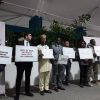
Don’t Lock Us Out of Negotiating Table—Indigenous Communities
Delegates representing Indigenous people’s rights have taken issue with the ongoing COP29 negotiations, calling for Parties to include text and language that promote Indigenous rights to be explicitly referenced in the consensus and outcome documents.
Definitely Not on Track to save Life on Planet
Alongside climate finance, COP29 currently being held in Baku, Azerbaijan, was expected to serve as an important platform for nations to demonstrate their intention to submit stronger national climate commitments, strengthen adaptation efforts, and show tangible progress and action on previous pledges.
‘The International Community Must Stop Turning a Blind Eye to the Suffering of Sudanese Women’
CIVICUS discusses Sudan’s civil war and its impact on women with Sulaima Elkhalifa, a Sudanese human rights defender and expert on gender-based violence.
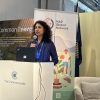
COP29 Must Set New Global Climate Finance Target, Says UNDP Adaptation Head
Empowering communities, fostering innovation and integrating socio-economic contexts into climate strategies are crucial for effective adaptation to climate change, says Srilata Kammila, Head of Climate Change Adaptation at the United Nations Development Programme (UNDP). In an exclusive interview with Inter Press Service, Kammila shed light on the agency’s pioneering approaches to locally-led climate adaptation.
Climate Finance Loans a Disaster for Climate-Burdened African Communities
African environmental activists at the ongoing climate summit (COP29) in Baku have called on climate financiers to stop suffocating poor countries with unbearable loans in the name of financing climate adaptation and mitigation on the continent.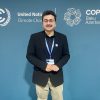
Women, Indigenous Communities Must Lead Climate Finance Allocations at COP29—Plan International Global Director
Plan International, a global leader in advocating for children’s rights and gender equality, sees the need for women and Indigenous people to be at the forefront of climate negotiations.
Africa’s Demands: Continent’s COP29 Irreducible Minimums Amid Release of First Draft Text
As expected, climate finance has taken center stage in Baku COP29 in a bid to renew the global focus on finance as a means to transform climate ambitions into tangible, sustainable action.
French-Speaking African Nations Bartering Natural Resources for Russian Arms
At the first ministerial conference of the Russia-Africa Partnership Forum in the southern coastal city of Sochi, seeking to deepen political and business ties with African countries, Russian President Vladimir Putin in his message and Foreign Minister Sergey Lavrov in his powerful speech underlined Russia's security support to fight terrorism and extremism across Africa.
COP29: African Countries Must Wake Up from ‘Distributed Carbon Emission Guilt’ to People-Centered Climate Action
Global warming is no longer just an issue for the environment but a crisis of life itself. Yet, African governments’ climate action strategies, specifically those submitted under the Nationally Determined Contributions (NDCs), remain disproportionately focused on emission reductions—an approach that fails to address the most pressing health needs of African communities. For many Africans, it’s hard to explain why their leaders prioritize reducing emissions, which are rather low and insignificant when the immediate threat of climate change is not their carbon footprint but their vulnerability to its effects.
Progress as Draft Decision Text for COP29 Presidency’s Top Negotiating Priority Released
Three days into the landmark COP29 conference, the co-chairs of the New Collective Quantified Goal (NCQG) have arrived at a workable basis for discussion on the summit’s top priority goal—a new climate finance goal. The COP29 Presidency says the draft will, moving forward, “guide conversations around potential landing zones and help identify concerns.”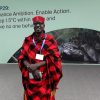
Seeking COP29 Solutions as Desert Lake Disrupts Harmonious Co-Existence With Indigenous Community
Climate change exacerbates the difficulties already faced by indigenous communities, multiplying their vulnerabilities from political and economic marginalization and loss of land and natural resources. The ongoing climatic carnage is displacing indigenous communities at seven times the rate of the global population.
Blinded by Circumstance: Trachoma’s Stranglehold on Kenya’s Rural Pastoralists
Draped in the vibrant red of his Maasai shuka, 52-year-old Rumosiroi Ole Mpoke sits cross-legged on a worn cowhide mat outside his hut, his face etched with a sorrow deeper than the lines of age. His once-sharp eyes, now clouded by trachoma, can barely make out the shadows of the cattle he once tended with pride.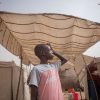
Sudan Faces Esclations in Famine, Humanitarian Law Violations
After 19 months of conflict, the ongoing Sudanese Civil War continues to deteriorate living conditions for millions of Sudanese people. Intensive conflicts between the Rapid Support Forces (RSF) and the Sudanese Armed Forces (SAF) have greatly exacerbated nationwide levels of famine. Numerous civilians have been caught in the crossfire, leading to a rising death toll. Sexual violence and rape have been used as weapons of war, with thousands of cases going unreported due to a pervasive state of fear. Sudan has seen record numbers in displacement, becoming one of the biggest displacement crises in the world.
Countdown Begins in Defining Twelve Days to Historic Global Climate Deal
The 29th session of the Conference of the Parties on climate change has officially kicked off in Baku, Azerbaijan, with the promise of striking yet another historic global climate deal and finance adaptation, gender responsive action and financing, and forgotten issues such as food waste are top on the agenda as every action is as crucial as every fraction in the rise or fall of a Celsius degree.
Hustle Culture Emerges in Benin in Face of High Graduate Unemployment
At just 11 years old, with a heavy heart, Louis peered up at his parents and said goodbye. He was leaving his small village in northern Benin to live with his uncle in Parakou, where the schools were better. Ever since, Louis has continued to make sacrifices to pursue a strong education and a better life.« Previous Page — Next Page »





The Week with IPS

NEXT STOP - SDGs
Tracking global progress towards a sustainable world
Tracking global progress towards a sustainable world
