Languages
Saturday, November 21, 2026



News and Views from the Global South
Africa
RIGHTS-ETHIOPIA: New Media Law, New Threat to Press Freedom
A new media law - six years in the making - has been passed by Ethiopia's House of People's Representatives. Its preamble declares that "the proclamation removes all obstacles that were impediments to the operation of the media in Ethiopia." But an analysis by Ethiopian journalists finds it actually clears the way for government to continue to harass and persecute the messenger when the message is not in line with the whims of the rulers.DEATH PENALTY-NIGERIA: Big Debate May Herald End of Punishment
Three Nigerian MPs have stepped in to end years of political inertia over ending the death penalty in Africa's most populous nation, forcing a parliamentary debate and vote on their Private Members’ Bill for abolition.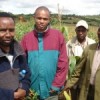
AGRICULTURE-TANZANIA: Higher Crop Prices Bring Farmers No Joy
The six-foot tall corn stalks on Kastul Baha's homestead are the envy of his pastoral village in northern Tanzania. Baha was one of the fortunate farmers this crop season with $35 to buy a package of fertilizer to apply over his half-hectare field. He expects to more than double output to 10 bags of corn compared to four bags last year.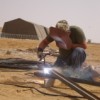
ENVIRONMENT-CHAD: Peacekeepers Try To Tread Lightly
Polish army Lieutenant Colonel Marc Gryga didn’t realize he was planning on building his country’s major base here in eastern Chad on top of a cemetery. "It didn’t look like any cemetery you see in the United States or Europe," he says, referring to absence of headstones.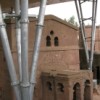
CULTURE-ETHIOPIA: Debate Swirls Around Fate of Holy Sites
Carved into the rugged mountains of northern Ethiopia, the eleven churches of Lalibela have for centuries remained among the most stunning visions a traveler can encounter.
RIGHTS-SEYCHELLES: Problems In Paradise
Annette* is a small, lively woman in her early sixties. Married to an abusive husband - who once threw boiling water on her, landing her in hospital - she was not repeating the story with her alcoholic and drug-addicted son. Just as her husband was growing older and calmer, her son was getting increasingly violent.POLITICS-AFRICA: Mixed Reviews From Civil Society
Civil society organisations (CSOs) have mixed feelings about the outcomes of the latest African Union Summit, which concluded in the Egyptian resort of Sharm El Sheikh earlier this week. The summit meeting of African heads of state and officials was largely dominated by debate – or lack thereof – over the crisis in Zimbabwe and the participation of the controversial president, Robert Mugabe.
DEVELOPMENT-GHANA: Lethal Yellow Disease Has Scientists Stumped
Older Ghanaians remember when the country's coast was lined with coconut trees. Fishermen would mend their nets in the shade the trees provided, as well as drink the water and eat the fruit. Thousands of women made a living extracting oil from copra - the dried meat of the coconut. But today, the beaches have been stripped bare by Lethal Yellow Disease (LYD).
HEALTH-SOUTH AFRICA: Refugees Denied Access to Health Care
Refugees and migrants do not have adequate access to health care services in South Africa, aid organisations and NGOs say. This is particularly detrimental for those who are HIV-positive and in need of continuous antiretroviral (ARV) medication: interrupted treatment can mean illness, development of drug-resistance and ultimately death.
SOMALIA: Fighting for an Education
"I like to study, even though there is fighting everywhere in Mogadishu," says Bashir Gedi, a 15-year-old student in the Somalian capital. "Education is more important for me because if I can get an education, then I can help rebuild my country."ZIMBABWE: Tobacco Sector Up in Smoke as State Violence Escalates
The perennial political and economic crisis in Zimbabwe has wreaked havoc with the country’s once thriving tobacco industry.HEALTH-SOUTH AFRICA: Bleak Future For the Country's Water
Earlier this month, a private pilot reported to a Johannesburg radio station that while flying over the Kruger National Park, in the far eastern reaches of the country, he had spotted the carcasses of several large crocodiles floating in the Olifants River. This was unusual because the crocodiles within the country's largest game reserve are protected from hunting.
AFRICA: Artists Reflect on World Through Toys With A Difference
It’s not child’s play to showcase ‘‘toys’’ made by artists reflecting on a changing world in African countries. Miniature construction vehicles from Malawi, next to a diminutive Nelson Mandela presiding over South Africa’s first democratic parliament, jostle for space with the Belgian comic hero Tintin on safari in the Congo – all captured in carefully crafted wood.RIGHTS-KENYA: Doubly Displaced
The Kenyan government says Operation Rudi Nyumbani - Return Home in Kiswahili - is almost complete; most of the camps for internally displaced people are closed and the remaining IDPs will be resettled within a week or two. But the hastily implemented programme is being called into question by Kenya's civil society and human rights activists.RIGHTS-ZIMBABWE: Women Bear Brunt of Violence
"We are too familiar with the violence that was meted upon numerous of us from 1890 when the colonialists came into our country right up to the most recent elections. Chief among these forms of violence is sexual violence, and it concomitant implication, HIV infection. Zimbabwean women now have the lowest life expectancy world wide because of HIV & AIDS - 34 years."
HEALTH-MALAWI: Water Woes in Model Hospital
Gladys Mawera's face is contorted with pain -– both she and her newborn baby survived a complicated birth three days ago - but she has not been able to take the painkillers and antibiotics prescribed to her by the medical personnel at the Chiradzulu District Hospital in southern Malawi. The hospital has been without water for five days.
REFUGEES-CHAD: Water and Wood Shortages Worsen
Every morning soon after sunrise, Fatne Abdaraman walks a short distance across the Iridimi refugee camp in eastern Chad hauling a twenty-litre plastic jug. She lines it up along with other women's containers at the water distribution point, then awaits her turn to draw her daily allotment of one of Central Africa's scarcest resources, one that underpins ongoing conflict in the region.Q&A: Is Democracy Dangerous in Multi-ethnic Societies?
The Centre for Research on Inequality, Human Security and Ethnicity (CRISE) would seem to have its work cut out for it in a world racked by brutal and enduring conflict. The centre's goal is to explore the links between ethnicity, inequality and conflict in order to identify policies that could lead to more inclusive multi-ethnic societies.HEALTH-KENYA: Malaria Rises to Highland Areas
The end of June marks the start of the malaria season in East Africa. After the long rains, conditions in lowland swamps and coastal regions are more conducive for mosquito breeding. But in recent years malaria has also appeared in the highland areas where it was previously unheard of.DEATH PENALTY-GHANA: Public Lets Execution Call Pass
A senior Ghanaian justice department official has expressed surprise that the government has failed to ban capital punishment, implicitly censuring lawmakers for their recent endorsement of two new pro-death penalty judges to the Supreme Court.DEVELOPMENT-GHANA: No Place to Lay Their Heads
Agbogbloshie Market is a vibrant market in the heart of Accra, Ghana's capital, where one can buy almost anything. But the market is also the stage for a sad tale of many who gain nothing from the commercial bustle: hundreds of young girls from the northern part of the country who work as porters in Accra's markets.« Previous Page — Next Page »


The Week with IPS

NEXT STOP - SDGs
Tracking global progress towards a sustainable world
Tracking global progress towards a sustainable world
