Languages
Sunday, November 22, 2026



News and Views from the Global South
Africa
POLITICS-NIGERIA: Will the National Dialogue Preach to the Converted?
From behind a curtain in her home in Kaduna city, northern Nigeria, Clementina Paul had an unwanted front seat to one of the worst bouts of violence to occur in her country during the past decade: the clashes between Christians and Muslims in 2000.DEVELOPMENT-CAMEROON: Independence Via the Keyboard
As is the case in much of Africa, cultural and religious factors in Cameroon have proved formidable obstacles to the advancement of women in the workplace. Traditional beliefs dictate that a women’s place is in the home, prompting many parents to take their daughters out of school at an early age – and allow them to be married.RIGHTS-AFRICA: Uganda, DRC in Sights of International Criminal Court
Luis Moreno Ocampo, chief prosecutor of the Netherlands-based International Criminal Court (ICC), is going to be a busy man this year as far as Africa is concerned.ECONOMY-KENYA: Textile Workers Face Uncertain Future
Kenyan manufacturing officials have accused the government of Mwai Kibaki of doing little to revive the country’s textile industry, and compete internationally.POLITICS-IVORY COAST: Mbeki Soldiers On
The past few days have seen South African President Thabo Mbeki push ahead with his initiative to bring peace to the Ivory Coast, even postponing his departure for the World Economic Forum. As the week ends, however, it is clear that the future of the West African state still hangs in the balance.HEALTH-KENYA: Tight Deadline for a Noble Initiative
Just 338 days. That is the amount of time that remained, Thursday, to meet the World Health Organisation’s goal of getting millions of HIV-positive people in developing countries on anti-retroviral treatment by the end of the year.
HEALTH-MOZAMBIQUE: Volunteers Worth Their Weight in Gold
The tall man is skeletal. Even so, it is a huge feat for him to muster up the energy to sit upright in front of his visitor – a young, vibrant woman.DEVELOPMENT-SUDAN: The South Starts Picking Up the Pieces
The roads are carpeted by thick layers of dust. Tanks, military trucks and the skeletal remains of buildings dot the landscape. Welcome to Rumbek: the newly-designated administrative capital of southern Sudan.WORLD SOCIAL FORUM: Is It Africa’s Turn Next?
The World Social Forum (WSF), sometimes described as the "carnival of the oppressed", is about to get underway in the Brazilian city of Porto Alegre.
TRADE-SOUTHERN AFRICA: Textile Industries in Turmoil
A few years ago, the tiny kingdom of Lesotho appeared to have a lot on offer for investors: cheap labour, generous tax incentives and proximity to the regional powerhouse, South Africa.ENVIRONMENT: Nigerian City Battling with Mountains of Garbage
Tonnes of garbage dot market places, bus stops and bridges, overwhelming efforts to clean up Nigeria’s commercial hub, Lagos.
EDUCATION-SWAZILAND: AIDS Orphans on (Somewhat) Firmer Ground
In May last year, IPS reported that teachers in Swaziland were at loggerheads with government over the delicate matter of admitting AIDS orphans to schools free of charge. With the new academic year looming, has the situation improved?
ECONOMY-AFRICA: Debt Activists Keep the Champagne on Ice
Civil society groups and anti-debt campaigners in Africa have cautiously welcomed a British proposal for the debt of Africa’s poorest states to be cancelled.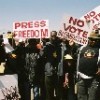
RIGHTS-ZIMBABWE: Journalists Shrug Off Government’s Media Straitjacket
Media rights watchdogs have long criticised the conditions under which journalists in Zimbabwe operate. Since the start of the year, however, the circumstances of the country’s media have become bleaker still.DEVELOPMENT-KENYA: "Drastic Actions" Required for UN Goals to Be Met
While a decade may seem a substantial amount of time to some, it is all too short for those who are pushing to have the Millennium Development Goals realised.RIGHTS-SIERRA LEONE: War Crimes Court Opening Up Old Wounds
There has been growing anxiety in Sierra Leone about the commencement of the trials of three high-profile war crimes indictees from the former military junta, the Armed Forces Revolutionary Council (AFRC), which seized power in a coup in 1997.RIGHTS-BENIN: 2005 the Year of ‘No More Excisions’
For International Action Against Female Genital Mutilation, a German group active in Benin and other African countries, 2005 will be a year in which past successes in the fight against mutilation are celebrated – and efforts to eradicate it continue with renewed vigour.DEVELOPMENT-AFRICA: Britain Once a Coloniser – Now a Saviour?
Britain's Chancellor of the Exchequer, Gordon Brown, paid a lightning visit to Kenya, Wednesday - this at the start of a week-long tour of Africa that is aimed at garnering support for efforts to fight poverty on the continent.EDUCATION-KENYA: Time Now for Universal Secondary Schooling?
A recent statement by the Kenyan government that many students who graduated from primary school last year will not find places in the country's secondary schools has generated widespread concern.
POLITICS-SOUTH AFRICA: Swaziland Seeks Border Adjustment
South Africa’s agreement to take seriously Swaziland’s claim to its national territory has implications for all of Africa, and the pledges African countries have made to honour boundaries drawn up during the colonial era, diplomats tell IPS.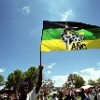
RIGHTS-SOUTH AFRICA: Judging the Judges
A statement by South Africa’s ruling party concerning judicial reform has sparked heated debate in the country.« Previous Page — Next Page »


The Week with IPS

NEXT STOP - SDGs
Tracking global progress towards a sustainable world
Tracking global progress towards a sustainable world
