Languages
Friday, November 20, 2026



News and Views from the Global South
Asia-Pacific
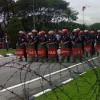
RIGHTS-MALAYSIA: Internal Security Act Flung at Peaceful Protestors
An old fear, not felt since the dictatorial Mahathir Mohamad retired as prime minister in 2003, has returned - fear of arrest without trial and indefinite incarceration without being charged.RIGHTS-JAPAN: Naming Hanged Convicts – Step Towards Reform
When Japan’s justice ministry departed from norm to name three convicts it hanged this month, many here saw it as a sign that the country was now prepared to adopt more humane policies towards capital punishment.MALAYSIA: Arrests of Peaceful Protestors Mar Rights Day
Malaysia is observing World Human Rights Day under a cloud, as the administration of Prime Minister Abdullah Badawi, rattled by a series of street protests over the last month, launches a tough crackdown against peaceful demonstrators.CLIMATE CHANGE: Survival of Pacific Islands Rests on Bali Outcome
With the effects of climate change lapping at their shores, representatives of the small island nations to the United Nations climate change conference underway in Bali are hoping that the industrialised countries will learn from the new Australian government’s decision to ratify the Kyoto Protocol.POLITICS-PAKISTAN: Taking Part in Musharraf’s Polls – Under Protest
With general elections barely a month away, Pakistan’s major political parties have decided not to boycott the polls and take their chances in a situation where the media and the judiciary have been hobbled.THAILAND: Thaksin's Pro-Poor Politics Haunt Poll Campaign
For the past 15 months, Thailand’s conservative political elites, who profited most from last year’s coup, rallied around the theme that populist policies lead to corruption and spread their idea through the media, public speeches and at university seminars.CLIMATE CHANGE: ‘Not Fair Picking on India, China’
Painting China and India as the villains of climate change, while letting rich industrialised countries get away with rising emissions of greenhouse gases (GhGs) that cause global warming, is patently unfair says an internationally-reputed non-government organisation (NGO).DEVELOPMENT: 'MNCs Gaining Total Control Over Farming'
Food security campaigners are now more concerned than ever that farmers are turning dependent on large multinational corporations (MNCs) for seeds, fertilisers, pesticides and other inputs while also becoming more vulnerable to pressures to produce genetically engineered crops.
/CORRECTED REPEAT*/ENVIRONMENT-INDIA: Subsidised Tourism Worsens Andamans' Woes
Tourism, promoted as a major economic activity and employment generator in India’s far-flung Andaman Islands, has run into opposition lately. Concerns are being raised, ironically, by local residents and tour operators who are supposed to be the prime beneficiaries.CHINA: Hong Kong-Shenzhen Megalopolis Unstoppable
China’s hopes that its booming southern hubs of Shenzhen and Hong Kong can merge to form a new megalopolis are facing fresh challenges after the victory of the pro-democracy camp in the Dec. 2 by-elections in the former British colony.PAPUA NEW GUINEA: Waking Up Finally to the HIV and AIDS Threat
When the new government of Papua New Guinea (PNG) set up in August a separate ministry devoted to containing HIV and AIDS in this Pacific Island country, it reflected the enormity of the threat to its six million people.ENVIRONMENT-ASIA: ‘Talking Dirty’ on Sanitation Can Save Lives
Although 2.6 billion people in the world - two-thirds of whom are in southern or eastern Asia - are living without access to basic sanitation, the issue has been a poor cousin to water supply in terms of visibility and financing.HEALTH-VIETNAM: Bird Flu Fighters Have Ducks in Their Sights
As the temperature drops and another cool season approaches, attention is turning to Vietnam’s duck population, suspected to have become vulnerable to the deadly avian influenza (AI) virus.
BANGLADESH: Fear of Famine Follows Cyclone Havoc
With its grain crops wiped out, Bangladesh has appealed to the world community for half a million tonnes of rice or wheat to immediately feed thousands of starving survivors of the Nov. 15 cyclone and stave of a possible famine.WORLD AIDS DAY-INDIA: Sexing Up Safe Sex to Limit HIV Spread
Sex workers in this eastern metropolis are being encouraged to put pleasure back into their services as one way of limiting the spread of HIV and other sexually transmitted diseases (STDs).HEALTH-THAILAND: 'Deny Drug Addicts Anti-HIV Treatment, Feed Epidemic'
Thailand’s reputation as a world leader in combating the spread of HIV and AIDS is being challenged by a new study which accuses Bangkok of ignoring those most vulnerable to the virus - drug users.ENVIRONMENT-ASIA: Bank's Water Report – Wakeup Call for Leaders
A report released by the Asian Development Bank (AsDB) in this affluent city-state on Thursday urges the region’s policymakers to place water-related issues high on their development agenda.
ENVIRONMENT-PHILIPPINES: Aerial Spraying Issue Turns Seesaw Court Battle
The villagers in the mountains surrounding Davao city are bracing for the day the crop-dusting planes resume dropping fungicide on the banana plantations - and the wind blowing toxic fog over their houses, water supply and children.POLITICS-PAKISTAN: Independence of Judiciary – The Main Issue
As Gen. Pervez Musharraf doffs his army uniform and takes oath as the civilian President of Pakistan, two crucial issues stand out: continuing curbs on the judiciary and media, and general elections, scheduled for early January, that observers say cannot be fair and free under emergency rule.
MEDIA-PAKISTAN: TV Talk Shows Take to the Streets – Literally
The question on the TV talk show was simple. Celebrity anchor Hamid Mir asks guests from various political parties if they are prepared to participate in a general election under emergency rule. As the cameras roll, the guests squirm uncomfortably in their seats and make non-committal noises.« Previous Page — Next Page »


The Week with IPS

NEXT STOP - SDGs
Tracking global progress towards a sustainable world
Tracking global progress towards a sustainable world
