Languages
Thursday, October 1, 2026



News and Views from the Global South
Asia-Pacific
Online University Throws a Lifeline to Afghan Women Shut Out of Education
Ever since childhood, Khatera’s (not her real name) dream was to study medicine at university and become a doctor.
Explainer: How the GEF Funds Global Environmental Action
The Global Environment Facility, widely known as the GEF, plays a central role in financing environmental protection across the world. It supports developing countries in tackling climate change, biodiversity loss, land degradation, pollution, and threats to ecosystems.
Why the Rohingya Refugees in Bangladesh Need Work, Not Just Rations
While global attention right now is on escalating geopolitical tensions involving the United States, Israel, and Iran, another crisis continues quietly in Bangladesh.
Informal Settlements Grapple With Climate Extremes in Pacific Islands
A rising cycle of poverty and extreme weather threatens many towns and cities, especially those situated on coastlines, in the Pacific Islands. Urban centres in the Pacific have grown at an unprecedented rate this century, rapidly straining national resources for urban planning. But governments are now making progress on improving people’s lives in the informal settlements that dominate the urban sprawl in some of the region’s largest cities.
Nations pledge $3.9bn to Global Environment Facility as Race to Meet 2030 Goals Tightens
With just four years left to meet a series of global environmental targets, governments are committing to shore up one of the world’s main environmental funds, the Global Environment Facility (GEF), with a $3.9 billion pledge.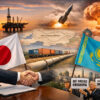
Japan and Kazakhstan Draw Closer as Iran Crisis Reshapes Energy and Security Priorities
As tensions surrounding Iran deepen and uncertainty spreads across global energy markets, Japan is once again confronting a structural weakness: its heavy dependence on Middle Eastern oil.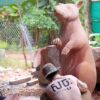
Cambodia Unveils Statue Honouring Tanzanian-Born Bomb-Sniffing Rat Magawa
At Mazimbu village, not far from Tanzania’s Sokoine University of Agriculture (SUA), Stephano Jaka still remembers the night he trapped and killed a rat that had been feasting on his maize cobs – stored in a meticulously woven basket designed to protect grains from rodents.
The Political Economy of Bangladesh’s LDC Graduation
Bangladesh is scheduled to graduate from the least developed country (LDC) status in November this year after more than half a century. Bangladesh joined the UN club of LDCs in 1975 and consistently met all three graduation criteria – per capita Gross National Income (GNI), human asset and economic vulnerability – since 2018.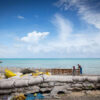
From Dialogue to Delivery: The Pacific’s Climate Mobility Moment
Rising seas, intensifying storms, saltwater intrusion and shifting coastlines are the lived realities of Pacific communities today. Families are making difficult decisions about whether to stay, adapt or move. Some communities have already relocated. Others are preparing for that possibility. Many are determined to stay for as long as possible on lands that hold ancestral meaning and identity.
Post-Protest Bangladesh: Restoration More than Renewal
Bangladesh’s first credible election in nearly two decades delivered a landslide win for the Bangladesh Nationalist Party (BNP) and its leader Tarique Rahman, son of a former prime minister, just back from 17 years of self-imposed exile.
Once Evicted From This Kashmir Lake, People Now Seen as Its Saviours
For the past few weeks, residents living in and around Dal Lake in Indian Kashmir have witnessed “a different phenomenon” as a green sludge has accumulated on the once pristine water. Photos circulating widely on social media triggered a public outcry.
Failing to Learn: Afghan Girls Repeat Grades to Avoid Exclusion
It is almost unheard of for a student to deliberately fail final school exams for no apparent reason. Therefore, when 13-year old Sara (not her real name) from Mazar-i-Sharif in Afghanistan took her school report home to her parents, they were shocked to learn that the top-performing student had failed her final exams and would not advance to the next level. But there was no longer a next level for Sara, even if she had passed.
Experts, Rights Groups Warn of Crisis of Obstetric Violence
Government and medical professionals must implement systematic changes to deal with a “crisis” of obstetric violence (OV) across Eastern Europe and Central Asia (EECA), experts and rights campaigners have said.
Nepal’s Gen Z Electoral Revolution
Less than six months after Nepal’s Generation Z rose up in protest, the country has a new prime minister. A 35-year-old former rapper who soundtracked the protests swept to power in a landslide in the 5 March election.
‘The Political System Only Moves When Threatened Directly’
CIVICUS discusses Nepal’s upcoming election with youth activist Anusha Khanal of the Gen Z Movement Alliance, a youth-led civil society coalition mobilising for democratic accountability and governance reform in Nepal.

Running on Sunshine: Pakistan’s Solar Boom to Tide Over Middle East Energy Crisis
Energy expert Vaqar Zakaria believes solar power makes “excellent economic sense” – and he lives by it. For over five years, his rooftop panels have slashed his bills, sometimes to zero, even allowing him to sell surplus electricity back through net metering.
How a Handful of Fishers Show How Harpooning Can Be Ecologically Sustainable
Sudhi Kumar animatedly moves his hands, resembling a graceful dance performance, as he demonstrates how a fishing harpoon is used. He has been on a brief hiatus from harpooning, owing to the recent rough nature of the sea, and doesn’t have the tool with him as we speak. But more than three decades of experience using harpoons is apparent in how vividly he uses his body to mimic the process.
My Name is Dhaka
 My Name is Dhaka is a one-minute experimental film portraying Dhaka as a living, breathing entity with a 400-year history. Through a reflective voice, the city recounts its transformations, crises, and resilience. It captures contrasts between pollution and celebration, hardship and hope, revealing a megacity shaped by climate change, migration, and human survival.

Geospatial Innovations Addressing Critical Water Data Gaps in Asia
Across Asia, new initiatives are showing how satellite Earth observation data and AI-powered technologies can turn fragmented water-related data into actionable insights for managers and policymakers in line ministries and local governments.
Young Afghan Taekwondo Women Coach Chose Resistance over Surrender to Taliban
When Khadija Ahmadzada was arrested in Herat province of Afghanistan in January this year, it sparked widespread domestic and international protests. Women’s rights activists and social media users raised their voices with slogans such as “Sport is not a crime,” “Education is a right for women,” and “Don’t erase women,” often using the hashtag #BeHerVoice.
CHINA: ‘The State Is Using Generative AI to Engineer Reality Through Informational Gaslighting’
CIVICUS discusses China’s tech-enabled repression with Fergus Ryan, a Senior Analyst at the Australian Strategic Policy Institute (ASPI), where he specialises in how the Chinese Communist Party shapes global information environments through censorship, propaganda and platform governance. His research includes a major study on China’s AI ecosystem and its human rights impacts, as well as investigations into China’s use of foreign influencers.
« Previous Page — Next Page »


The Week with IPS

NEXT STOP - SDGs
Tracking global progress towards a sustainable world
Tracking global progress towards a sustainable world
