Languages
Thursday, October 1, 2026



News and Views from the Global South
Asia-Pacific

Afghan Girl Disguised as Boy to Support Family Under Taliban Rule
Nooria is a young girl who, because of poverty and the absence of a man in her family, had to dress in boys’ clothes so she could work and feed her family. It was not a choice, it was survival. But she was eventually caught by the Taliban.
Lawmakers From Three Continents Demand Action, Not Pledges, on Population and Health
The word heard most often at a two-day parliamentary forum in Cairo last week was not "commitment"; it was “follow-up.” And the difference mattered.
The Tale of Three Countries: Policy Independence Matters for Development
The Republic of Korea (Korea), Vietnam and Bangladesh are on three different rungs of the development ladder. While Korea is a member of the rich nations’ club, i.e., the Organisation for Economic Cooperation and Development (OECD), Bangladesh is still a least developed country (LDC); and Vietnam is in the middle.
PHILIPPINES: ‘A Protest Is One Day, but Organising Is the Thousands of Conversations That Make That Day Possible’
CIVICUS discusses Gen Z-led protests in the Philippines with Charles Zander, a 17-year-old climate justice activist from Bohol and youth campaigner for Greenpeace Philippines.
El Niño Likely to Return: the Case for Early Action
Climate models are converging: El Niño is likely to return by mid-2026 and could be strong. According to the World Meteorological Organization, it could emerge as early as May–July 2026, with several national hydrometeorological agencies in Asia and the Pacific already issuing alerts.
Before the Flood, Jannat Carried Books. After the Flood, She Carried Dirty Dishes
When catastrophic floods swept through the Haor wetlands of Sunamganj in 2022, they destroyed far more than homes and crops. They shattered childhoods.
Cleaning Up the Fields: Across Africa and Asia GEF is Helping Farmers Rewrite Their Pesticide Story
For decades, pesticides have been a quiet pillar of Malawi’s agriculture, guarding crops against pests, improving yields, and sustaining millions of livelihoods. But beneath this success story lay a troubling reality: weak regulation, unsafe handling practices, and growing threats to human health and the environment.
How Santa Marta Finally Made Fossil Fuel Phase-Out Politically Discussable
The First Conference on Transitioning Away from Fossil Fuels in Santa Marta, Colombia, may eventually be remembered as a defining moment in global climate politics, not because it produced a treaty or a formal negotiation outcome, but because it changed the tone, structure, and ambition of the conversation itself.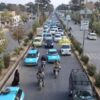
Speaking Up for Girls’ Education Carries Heavy Risks in Afghanistan
Qadoos Khatibi, an Afghan university lecturer, and Fayaz Ghori, a civil society activist, also from Afghanistan, were detained by the Taliban’s Ministry for the Promotion of Virtue and Prevention of Vice. Their crime? Advocating for girls’ right to education.
100 Days, No Outcry – The Cost of Speaking Out
“We’ve abandoned this couple completely; we have not done even 1% of what they did for us all these years!” said journalist Asad Ali Toor.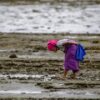
Pacific Ocean Under Pressure — Now a Region Finally Armed With Evidence
For generations, Pacific people have understood the ocean not as a resource but as identity, sustenance, and survival. Today, that relationship is being tested in ways science is only just beginning to fully capture.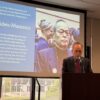
‘Nuclear Weapons Are Not Just Tools of War. They Are Weapons of Mass Suffering.’
"We choose hope because despair is a form of surrender that we cannot accept,” UN Ambassador to the Philippines, Enrique Manolo, told civil society representatives and the diplomatic community, considering the question of whether to pursue nuclear disarmament in a world that is becoming more polarized on the issue.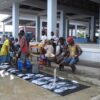
Pacific Islanders Combat Mercury Poisoning of the Environment
It is an invisible contaminant that has been found in fisheries, an essential part of the food chain for many Pacific Islanders. Mercury, emitted from fossil fuel power generation and other industrial processes around the world, has now penetrated marine ecosystems in the Pacific Islands with detrimental consequences for people’s health and wellbeing.
Corruption in Bangladesh: Will Development Partners Remain Complicit?
Bangladesh remains one of the most corrupt countries in the world. Its corruption perception index (CPI) score, 24, is 18 points below the global average score of 42, and 21 points lower than the Asia-Pacific region’s average of 45. One of the main sources of corruption is over-priced aid-funded projects as they lack competitive bidding. Projects funded through Government-to-Government deals drive up costs by more than 400% compared to more transparent alternatives, and around 35% of project costs are lost to corruption and inefficiency.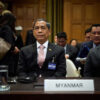
Indonesia’s Genocide Case Shines the Spotlight on Myanmar Atrocities
Yasmin Ullah, from Myanmar’s persecuted Rohingya minority, is determined to see justice. On 13 April, she filed a complaint alleging genocide against Myanmar’s president, Min Aung Hlaing, to Indonesia’s Attorney General’s Office. Min Aung Hlaing led the 2021 coup that ousted a democratically elected government and this month was named president following a sham election held amid intense repression, rubber stamping the army’s continuing grip on power. However secure he appears in his position, Yasmin Ullah’s legal action offers hope his impunity may not be guaranteed.
NEPAL: ‘Voting on Discord Was a Very Gen Z Way of Doing Politics’
CIVICUS discusses Gen Z-led protests in Nepal with Abhijeet Adhikari (Abhi), a lawyer and political activist who took part in the protests.

Feminist Governance and Democratic Change in Armenia
 The period after Armenia's 2018 "Velvet Revolution" maintains a fragile status which presents both substantial democratic and feminist achievements and rising internal and external international pressures.
Criminalized Sanctuaries: How India’s 2026 Trans Act Undermines Safety
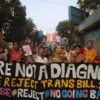
On 30 March, the eve of Transgender Day of Visibility, the Transgender Persons Amendment Act, 2026 became law in India, narrowing who can be recognized as transgender and requiring individuals to have their identity verified by authorities. This bill risks placing already vulnerable people under deeper scrutiny while destabilizing the informal systems of care they rely on.
No Bones Broken, No Crime Committed: Inside the Taliban’s New Rules on Violence Against Women
The Taliban have announced new laws that effectively legalise domestic violence against women and children. Afghanistan's supreme leader, Mullah Hibatullah Akhundzada, signed a decree introducing a new criminal code in January. It contains three parts, ten chapters, and 119 articles that legalise violence, codify social inequality, and introduce punitive measures widely condemned as a return to slavery.
Guardians of the Sea: How GEF Small Grants Program Enables Young Volunteers Take the Lead in Sea Turtle Conservation
Every winter thousands of sea turtles come ashore at Cox’s Bazar, in the Bay of Bengal, Bangladesh, to lay eggs.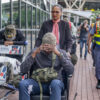
Russia’s African Cannon Fodder
On 7 April, the government of Cameroon published a list of 16 of its citizens confirmed killed fighting for Russia against Ukraine. That means the number of Cameroon citizens killed in this distant war has likely surpassed a hundred, making the country the biggest victim of a Russian recruitment drive increasingly focused on Africa.« Previous Page — Next Page »


The Week with IPS

NEXT STOP - SDGs
Tracking global progress towards a sustainable world
Tracking global progress towards a sustainable world
