Languages
Thursday, October 22, 2026



News and Views from the Global South
Latin America & the Caribbean

Brazil to Free Classrooms from the Invasion of Mobile Phones
It was necessary to repel the "invasion" of mobile phones in Brazilian classrooms, even to spark a debate about the use of technology in education, according to Silvana Veloso, an educator with extensive experience on the subject.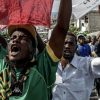
The “Fierce Urgency of Now”– to Reverse Course in Haiti
As we commemorated Dr. Martin Luther King Jr.’s Day on January 20, 2025—a day that also marked America welcoming its newly elected president—we honor the legacy of this civil rights leader by reflecting on his powerful words: “We are confronted with the fierce urgency of now.”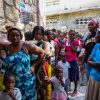
2024 Marked An Escalation in Brutality for Haiti’s Gang War
2024 was a transitional period in Haiti’s history, marked by rampant political instability, brutal gang violence, and widespread civilian displacement. Since the eruption of hostilities in March 2024, the Caribbean nation has been in a state of emergency. In response, the United Nations (UN) Security Council approved The Multinational Security Support (MSS) Mission in Haiti to assist the Haitian government in deposing gang activity and restoring order. However, the support mission has been largely ineffective as gangs continue to seize more areas in Haiti.
Violence Flows in Parts into Mexico from the United States
The case of a man arrested in Texas, in the south of the United States, for shipping arms parts to Mexico immediately caught the attention of authorities in both countries. But it was only one thread in a web that continues to become more and more tangled.
Colombia’s Historic Child Marriage Ban
Colombia has just marked a historic milestone in the global campaign against child marriage, with the Senate passing one of Latin America and the Caribbean’s most comprehensive bans on child marriage and early unions. In a country where one in five girls under 18 and one in 10 under 14 are married or live in marriage-like conditions, the new law raises the minimum age to 18 with no exceptions, eliminating a 137-year-old Civil Code provision that allowed children over 14 to marry with parental consent. This achievement aligns with goal 5 of the Sustainable Development Goals (SDGs), which has a target of eliminating harmful practices like child marriage by 2030. The new law now awaits the signature of President Gustavo Petro to come into effect.
U.S. Wins Controversial Ruling in GM Corn Dispute with Mexico
A tribunal of trade arbitrators has ruled in favor of the United States in its complaint that Mexico’s restrictions on genetically modified corn violate the terms of the U.S.-Mexico-Canada trade agreement (USMCA). The long-awaited ruling in the 16-month trade dispute is unlikely to settle the questions raised by Mexico about the safety of consuming GM corn and its associated herbicide.
Maya Train: Still Waiting to Become Promised Engine of Development – VIDEO
 When he promoted the Maya Train (TM) in 2019, then-President Andrés Manuel López Obrador, who ruled Mexico between 2018 and October this year, stated that the railway line would be an engine of development for the southeastern Yucatan peninsula.
Power Arrives but the River Dries Up for Brazil’s Amazonian Dwellers
The flow of the igarapé always dropped for three months every year, but now it has been dry for two years in a row, complains Maria Aparecida dos Anjos, looking at the trickle of water that when flooded reaches the stilts of her wooden house, 50 metres away and on a slope of more than 10 metres high.
Why is It So Hard to Change? Insights from the 2024 Human Development Report on Chile
As many middle-income countries in the world, Chile finds itself at a critical juncture. The country has made significant progress over the past decades in terms of economic growth and poverty reduction, yet many structural challenges remain.
Expansion of Mexico’s Largest Port Causes Alarm Over Environmental Damage
The expansion of the port of Manzanillo, Mexico's most important port in terms of cargo movement and located on the central Pacific coast, has major environmental impacts, as well as presenting climatic risks.
New Legislation Outlaws Dissenters in Venezuela
In Venezuela you can no longer say in public that the economic sanctions applied by the United States and other countries are appropriate, or even be suspected of considering any of the authorities illegitimate, because you can be sentenced to up to 30 years in prison and lose all your assets.
‘My Father Was Arbitrarily Arrested and Convicted for Denouncing Government Corruption’
CIVICUS speaks with Ramón Zamora, son of Guatemalan journalist José Rubén Zamora, about restrictions on press freedom and the challenges of defending human rights in Guatemala.

Small Island States Put Faith in International Court’s ‘Wayfinding’ Advisory Opinion
The “crazy, weird and at some point (what seemed like) insurmountable” plan to ask the International Court of Justice for an advisory opinion on the obligations of UN member states regarding climate change was a success, Vishal Prasad, a representative for the. Pacific Islands Students Fighting Climate Change (PISFCC) said at a post-hearing press conference today (December 13).
New Law in Cuba Makes Investing in Renewable Energy Sources Mandatory
With Decree 110, published on 26 November, Cuba made it mandatory for major consumers, whether they are state or private entities, to invest in the use of renewable energy sources, while the energy crisis facing the country worsens.
Breaking Latin America’s Cycle of Low Growth and Violence
Violent crime and insecurity have a disproportionate impact on Latin America and the Caribbean, with severe consequences for socioeconomic development.
Micro-Dams Spark a Wave of Water Sustainability in Brazil – VIDEO
They look like attempts to copy the moon’s surface, in some cases, as craters multiply in the grasslands. But they are actually micro-dams, barraginhas in Portuguese, which have spread in Brazil as a successful way to store water and prevent soil erosion in rural areas. 
No State Is Truly Independent if It Suffers Significant Injury Without Consequence—Palau
After many decades of colonial rule, Palau was the last country to emerge from the UN Trusteeship. Palau celebrated 30 years of independence in October 2024 “and takes seriously the rights and responsibilities of independence. Independence should mean that Palau is free to build its own future and be responsible for the security, safety, and well-being of its own people,” said Gustav N. Aitaro, the Minister of State of the Republic of Palau at the International Court of Justice (ICJ).
Central American Countries Backtrack on Metal Mining Ban
Metal mining has a renewed momentum in Central America, encouraged by populist rulers who, in order to soften environmental damage, claim they can develop it in harmony with nature, which is hard to believe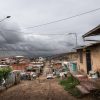
Latin America’s Poor Are More Urban and More Vulnerable
Poverty, while declining in Latin America and the Caribbean so far this century, shows a new face, that of the looming vulnerability of the poor as they become less rural and more urban, the United Nations Development Programme (UNDP) says in a new analysis.
Rural Laboratory Innovates in Northeastern Brazil
In the municipality of Congo, in the state of Paraiba, in the driest territory of Brazil's semi-arid region, an original initiative seeks to prove it is possible to overcome several challenges concerning family farming. It is the EcoProductive Pilot Project.
‘Quilombola Communities Live in Fear Because the Laws That Are Supposed to Protect Them Are Ignored’
CIVICUS discusses threats to the security, rights and ancestral lands of Brazil’s quilombola communities with Wellington Gabriel de Jesus dos Santos, leader and activist of the Pitanga dos Palmares Quilombola community in Bahia state.
« Previous Page — Next Page »





The Week with IPS

NEXT STOP - SDGs
Tracking global progress towards a sustainable world
Tracking global progress towards a sustainable world

