Languages
Monday, November 9, 2026



News and Views from the Global South
Middle East & North Africa
LEBANON: Syria Comes In From the Cold
Syrian skies seem to be finally clearing after a very long storm and the virtual shunning of President Bashar al-Assad from the international political scene for almost three years. Many may perceive the recent rapprochement between Syria and France as a mere dalliance, but others believe it can herald a new - and more peaceful - dawn in Lebanon.LEBANON: Bodies Swap Brings Uneasy Triumph
The image of 199 coffins covered with Lebanese, Palestinian and Hezbollah flags neatly aligned in a southern Beirut compound was broadcast last week on all national Lebanese TV stations. On Tuesday this week, 144 of these remains were transferred to Syria, their final place of rest. Such images have stirred varying emotions among the Lebanese population.IRAQ: Most NGOs Losing Face
Welcomed at first after the U.S.-led invasion in 2003, most NGOs have run into scepticism and mistrust. Few remain to help.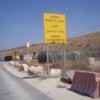
MIDEAST: Roadblocks Cripple West Bank Economy
The Israeli military has erected three additional roadblocks, further blocking vehicular access on the road between the south Hebron village of At-Tuwani and the commercial hub of Yatta in the southern West Bank.HEALTH-LEBANON: Cancer On the Rise
Reports of a rising incidence of cancer now worry many families across Lebanon. Over the past 40 years, reported cases of cancer have risen from 3,000 to about 8,000 a year.IRAQ: Fallujah Braces for Another Assault
U.S. and Iraqi forces are preparing another siege of Fallujah under the pretext of combating "terror", residents and officials say.EGYPT: Locals Step Up Fight Against Factory
Controversy continues to rise over the fate of a Canadian fertiliser plant currently under construction in Egypt's coastal province Damietta. Residents fear it could adversely affect the environment.LEBANON: Fresh Disputes Shadow New Govt
The new government's first official snapshot taken at the presidential palace last week was certainly worth a thousand words. While 28 of the 30 cabinet ministers were dressed in the traditional white suits, two - Public Works Minister Ghazi Aridi and State Minister Wael Abou Faour - wore dark colours. Between them they emphasised some of Lebanon's eternal dichotomies.
MIDEAST: Gaza Siege Batters Women
The siege of Gaza has led to a sharp rise in the number of battered and sexually abused women and children in the Gaza Strip, say members of the Gaza Community Health Programme (GCHP).IRAQ: Unrest Surfaces in Fallujah Again
Security has collapsed again in Fallujah, despite U.S. military claims.MIDEAST: Israel Targets Hamas Orphanages
Shopping malls. Schools. Medical centres. Charities, orphanages. Soup kitchens. These are the latest targets in the campaign the Israeli military is waging against Hamas in the West Bank.MIDEAST: Hamas-Israel Prisoner Swap Remains Elusive
Despite intensive mediation efforts by Egyptian officials, a delegation from Palestinian resistance faction Hamas departed Cairo Saturday (Jul. 12) without securing a prisoner exchange deal with Israel. According to local analysts, fresh swap proposals - featuring the release of long-time Israeli captive Gilaad Shalit - continue to run up against Israeli obduracy.
LEBANON: Radical Islam Comes to Town
In the centre of one of Tripoli's squares in north Lebanon, a large statue has been erected inscribed with the word 'Allah' in Arabesque calligraphy. The statue reflects the city's reality, especially in light of the recent rise in Salafism, a radical form of Islam.
LEBANON: Not All Earthquakes Are Political
South Lebanon is reputed for orange groves and orchards lined with lush banana trees. For many around the world, it also conjures up images of a fierce battleground, where all regional conflicts come to life. In recent months, however, the region has also become known for its intense seismic activity.POPULATION-MIDEAST: Israel Fears the Womb More Than the Bomb
Israeli Prime Minister Ehud Olmert has laid it out in the starkest possible terms for his fellow Israelis. If they do not relinquish control of the occupied territories, he has warned them, Israel will ultimately cease to exist as a Jewish and democratic state.
POPULATION-MIDEAST: Time Bomb Ticking Away in Gaza
Crowded into a tiny strip of territory of 360 square kilometres, plagued by poverty, malnutrition and unemployment, Gaza's 1.5 million people face a demographic time bomb as the fragile infrastructure struggles to cope with a soaring birth rate.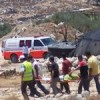
MIDEAST: Palestinian Village Takes On Israeli Military
Ambulances were again prevented Monday from entering the central West Bank village of Ni'ilin, near Ramallah, to evacuate the ill and the wounded. Supplies of medicines were running low, as confrontations continued with youths defying a four-day-old curfew imposed by the Israeli military.
LEBANON: Conflict Finds a Creative Side
Can beauty arise from conflict? When looking at the art scene in the Middle East, where a fault line of political instability stretches from Lebanon, Syria and Israel to Iraq and Iran, the answer seems to be a resounding 'yes'.MIDEAST: Gaza Locked In Despite Truce
Despite a torrent of mutual recriminations, the fragile truce between Israel and Palestinian resistance faction Hamas survived into its third week. Israel, however, has been slow to fulfil its pledge - as laid down in an Egypt-brokered ceasefire agreement - to allow desperately-needed humanitarian supplies into the outdoor prison that is the Gaza Strip.
MIDEAST: When You Shoot the Messenger
The assault of IPS Gaza correspondent Mohammed Omer has left Israeli security personnel with a lot of explaining to do. And they are not doing a very good job of it.
LEBANON: Civil Wars Find New Fronts
An eerie calm reigns over the new demarcation lines drawn in northern Tripoli, the second largest city in Lebanon, which gets its name from the Greek 'tri-polis', or 'three cities'. One week after violent combat erupted between the Alawite minority from the Jabal Mohsen area and the Sunni community of Bab el-Tebbaneh - separated by the wide Syria Street - tensions still run high.« Previous Page — Next Page »





The Week with IPS

NEXT STOP - SDGs
Tracking global progress towards a sustainable world
Tracking global progress towards a sustainable world
