Languages
Tuesday, September 8, 2026



News and Views from the Global South
IPS UN Bureau
Will US Opposition to UN’s Socio-Economic Goals Play a Decisive Role in the Vote for Next Secretary-General?
As the campaign for a new UN secretary-general gathers momentum, will the US exercise the decisive vote -- or the veto-- in the final selection?
In Sikkim, Snow Leopards and Communities Share the High Mountains
The tea arrives before the conversation starts. Jayanta Mukhia sets two cups on the wooden table and pulls up a chair across from the couple who arrived that afternoon with trekking poles and rucksacks. They have come to walk the Goechala trail into the heart of Khangchendzonga National Park in India. They will leave in two days. Before they go, she has something to tell them.
Global Economy Endures War Shock—So Far
More than three months into the war in the Middle East, the global economy appears to be holding up. Commodity prices, inflation and expectations for it, and financial conditions have all been impacted—but not yet in ways that signal a global slowdown. And we have seen strong economic momentum in the world’s biggest economies, the United States and China.
GLOBAL TAX TREATY: ‘Without Sustained Pressure from Organised Movements, the Political Space to Win Simply Doesn’t Open’
CIVICUS discusses a proposed United Nations (UN) tax treaty with Jenny Ricks, General Secretary of Fight Inequality Alliance, a global movement that organises to counter the concentration of power and wealth in the hands of a small elite.

New Caledonia’s Election to Set the Stage for New Talks With France on Its Political Future
The French overseas territory of New Caledonia in the Pacific will hold elections on 28 June in the wake of the latest agreement on its political status with France being rejected. The representatives elected in the three provincial assemblies and territorial congress will then determine a new round of negotiations as the mission of achieving consensus on New Caledonia’s future continues.
Fiscal Reform Needs More Than Strong Finance Ministries
In the human body, connective tissue rarely gets the attention given to the heart, lungs or brain. But without it, even the strongest organs cannot function as a system. It binds, supports and connects a healthy body. Fiscal systems work in a similar way.
UNICEF: Overlapping Climate Hazards Threaten Children’s Quality of Life
A new report from the United Nations Children’s Fund (UNICEF) highlights the vast, overlapping climate threats affecting children worldwide, which is leaving them increasingly vulnerable to escalating risks across health, security, and education.
Systematic Vilification of Russian LGBTQ+ Community Pushes Them Underground
LGBTQ+ people in Russia are being forced to increasingly use self-censoring strategies in their daily lives as they struggle with systemic vulnerability, one of the largest surveys of the LGBTQ+ community in the country has shown.
The Last Bottle of Halothane: Why Africa Cannot Wait
Global health has a habit of mobilizing around the visible and the dramatic. Ebola, malaria, and Mpox have all dominated headlines related to Africa in recent years, and understandably so. But nobody is talking about one of the most consequential regional health crises waiting to happen.
From Victoria to Mombasa: Will Africa’s Ocean Voice Be Heard?
Tomorrow, Africa hosts the Our Ocean Conference on its own shores for the first time, in Mombasa. This is more than a diplomatic milestone. It is a test of whether we, as Africans, are prepared to safeguard our ocean as a shared heritage and a pillar of our future prosperity.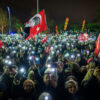
Erdoğan’s Race to Avoid Orbán’s Fate
When Hungary’s Prime Minister Viktor Orbán lost by a landslide to a unified opposition in April, Turkey’s President Recep Tayyip Erdoğan was watching. The lesson he drew was not that he should be more moderate; it was that he needed to crack down harder. He had already arrested Istanbul Mayor Ekrem İmamoğlu, the opposition Republican People’s Party (CHP)’s leading presidential contender, in March 2025. After Orbán’s defeat, he has accelerated his campaign to fracture the opposition and rewrite the rules before the next election in 2028.
The End of the Gulf Model?
The German government, along with a number of other countries, are currently organising flights to evacuate travellers and influencers stranded in the Gulf states. For many citizens of other nationalities, however, there is no such assistance. They remain stuck in precarious situations, marked by exploitation and insecurity.
BOTSWANA: ‘Court Rulings Matter, but It’s Sustained Civic Action That Turns Them into Real Protection’
CIVICUS discusses Botswana’s decriminalisation of same-sex relations with Faith Gunda, a Botswana-based law student and human rights defender, a member of the CIVICUS Protest Lab and co-founder of Sisterhood Chain International, a solidarity initiative that supports grassroots groups and amplifies young women’s voices.

Ocean Economy Reaches $2.5 Trillion as Services Become the Largest Share of Ocean Trade
The global ocean economy continues its expansion, with ocean-related trade reaching USD 2.5 trillion as of 2025. Ocean services now make up the majority of the ocean trade, accounting for 58.9 percent of the composition, up from 47.8 percent in 2020.
Africa Pushes for Data Sovereignty and Digital Independence
African leaders are sharpening their focus on digital sovereignty, warning that the continent’s economic future will depend not just on connectivity, but on who controls its data—and where it is stored.
The World Cup of Human Rights
This planet’s biggest sporting event—the FIFA Men’s World Cup—will soon kick off. Millions of people around the world will sit up, bleary eyed, watching matches at unreasonable hours and inventing feeble excuses for why we won’t be at work in the morning. More than one billion are expected to watch the finale on TV in mid-July. That’s a bigger audience than any Olympic sporting event and more than the number of people who have viewed Squid Game on Netflix.
Central Asia Bets on a New Water–Land Pact to Survive Environmental Degradation
As ministers, diplomats and development officials assembled in Samarkand Congress Centre for a ceremonial family photograph, the mood carried unusual symbolism. Behind the smiles and formalities stood a region confronting a harder reality: rivers are shrinking, soils are tiring, temperatures are rising, and the old ways of managing land and water are no longer working.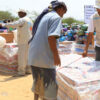
UN Urgently Calls for Increased Aid in Yemen Following IPC Warnings of Food Insecurity
In Yemen, increasing funding constraints on humanitarian operations have put millions of civilians in dire need of life-saving assistance amid overlapping crises. Acute food insecurity is a persistent issue, as recent reports from the Integrated Food Security Phase Classification (IPC) give a stark warning of conditions without urgent intervention.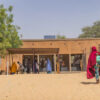
Violence, Climate Shocks, and Hunger Push The Sahel To The Brink of Collapse
Over the past few years, the humanitarian crisis in Africa’s Sahel region has expanded considerably, largely driven by a surge of violence—particularly in the Central Sahel. Although the crisis has been described by the United Nations (UN) as having “largely faded from the headlines” since its wake in 2012, millions of people across the region are in dire need of humanitarian assistance as civilian displacement, climate shocks, and widespread hunger rapidly spill across borders.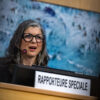
Trump Administration Weaponises Sanctions Against Human Rights
For a few days in May, Francesca Albanese could live more easily. On 13 May, a US federal judge ruled that sanctions the Trump administration imposed on her violated her right to free expression. The government was forced to remove the UN Special Rapporteur on the Occupied Palestinian Territories from its sanctions list. But the reprieve lasted barely a week. On 27 May, after an appeals court suspended the ruling, the US Treasury restored sanctions.
The Moral, Practical, Necessary Invigoration of Nuclear Sanity
Martin Luther King Jr. , when he received the Nobel Peace Prize, reminded us of “The fact that most of the time human beings put the truth about the nature and risks of the nuclear war out of their minds because it is too painful and therefore not ‘acceptable’, does not alter the nature and risks of such war. The device of ‘rejection’ may temporarily cover up anxiety, but it does not bestow peace of mind and emotional security.” I have devoted many decades of my life to not ignoring the risk of nuclear annihilation and since 1995 have attended every Review Conference of the Nuclear Nonproliferation Treaty to learn and hopefully contributed to a saner safer world.« Previous Page — Next Page »


The Week with IPS

NEXT STOP - SDGs
Tracking global progress towards a sustainable world
Tracking global progress towards a sustainable world
