Languages
Wednesday, November 11, 2026



News and Views from the Global South
IPS UN Bureau

Gaza Massacre and Western Hypocrisy
Israeli troops opened fire targeting the Palestinians, gathered around food aid trucks, killing at least 112 and injuring hundreds on 29 February. The massacre happened, about a month after the International Court of Justice (ICJ) ordered provisional measures for Israel to refrain from all acts under the Genocide convention. Ironically Israel was supposed to report to the Court, within one month, of all measures taken in line with its order. Israel has been emboldened by a beholden US.
International Women’s Day, 2024
The Misogynistic Minority
A minority of the world‘s population appears to be misogynistic and continues to oppose efforts to achieve gender equality and empower women and girls. The misogynistic minority cannot be permitted to undermine gender equality policies supported by large majorities of the public worldwide.

International Women’s Day, 2024
Progress Hinges on Feminist Leadership
Investing in inclusion requires more than electing and initiating women leaders. It requires a coordinated effort to change mindsets and systematically increase investments. This will allow feminist leaders, individually and collectively, to fully exercise their agency and counter targeted attacks on their safety and legitimacy.

UN Environmental Assembly Call for Action to Address Planetary Triple Threat
The Sixth United Nations Environmental Assembly (UNEA-6) ended with delegates calling for firm actions to address the triple planetary crisis of climate change, nature loss, and pollution. The assembly also reaffirmed its call for “environmental multilateralism” in seeking solutions to the threats, noting that time was running out fast before the threats could besiege the planet and make life a bigger nightmare, especially for the underprivileged.
International Women’s Day, 2024
Support the Women and Girls Fighting for Rights
This International Women’s Day (March 8) comes at a fiercely challenging moment. We can find inspiration, and hope, however, in the women and girls around the world who, often at great risk, are leading the fight for rights for everyone.
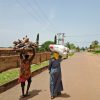
From Gas to Ash: The Struggle of Nigerian Women Amidst Surging Cooking Gas Prices
One sunny mid-morning in Omu-Aran village, a community in Kwara State, North Central Nigeria, Iyabo Sunday sat beside a firewood stand observing her pot of beans with rice (a combination enjoyed by many in Nigeria). The 52-year-old widow used her plastic dirt parker to fan the flames, occasionally blowing air through her mouth for speed and frantically shielding her face from the wisps of smoke that curled from the firewood.
Greece: Another First for LGBTQI+ Rights
After almost two decades of civil society campaigning, Greece’s parliament has passed a law enabling same-sex couples to marry and adopt children. It’s the first majority-Orthodox Christian country to realise marriage equality.
Air Quality Sensors Boosting Nairobi’s Fight Against Air Pollution
Deborah Adhiambo (43) has been battling mild asthma since 2022, a condition she describes as “both a health and economic burden.’’ The mother of three lives within Dandora Estate, nine miles east of Kenya’s capital, Nairobi. Dandora is home to Kenya’s largest open landfill, which receives more than 2,000 metric tonnes of waste daily.
Bearing Witness: No Safety for Children in Gaza
Nothing could prepare me for my recently concluded mission into the Gaza Strip, where children face catastrophic conditions. In my twenty years with UNICEF, traveling from one humanitarian crisis to the next – from famines to floods and war zones to refugee camps – I’ve simply never seen such devastation and despair as is happening in Gaza.
IPBES Invasive Alien Species Assessment
 At the tenth session of the IPBES Plenary, held in Bonn, Germany from 28 August - 2 September 2023, the IPBES Thematic Assessment of Invasive Alien Species and their Control was accepted and its summary for policymakers was approved. The Report is the result of four years of work by 86 experts from 49 countries, and synthesizes information from over 13,000 references into a comprehensive scientific assessment and concise summary document for policy makers.
Africa’s Debt Crisis Needs a Bold New Approach– & a Way Forward
It hasn’t been easy for African states to finance their developmental and environmental policy objectives over the past few years. Recent events suggest that the situation may be improving. For the first time in two years, three African states have been able to access international financial markets, albeit at high interest rates. Kenya, for example, is now paying over 10% compared to about 7% in 2014.
‘I Haven’t Forgotten Where I Came From,’ says Yvonne Pinto, Incoming IRRI Chief
Growing up on a small farming station in Holetta (Ethiopia), Yvonne Pinto would accompany her agriculturist father to the farm, where she would spend her time cross-fertilizing plants. Her tiny fingers making the task easier, as she would marvel at the end product of a prospective new and higher yielding variety. These formative years laid the foundation for her career in agricultural science.
Bali’s Ancient Canine Guardians on the Brink of Extinction
Bali's Island's ancient canine guardians, the proud descendants of lineages tracing back tens of thousands of years, stand on the brink of extinction. Culling triggered by rabies outbreaks and interbreeding is pushing these living cultural treasures towards a tragic end.
Hapless New Year for Global South
As dire economic predictions for 2023 did not materialise, pundits began 2024 far more optimistically. But policy ghosts from the last half-century will likely undermine such wishful thinking.
Female Genital Mutilation Continues Amid Sudan’s Conflict and Forced Displacement
Female genital mutilation (FGM) stands as one of the most egregious violations of human rights, particularly affecting women and girls worldwide. However, when conflict and forced displacement enter the equation, the horrors of FGM are exacerbated, creating a dire situation that demands urgent attention and action. Where instability and insecurity prevail, the prevalence of FGM often intensifies, exacerbated by factors such as displacement, poverty, and the breakdown of social systems.
Abusive Use of Veto Power Against Global Public Opinion — Why?
With its current cash crisis, UN's leadership is finding itself in a helpless situation both politically and financially. The UN’s credibility has reached rock bottom.
UN’s Credibility at Stake—as Russia and Israel Continue to Remain Defiant
The two devastating military conflicts—Russia vs Ukraine and Israel vs Hamas—have exposed once again the stark reality that the United Nations, created 79 years ago to maintain international peace and security, has failed in its political mission – while its credibility is at stake. Russia is accused of violating the UN charter by invading a sovereign nation state and causing hundreds and thousands of deaths over two years --- with no signs of a peaceful settlement.
‘Unbounded’ Impunity Emboldens Israel
Israel continues to reject calls for a ceasefire in Gaza and now readies itself for an assault on Rafah with a Ramadan deadline for the release of all hostages. It emphatically says, it will oppose any international attempt at creating a Palestinian State, regarded as an “unilateral recognition”. Its unrestrained bombings and ground assaults so far have resulted in close to 30,000 Palestinian deaths more than half of whom are women and children. they have brazenly ignored the International Court of Justice (ICJ) order to take all measures to prevent a plausible genocide. Many thousands are facing starvation and death even when the United Nations Security Council (UNSC) demanded unhindered aid flows to besieged Gaza. All these were possible due to Israel’s ‘unbounded’ impunity which emboldens it.
No Ceasefire Gaza Threatens Humanitarian Aid, Raises the Palestinian Question
As negotiations within the UN Security Council and internationally continue, the humanitarian response to Gaza continues to be under threat.
Western States Scramble to Explain Themselves, as UN experts call for Arms Transfers to Israel to “Cease Immediately”
There are moments when international treaties, long forgotten by the general public, suddenly spring back to life. Moments when glimpses of reality shine through the thick-laden bureaucracies of the United Nations and catch the attention of the world outside.
Parcels for Prisoners: Exiled Myanmar Activists Keep the Revolutionary Faith
Rangoon Nights is rocking. The bar is on its feet and the cocktail shaker is shaking in abandon as the band Born In Burma starts pumping out its beat. Except we’re not in Rangoon or Burma (officially called Myanmar), but in the northern Thai town of Chiangmai which has evolved into a hub for activists, fugitives, and those taking a break from the war tearing their country apart.« Previous Page — Next Page »





The Week with IPS

NEXT STOP - SDGs
Tracking global progress towards a sustainable world
Tracking global progress towards a sustainable world
